
Technology to make event hotel bookings a breeze.









All in one hotel booking software for events:
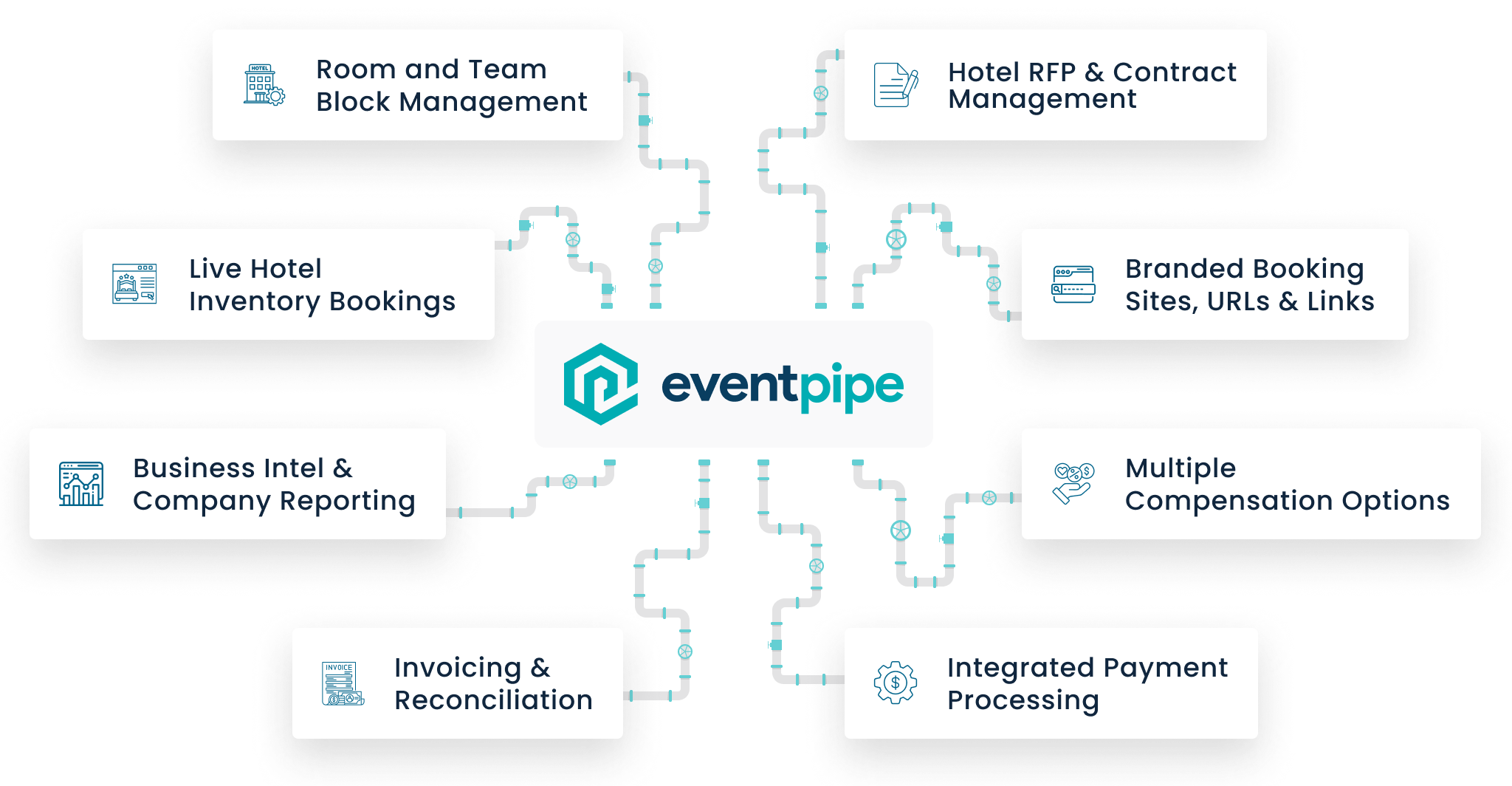


Block Management

Management

Inventory Bookings

Sites, URLs, & Links

Event Housing Reporting

Compensation Options

Reconciliation

Processing
Here's how EventPipe handles group bookings for events:
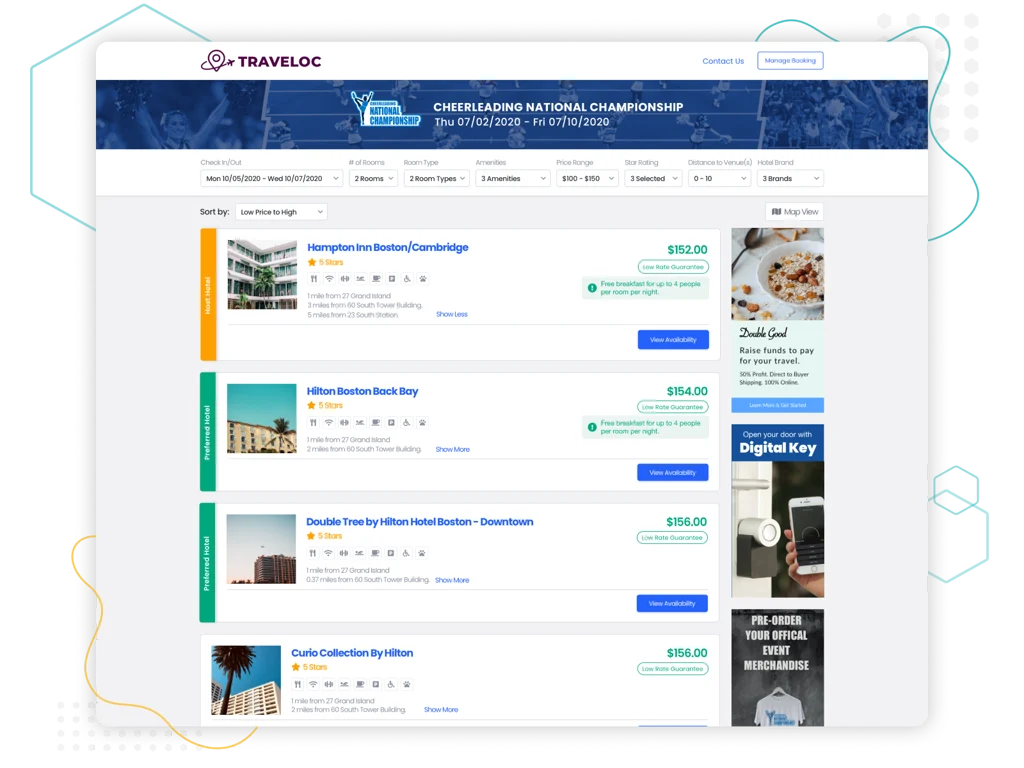
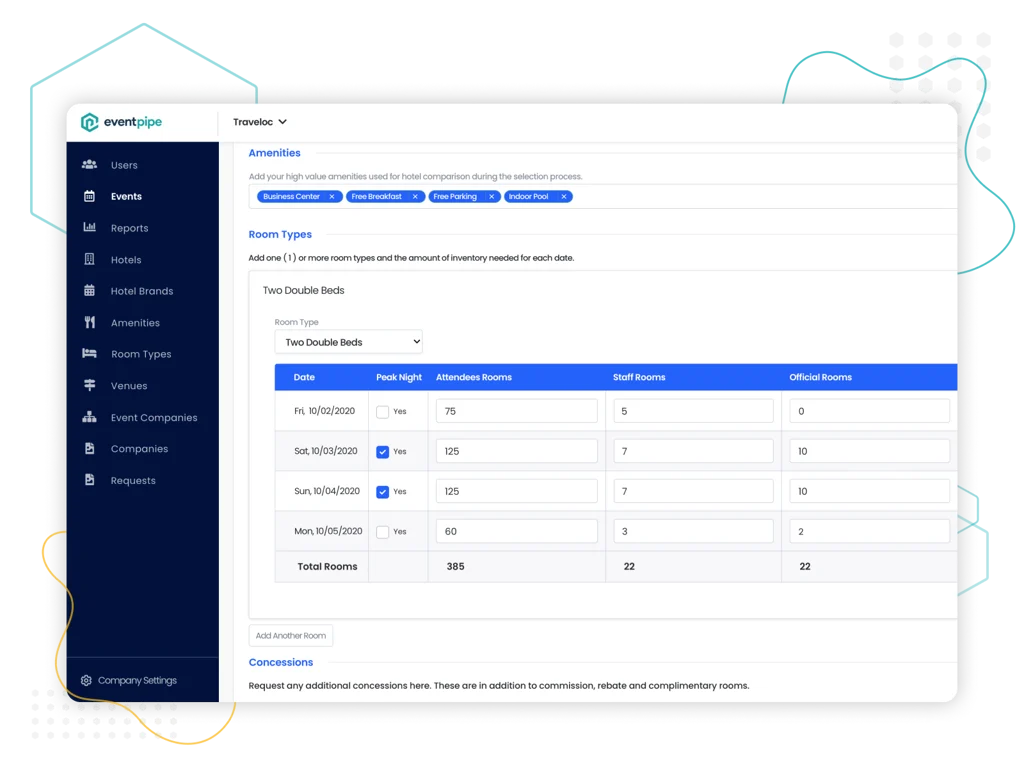
Manage and sell all of your event room inventory from one intuitive screen.
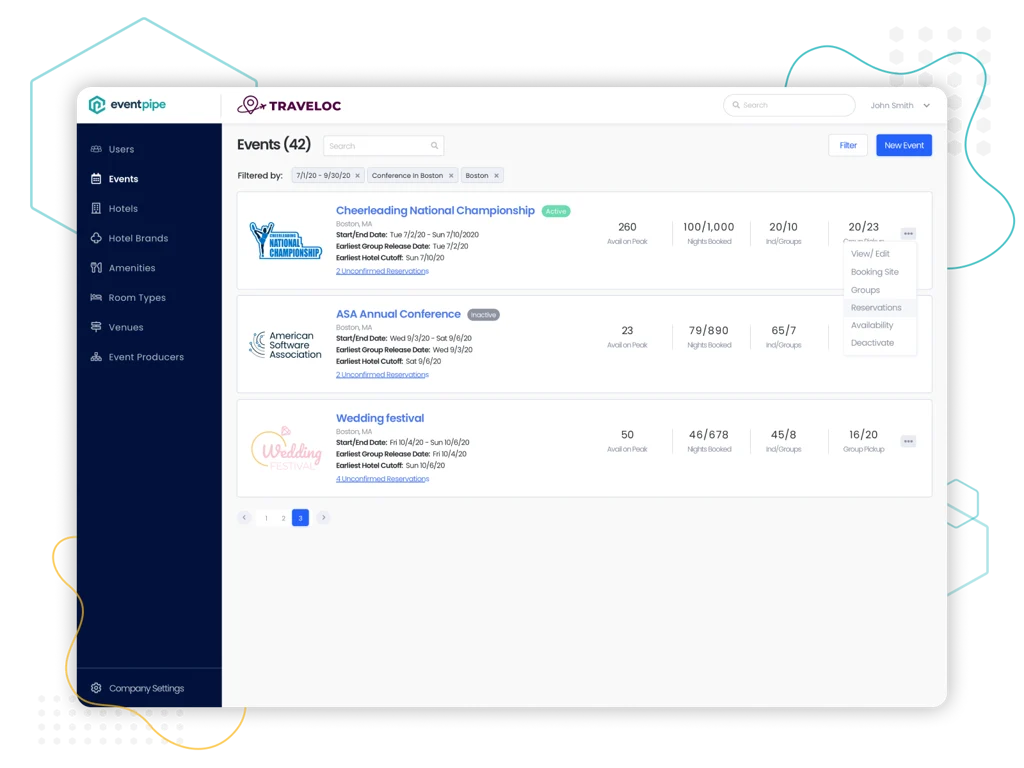
EventPipe allows you to create a custom booking site for any event in under 10 minutes.
Wow your guests with a simple, transparent reservation process.
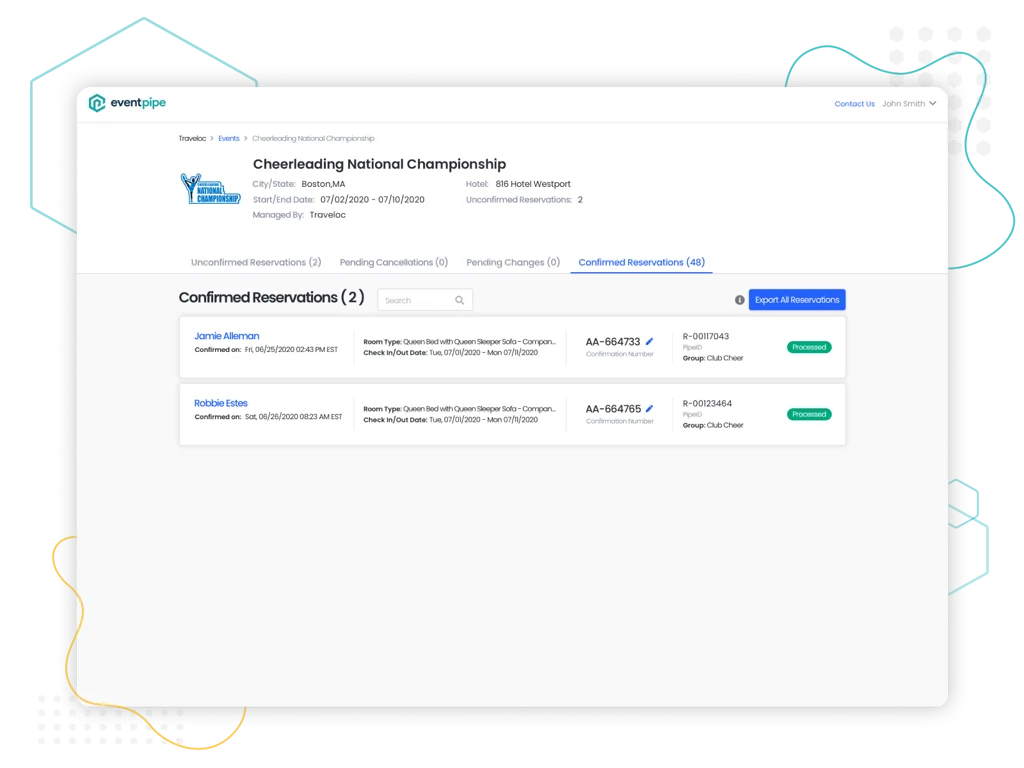
Keep your hotel partners happy with a simple reservation management portal for them.
Don't just take our word for it.
Common Questions About Event Hotel Booking Software
What is the best software for event booking?
The best event booking software depends on whether you are managing contracted hotel room blocks or booking individual trips. Those are two different products. If your events involve room blocks, look for a platform that covers the full housing lifecycle in one system: hotel RFPs, contracting, branded booking sites, reservation management, rooming lists, pickup reconciliation, and invoicing. Tools that only handle the booking step leave you doing the contracting and reconciliation work by hand. EventPipe is built for that full lifecycle, with over $1 billion in hotel bookings processed to date. Housing companies, associations, and event organizers use it to manage blocks and collect commissions in one place.
How do I set up a room block and manage reservations for a group event?
Setting up a room block follows eight steps: identify hotels near your venue, send an RFP with your room and rate requirements, negotiate and contract the block, launch a booking site for attendees, handle reservation support, send the rooming list to the hotel about two weeks out, run the pickup report after the event, and invoice for commissions. Most of the work sits at the ends of that list. Sending RFPs to 40 hotels one at a time eats days. So does reconciling reservations against actual hotel stays in a spreadsheet. Software that connects those steps keeps the data in one system, so what you contracted is what you reconcile and what you invoice.
What features do event planners & housing companies need in hotel booking software, and why?
Event planners & housing companies need six things from housing software: RFP management, contract tracking, branded booking sites, real-time reservation visibility, pickup reconciliation, and reporting. Each one closes a different gap in the booking process.RFP management turns a one-by-one email process into a one-to-many send. On a 50-hotel event, that's the difference between a half-day of work and a few minutes. Contract tracking keeps the clauses and concessions you negotiated from disappearing somewhere between the proposal and the signed agreement. Branded booking sites hold attendees inside your block, so they book with you instead of clicking away to a third-party site. The rest of the list is about knowing what's actually happening while the event is still in front of you. Real-time reservation data shows pacing early enough to act on it. Pickup reconciliation matches bookings against actual stays so you invoice the right number. And reporting gives leadership a clear read on how this year's events are pacing against last year's.
How do I reduce attrition using booking software?
Reduce attrition by watching pickup pacing in real time and fixing the gap before the cutoff date, rather than discovering it in the reconciliation report. Booking software gives you three levers. First, live pickup data shows which blocks are filling and which are not, early enough to release rooms or push bookings. Second, compliance tracking catches attendees booking outside your designated hotels, which is revenue you contracted for and cannot recover after the fact. Third, blockflation controls limit over-reserving, where teams hold more rooms than they need and inflate a block that never actually fills.Attrition is a data problem before it is a penalty problem.
How do I manage hotel room blocks for a large event?
Managing blocks for a large event means running many hotels as one event, not many events. Large events add three problems small ones do not have: dozens of properties to contract, groups that need to split across multiple hotels, and a reconciliation process with too many reservations to check by hand. Handle it by sending one RFP to every hotel at once instead of individually, blocking teams or groups across properties from a single view, and reconciling reservation by reservation rather than in bulk. City-wides, multi-day tournaments, and conventions all run on the same pattern: one admin view of every hotel, every block, and every reservation.
What is blockflation, and how does it affect room blocks?
Blockflation is when teams or attendees reserve more rooms than they actually need, usually to hold inventory before they know their final numbers. The block looks full. Actual pickup falls short. The damage shows up at reconciliation. You contracted and staffed for a block size that never materialized, hotels release rooms you could have sold, and commission revenue lands well under projection. Catching it requires seeing reservation behavior as it happens: which groups are holding more rooms than their roster supports, and which blocks are inflated versus genuinely full.
