
Tournament season tests every part of a sports housing company. One weekend can mean dozens of room blocks, a dozen hotels, and hundreds of teams booking at once. The commission that keeps the business running only lands on room nights teams actually use, so every no-show, over-booked room, or team that slips out of the block cuts into revenue.
Sports hotel booking software exists to protect that revenue. The right platform runs the full event housing lifecycle, from the first hotel RFP to the final invoice, and keeps a housing company in control of the commission it earns. Here is where that money is won or lost.
A housing company sits between event organizers and hotels, handling rooms so tournament organizers can focus on the games. It sources hotels near the sports facility hosting the event, sends RFPs, contracts the room blocks, and runs the site where teams book their rooms. Good room block management software carries all of that on one centralized platform, in place of spreadsheets and phone calls.
Booking the room is the simple part. Commission leaks in three later stages that a general hotel booking platform was never built to handle effectively:
Sports travel keeps climbing, which raises the stakes. The Sports Events and Tourism Association counted 124.3 million hotel room nights from sports travel in 2025, and 65% of destinations say sports events are their biggest source of room nights. More volume means more blocks, more teams, and more room for commission to slip.
“When a housing company outgrows a general booking tool, the first thing that breaks is pickup visibility. Someone's stuck exporting a spreadsheet and manually checking it against the hotel's rooming list just to know where the block actually stands. That gap usually hides costs for weeks, because nobody notices a block is trending toward attrition until they're staring down a wash number they can't explain at reconciliation. By the time it shows up, you're not managing the block anymore, you're just doing damage control on the bill.” - Patricia Driscoll, Director of Customer Success & Support at EventPipe
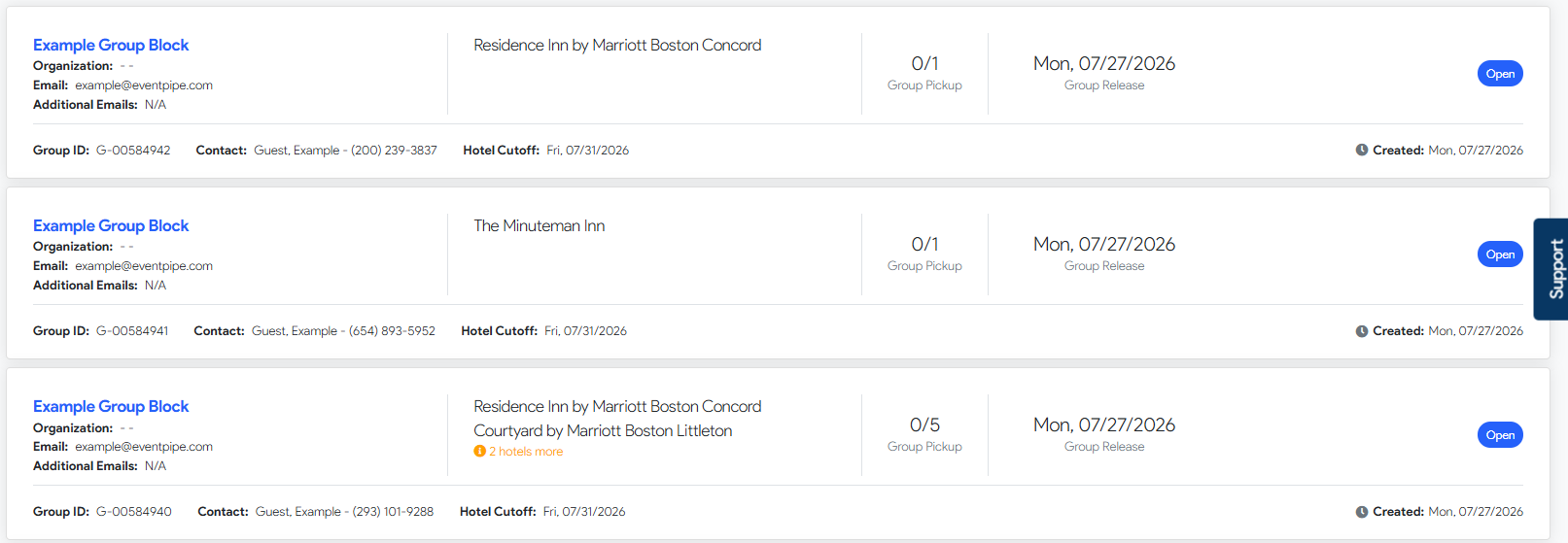
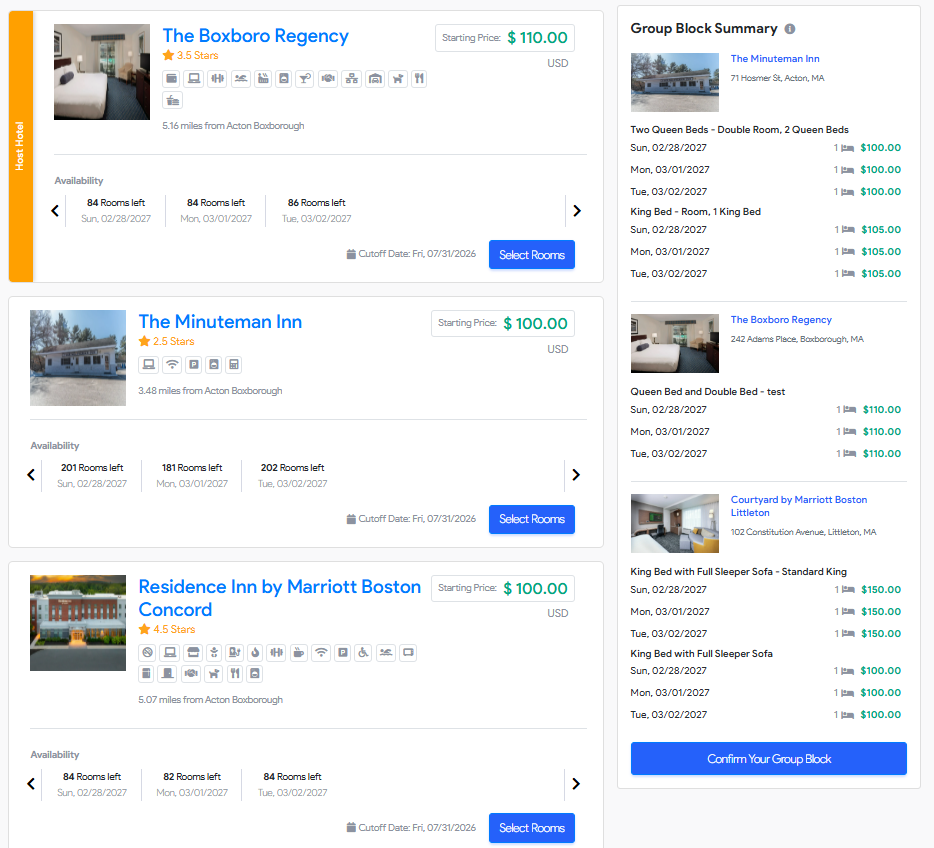
Group bookings for sports events rarely fit inside a single hotel. A large club can send ten teams to one tournament, and each team needs its own block, often spread across multiple properties. When a coach or travel arranger has to chase separate confirmation emails from three hotels, the customer experience falls apart, and rooms sit empty.
Sports hotel booking software holds a team block across multiple hotels under one online booking flow:
Less friction means more teams book inside the block, which keeps travel costs predictable for families and commission intact for the housing company. That is a real savings for both sides, and better communication with hotels along the way.
Platforms differ sharply in how they hold one team block across several properties, which is one of the factors our review of group hotel booking software scores.
Request a demo. See how EventPipe helps sports housing companies scale.
Stay-to-Play is the rule that keeps the model working. Many tournaments require every team to book inside the official block, or the team cannot compete. That guarantee earns the housing company favorable rates and rebates from hotels. When teams book around it, the housing company loses revenue it already earned.
Two problems drain that revenue:
EventPipe named the second problem blockflation: teams grab extra rooms to play it safe, the block looks full, and actual pickup falls short at reconciliation. Both wreck commissions.
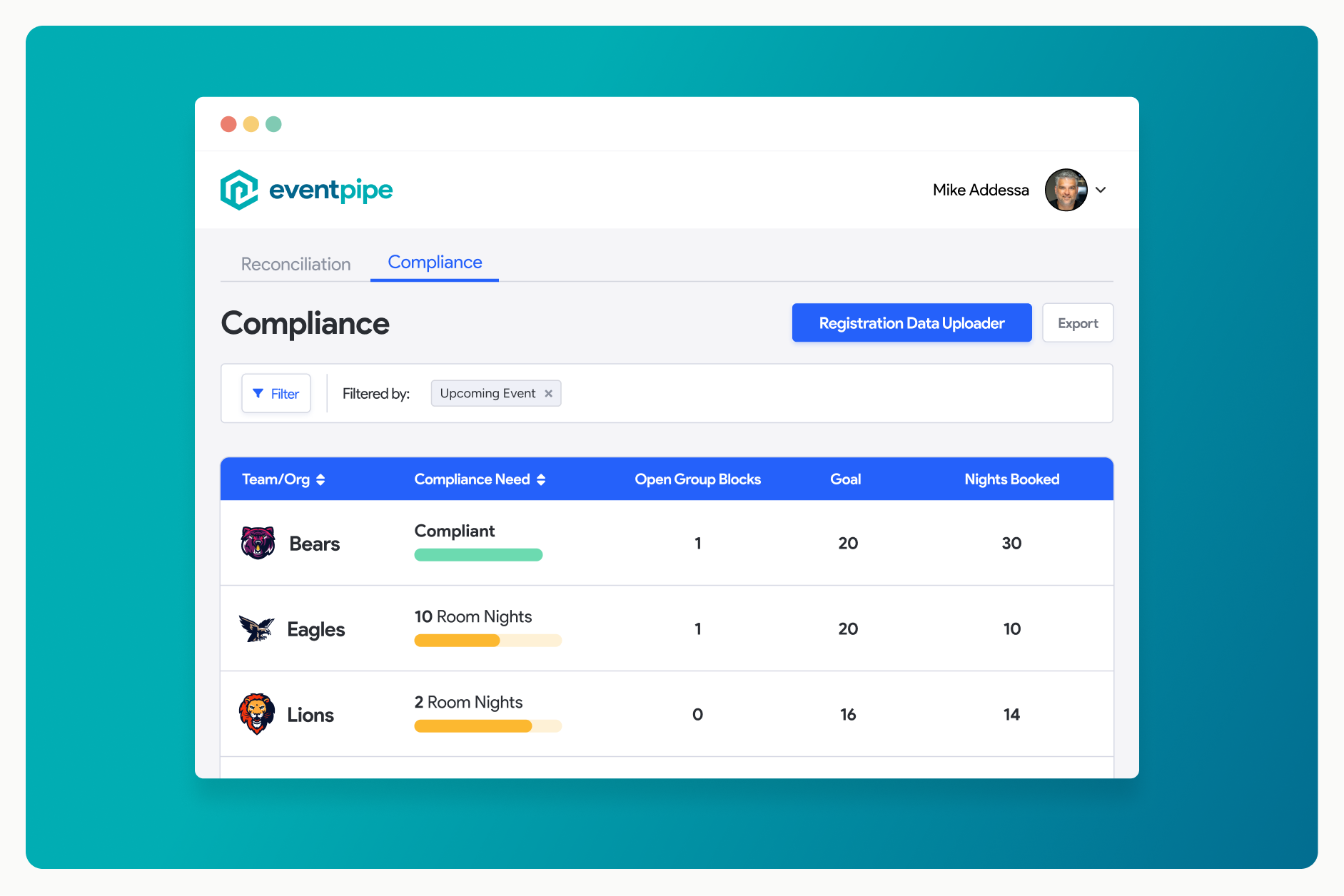
Stay-to-Play compliance tracking inside Teams Management shows which teams have booked, how many rooms they hold, and whether they fall inside the required radius of the venue. Unlike a manual room list, it flags out-of-block bookings and blockflation early, while there is still time to act. That is what makes compliance enforcement efficient enough to run across a full slate of events.
Getting paid is the last place revenue slips. After the event, a housing company runs a pickup report that compares what teams booked against who actually stayed. Some guests extend, some drop a night, some never show. That gap sets the real room night total and the commission the hotel owes.
When this data moves by hand between systems, small errors pile into real money, often several percent of revenue written off. Sports hotel booking software reconciles reservation by reservation, then turns the final numbers into accurate invoices and payments. The housing company bills the hotel for the right commissions, rebates and services rendered, faster and with fewer disputes.
“The leak almost always sits between the pickup report and the wash, because pickup only tells you rooms booked, not what happens when the block gets reconciled against the attrition clause. Housing companies get comfortable watching pickup climb toward cutoff and assume they're fine, then reconciliation applies a per night clause instead of cumulative and a few soft nights turn into real dollars owed. The one control that stops it is knowing your clause type before you ever get to the wash, so you're tracking pickup against the actual penalty structure, not just a headcount. That's the difference between catching a shortfall with time to fix it and finding out at the invoice.” - Patricia Driscoll, Director of Customer Success and Support at EventPipe

One tournament is manageable on instinct. A full calendar of sports events is not. A director running 30 tournaments a year needs to see how every event is pacing, which blocks are filling, and how this season compares to last and where next season's plans stand, without waiting weeks for a month-end report.
PipeSights gives housing company leadership real time visibility across the whole portfolio. Managers track pacing, rebates, and active events on a single platform, and see every hotel booking across the portfolio in one place. Management software like this is how a housing company takes on more sports events without adding staff, and it takes the training load off new hires who would otherwise learn a stack of disconnected tools.
Real numbers make the case better than promises. Stack Sports, through its TeamINN housing operation, moved its event housing onto EventPipe and grew revenue nearly 80% year over year in under 18 months. Working with partners like Pop Warner, the team scaled bookings on one platform in place of stitched-together tools. The full Stack Sports case study shows how a purpose-built hotel booking platform supported that growth.
Request a demo. Talk to someone who knows event housing.
It means less manual work and faster access to revenue data. As more tournaments adopt Stay-to-Play rules, housing companies will rely on automated compliance tracking and live reporting to catch out-of-block bookings and pace the business in real time. The companies that adopt these tools first will scale faster than those still working from spreadsheets.
No. Stay-to-Play is common in larger tournaments that guarantee hotels a minimum number of room nights, but many smaller or regional events do not require it. For events without a mandate, a housing company can still offer a booking link and capture rooms without enforcing compliance.
A booking site can go live in minutes rather than days, which helps move group bookings from inquiry to confirmed reservation faster. The platform auto-generates a branded site once the room blocks are contracted, so teams can start booking hotel rooms as soon as registration opens. That speed matters when demand hits all at once.

Jeff is the Marketing Manager at EventPipe. He brings a decade of Marketing experience with a background in social media, events, SEO, and content. Outside of work, Jeff is an independent Hip Hop artist who regularly releases and performs his music and loves to golf and play ice hockey in his spare time. Jeff holds a bachelor of arts in Economics from Union College, with a minor in Spanish.
