
Hotel room block attrition is the gap between the number of rooms you promised a hotel and the rooms your group actually books. When you sign a hotel contract for a block, you commit to filling a minimum number of hotel rooms at a negotiated rate.
If the group fails to book rooms as agreed, the hotel can charge attrition fees to recover the room revenue it expected. For housing companies and event organizers who run dozens of events a year, those financial penalties come straight out of the margins your events earned.
Hotels write an attrition clause into the hotel contract because unsold rooms are perishable. A room reserved but empty on a given night is revenue the hotel can never get back. The attrition clause exists to protect the hotel against a block that looks full on paper and shrinks by check-in. For the group, that same clause is the line item that can turn a strong event into a budget problem for any event planning team.
Associations that build the budget around hotel risk from the first draft price that exposure in before the block size is ever set.
Most attrition trouble comes down to a data problem. Across their events, groups that track room pickup closely and forecast the number of rooms honestly rarely face unexpected penalties. Groups that guess at how many guests will book rooms almost always do.
That is also why attrition risk is a useful filter when associations shortlist housing management software, because forecasting and cut-off tracking are where platforms tend to differ most.
Attrition charges are calculated based on the shortfall between your contracted block and your actual room pickup. Hotels rarely expect a group to fill 100% of the hotel rooms reserved. They build in an attrition percentage, a cushion of rooms you can miss without penalty.
Standard allowances typically start around 10% to 15%, which means most events must pick up 85% to 90% of the reserved rooms to avoid penalties. In high-demand markets, that attrition rate tightens and the required pickup climbs.
The math is simple once you know the terms. For one of your events, say you contract a total room block of 100 room nights at a discounted rate, with a 15% attrition percentage. The group needs 85 rooms picked up. Book only 70 rooms, and you owe attrition charges on the 15 fewer rooms below the line. Hotel revenue managers treat that charge as liquidated damages, for example the room nights you missed times the negotiated rate.
The number that decides your bill is actual pickup. That is why hotel room block management software that tracks pickup and cut-off dates in real time matters more than any attrition clause you negotiate. You cannot protect margins on a number of rooms you cannot see.
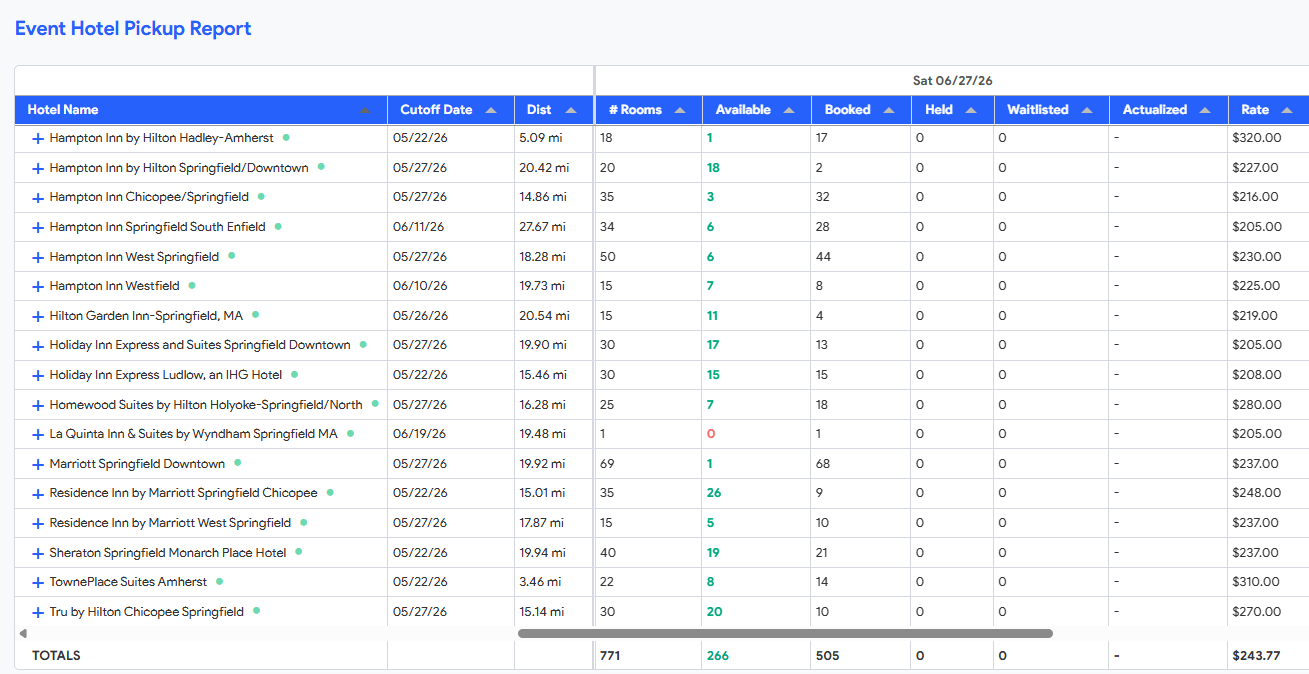
“The first number I tell teams to pull is their pickup percentage against the block, tracked against the cutoff date, not the final attrition total. Most teams only look at the wash number after the bill arrives, and by then it's too late to do anything about it. When you're watching pickup pace week-over-week heading into cutoff, you can catch a slipping block early enough to renegotiate, extend a hold, or push a promo instead of getting hit with a bill you have no leverage to dispute." - Patricia Driscoll, Director of Customer Success & Support at EventPipe
The difference between cumulative and per-night attrition decides how much risk a group carries across a multi-night event. Both compare your pickup to the contracted room block; they just measure it differently, and the gap can mean thousands in penalties.
The three-night example shows why the wording matters. Picture a block where Monday runs light but Tuesday and Wednesday overflow. Cumulative terms let the strong nights carry the soft one, and the group may owe nothing. A per-night clause leaves Monday's shortfall exposed on its own. Push to protect yourself with cumulative terms wherever the event allows.
“More often than you'd think. Per night attrition clauses look simpler on paper, so they get signed without much pushback, but they punish you for every single room that falls short on every single night of the block. A cumulative clause lets strong nights offset weak ones, so your overall exposure is based on the total picture instead of your worst moments. I've seen groups sign a per night clause assuming it was the safer option, then get hit with a bill that was double what a cumulative structure would have produced for the exact same pickup." - Patricia Driscoll, Director of Customer Success & Support at EventPipe
Block attrition often starts long before the cut-off date, with a problem EventPipe calls blockflation. Blockflation is when teams or attendees hold more rooms than they actually need, usually to grab inventory before it sells out. On paper the block fills up. At reconciliation, the no-shows and over-holds fall away, and real pickup comes in well under the rooms you contracted.
An attrition clause charges for that gap. A block padded with speculative holds is already on track for a penalty, because the contract counts those rooms as committed even though no one was ever going to sleep in them.
This is why attrition and blockflation are two sides of the same coin. Over-reservation inflates the hotel block you report. Under-pickup is what the hotel actually bills. No shows can significantly impact the final number of rooms, so the defense is visibility into real demand versus held rooms, early enough to act.
Across their events, housing companies and event organizers that monitor team-level hold spot inflated blocks and release unused rooms before the cut-off, protecting both their pickup and their hotel relationships.
Managing attrition comes down to two habits: start negotiating a fair attrition clause up front, and watch pickup across your events like the revenue it is.
The attrition percentage, the calculation method, and the credits all sit on the table during negotiation. Request that the hotel's sales team provide cumulative rather than per night terms in writing, and keep negotiating toward a lower attrition percentage. Negotiating favorable terms on credits matters too: request that the hotel credit room revenue from resold rooms, and count early arrivals, late departures, and deposits kept on no shows.
Add the right to audit the hotel records, and maintain open communication with the hotel partner. Each attrition clause concession you win protects your margins and lowers the penalty you could ever face. Negotiating these favorable terms in advance beats disputing a hotel bill after the events.
Associations signing a venue contract in the same cycle should underwrite the venue and hotel contracts against one attendance forecast, since both carry their own attrition clause.
Many groups over-contract out of fear, which guarantees a hotel attrition bill if attendance dips. A smarter approach is to contract the number of rooms a group can confidently fill, then plan for overflow separately.
When a block sells out or the cut-off passes, post-block hotel booking lets you keep capturing guests on live inventory without adding contracted rooms you might not fill. A smaller room block carries less financial risk and fewer financial penalties for your events.
Watching pickup across your events turns attrition from a surprise into a decision. Release unfilled rooms in advance of the cut-off and you cut your liability while you protect the relationship with your host hotel. Many hotels now measure attrition per night, so a clear view of room pickup by date keeps unfilled rooms from becoming costly attrition penalties. A clean rooming list and an accurate guest list of your guests make that tracking far easier. Stack Sports (TeamINN) grew its business 80% in 18 months after moving to a smarter hotel booking platform built to protect pickup across its events.
Wedding room blocks carry the same exposure on a smaller scale, which is why sizing conservatively beats locking in a big number.
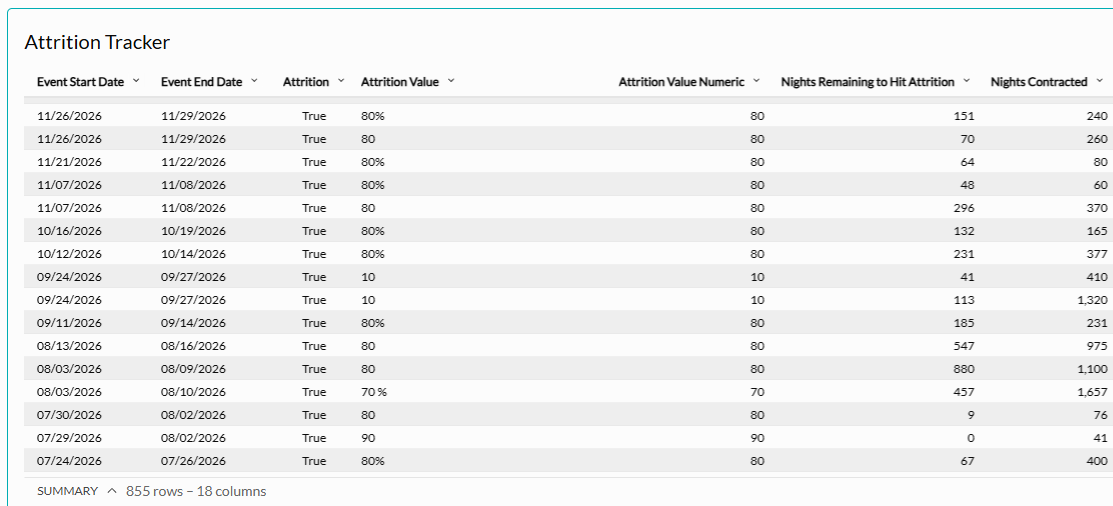
See how it works. Book a demo, see how EventPipe tracks pickup and flags attrition risk before the cut-off date.
Attrition is a manageable risk, and the housing companies and event organizers who beat it treat every room block like the revenue it protects. They keep negotiating smarter hotel contracts, watch their rooms and bookings closely, and protect the commission revenue their events are built to deliver.
Talk to someone who knows event housing; request a demo of EventPipe.
Most contracts allow a 10% to 20% attrition percentage, meaning a group must pick up roughly 80% to 90% of the reserved rooms to avoid a costly penalty. In tight markets, hotels often push that threshold toward 90%. The exact attrition rate is negotiable and should reflect your events' real booking history.
Attrition charges are usually billed after the event, once the hotel compares your contracted block against actual room pickup during reconciliation. Because the penalty is calculated based on final numbers, tracking room bookings and rooms before the cut-off date is the only way to see a shortfall coming. Catch it early and the group can release rooms or drive more rooms before the penalty locks in.
It depends on your hotel contract. A well-negotiated attrition clause requires the hotel to credit revenue from resold rooms against what you owe, so the group is not charged for rooms booked by other guests. Without that language, you can pay for rooms that never actually sat empty.

Jeff is the Marketing Manager at EventPipe. He brings a decade of Marketing experience with a background in social media, events, SEO, and content. Outside of work, Jeff is an independent Hip Hop artist who regularly releases and performs his music and loves to golf and play ice hockey in his spare time. Jeff holds a bachelor of arts in Economics from Union College, with a minor in Spanish.
