
Association event housing management is the work of sourcing hotels, contracting room blocks, running a booking site, and reconciling commissions after a conference ends.
Association event housing management software is the system that holds all of it in one place. Most association event planning guides treat housing as a single line on a 12-month checklist, filed somewhere between sponsor sales and badge printing.
That framing costs associations and AMCs money. Housing is the only piece of the event stack that carries a financial liability on one side and a revenue stream on the other.
Event housing management software gives associations and AMCs one system to find hotels, send RFPs, contract room blocks, publish a branded booking site, track pickup as reservations come in, and invoice for commissions after the event.
That is a different job than event registration. Registration software counts people. Housing management software counts rooms, and rooms come with contract terms, cutoff dates, and penalties attached.
The buyers are association event planners running one annual conference, AMCs managing conventions and trade shows for a portfolio of clients, and housing managers who handle hotels full time. Their volume differs. The process does not.
Your association management software (AMS) owns member records, dues, registration, and CE credits. It does not own the hotel side. So housing lands in a spreadsheet, an inbox, or an outsourced relationship where the association sees a summary report months after the fact.
That gap matters because your organization signed the hotel contracts. When pickup falls short, the association pays. When attendees book around the block, the association loses the commission and still owes on the shortfall. Housing managers end up chasing numbers from multiple hotels by email while the cutoff date moves closer.
The daily cost is quieter. Attendee inquiries about confirmations, room types, and date changes land on staff who have no way to look a reservation up. Sponsors and exhibitors ask for their own sub-block numbers. Leadership asks how the block is pacing against last year. Every one of those answers takes a phone call to a hotel.
“The first thing they usually say is some version of "wait, this is everything?" Before, most teams were stitching pickup together from separate hotel extranet logins or emailed reports, sometimes updated daily, sometimes once a week depending on how responsive the hotel was. Seeing every property's numbers in one place, updated in real time, is usually the moment it clicks how much manual reconciliation they were doing without realizing it.”
Patricia Driscoll, Director of Customer Success at EventPipe
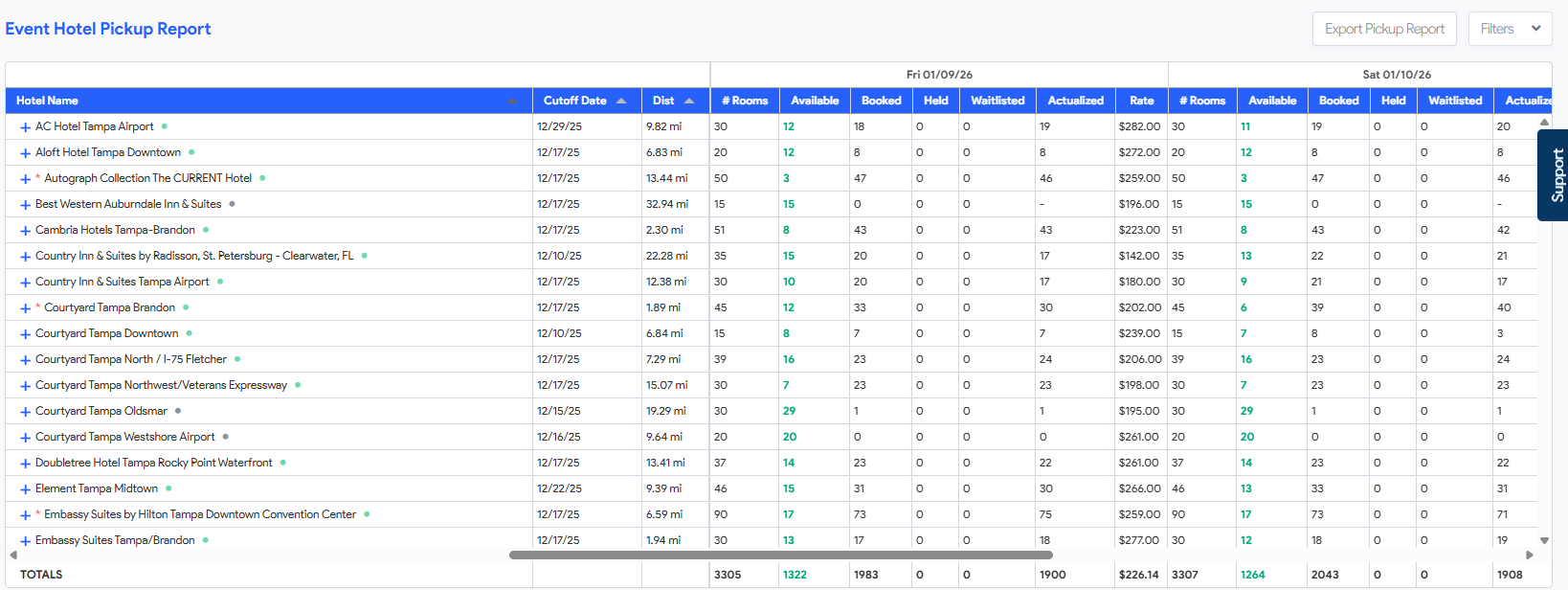
Associations handle convention room blocks one of three ways: inside an event platform module, through a full-service housing company, or in purpose-built housing management software.
None of the three is wrong. The question is which one matches how much of the process your team wants to run. Associations that outsource everything and still get surprised at reconciliation usually need more visibility. AMCs juggling housing for several client associations at once usually need a system, since the spreadsheet approach breaks down fastest across a portfolio.
Budget belongs in that decision, but it is rarely the deciding factor. Housing costs show up as attrition penalties and uncaptured commissions far more often than as software line items.
Evaluate any platform against the full sequence, not a feature list:
If a platform only covers steps three and four, your team still owns the other four manually. That is the real cost comparison, and it rarely appears in a demo.
Attrition risk should push you toward platforms that show pickup daily rather than at cutoff. Hotel room block attrition is the gap between the rooms you contracted and the rooms attendees actually used. Hotel agreements define the extent of a group's liability for failing to meet its minimum commitments, and typically set out numbers or formulas for calculating the damages, per the Events Industry Council's APEX contracts guidance.
Forecasting that number has gotten harder. In PCMA Convene's most recent Annual Meetings Market Survey, 13 percent of the 80 event professionals surveyed expected attendance to drop in 2026, compared with 3 percent who predicted a decline the year before.
Software cannot fix a bad forecast. It can tell you at week three that a property is pacing well behind, while releasing rooms is still an option.
Blockflation is EventPipe's term for the opposite failure: groups reserving more rooms than they need in order to hold inventory, then releasing them late. Apparent pickup looks strong. Actual pickup falls short.
Associations and AMCs see this from exhibitors and chapter groups who book a cushion before their headcount is final. The block looks healthy in month two, so the association adds rooms at a second property. In month five, the cushion evaporates; the association is carrying inventory nobody wants, and hotel partners are holding rooms they could have sold.
Any platform you evaluate should let you see reservation activity by group, not just a total.
“Most over-forecasted blocks trace back to historical attendance numbers pulled straight from a past event, without adjusting for what actually changed. The input teams leave out is registration pacing from the current event itself. Past attendance tells you what happened last time, but it doesn't account for this year's earlier or later program, a shift in venue city, or a dip in early registrations that's already showing up in the data. Anchoring the block to last year's number instead of this year's pacing is where the gap starts.”
Patricia Driscoll, Director of Customer Success at EventPipe
Conventions that sell out their block every year face a different problem. Once inventory is gone or the cutoff passes, remaining hotel bookings happen elsewhere and the association captures nothing.
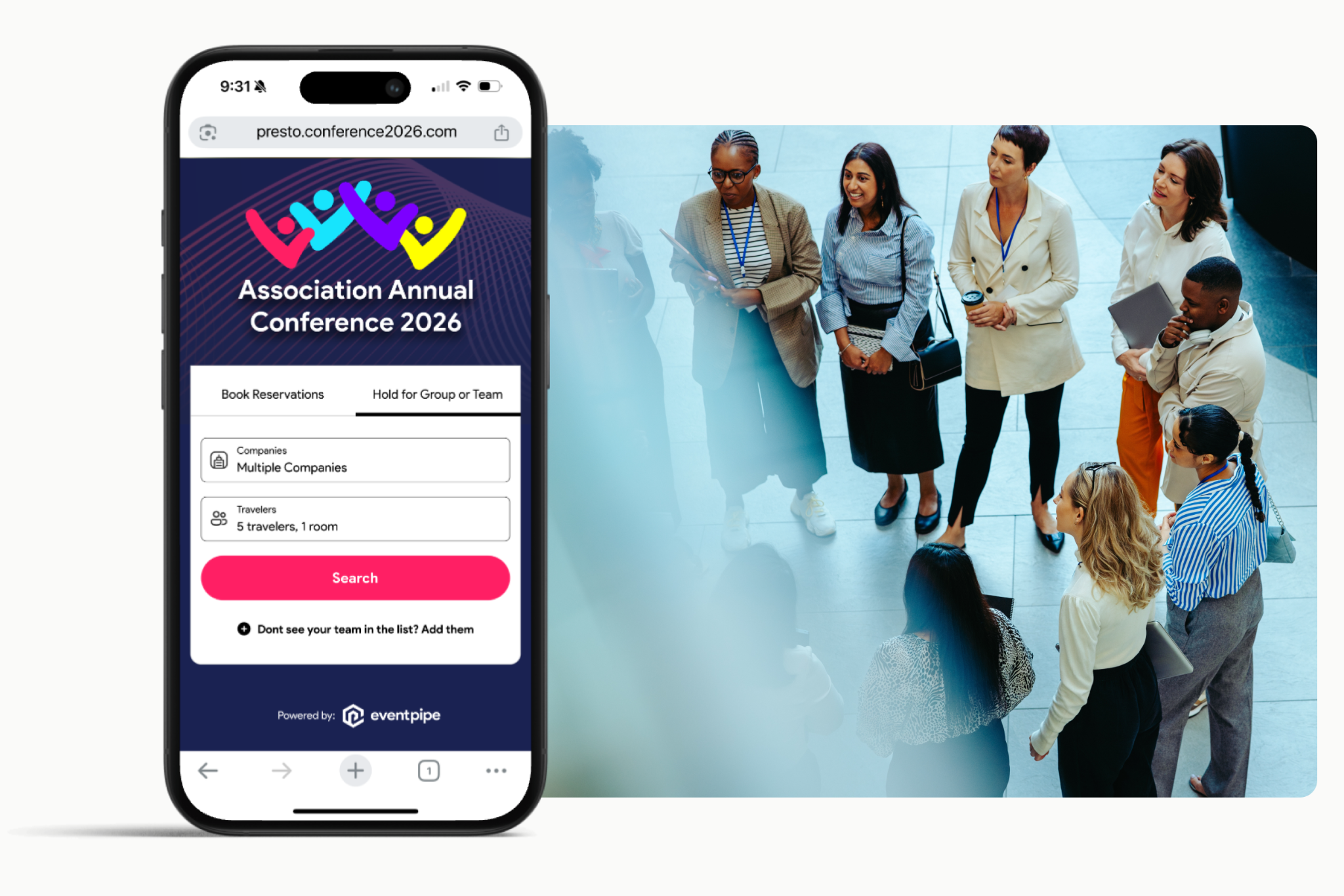
Live hotel inventory booking is one answer. EventPipe's Presto connects to live inventory so a booking link stays active without a second hotel contract. Two situations call for it:
Presto runs alongside a contracted block rather than replacing one.
See how it works. Request a demo.
Vague answers to any of these usually mean the capability lives in a spreadsheet somewhere.
Purpose-built room block management software keeps sourcing, contracting, booking, and reconciliation in one system of record. Retrofitted tools bolt a housing tab onto a platform designed for something else, and the seams show at reconciliation.
The difference is measurable. Stack Sports, which runs housing for hundreds of national events, reported nearly 80 percent revenue growth within roughly 18 months of moving to EventPipe, after replacing email-and-PDF contract workflows with one platform. That operation is a housing company rather than an association, but the pattern holds anywhere hotel contracts, booking sites, and commissions are managed as one process instead of three.
For associations and AMCs, that means conference housing management for associations and AMCs built around how annual conventions actually run.
“What breaks first is usually the attrition and cutoff tracking. General event platforms are built for registration and agenda management, so they treat hotel blocks as a line item rather than something with its own moving pieces. Teams end up back in spreadsheets or emailing hotels directly to check pickup, because the platform never surfaces per property numbers or flags a block that's pacing toward attrition until it's already past cutoff. By the time someone catches it manually, the association is negotiating from a worse position than if they'd seen it coming.”
Patricia Driscoll, Director of Customer Success at EventPipe
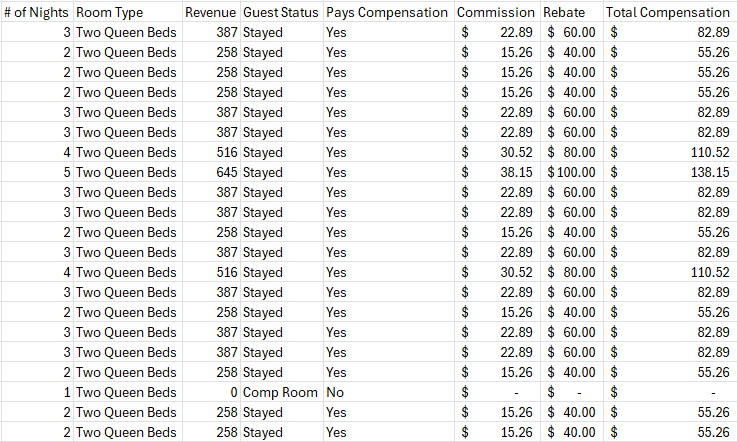
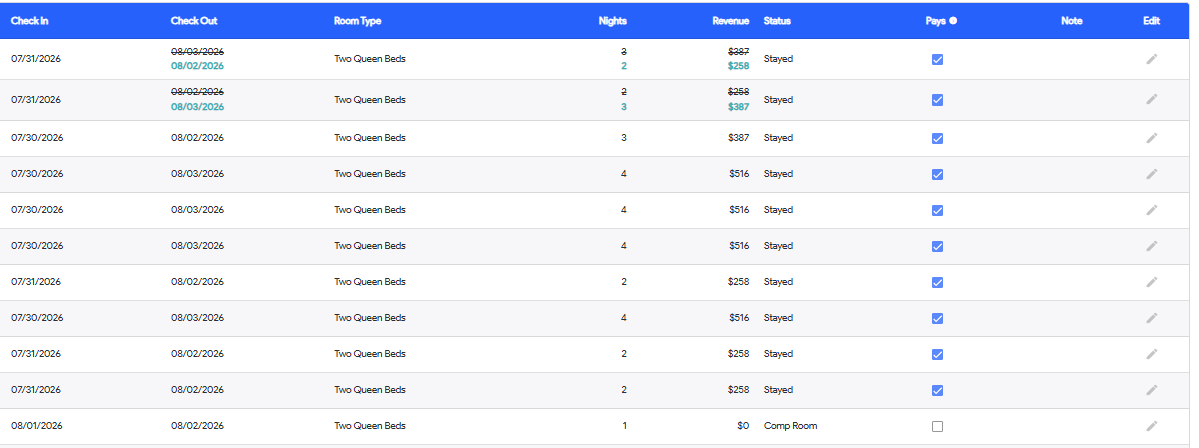
Talk to someone who knows event housing. Request a demo.
Most associations and AMCs can go live in weeks rather than months, since the setup work is loading hotels, contract terms, and booking site branding. The tighter constraint is your hotel sourcing timeline, not the software. Start the conversation before you send RFPs, not after contracts are signed.
That depends on whether your team wants to run hotel negotiations in-house. Software lets an association or AMC manage the process directly, while a housing company runs it for you and takes a share of commissions. Some organizations use both, keeping software for visibility while a partner handles negotiations.
Start hotel sourcing as early as your dates and rough room count are firm, since availability rather than your own calendar is usually the binding constraint. Large annual conventions that need meeting space alongside guest rooms need the longest runway, and competitive markets tighten it further. Smaller regional meetings can move considerably faster.
Your association should. Rooming lists, reservation history, and pickup reports are your records of who attended and where they stayed, and that data shapes next year's block. AMCs should go further and confirm the data follows the client association if the management contract ends.

Jeff is the Marketing Manager at EventPipe. He brings a decade of Marketing experience with a background in social media, events, SEO, and content. Outside of work, Jeff is an independent Hip Hop artist who regularly releases and performs his music and loves to golf and play ice hockey in his spare time. Jeff holds a bachelor of arts in Economics from Union College, with a minor in Spanish.
