
Conference venue selection comes down to a test most association or AMC event planners apply far too late: can the hotels around this event venue hold your attendees at a rate your members will actually pay? The ballroom gets all the attention during venue research. But the guest rooms make or break the event.
A conference venue with ideal meeting space and too few affordable rooms within walking distance will cost you attendance. It will also quietly cost you room night revenue that never shows up on the venue rental line of your budget.
Conference venue selection is a hotel decision because every hotel near your event venue pays commissions and rebates on the room nights your event delivers. A property might pay a percentage of room revenue plus a per night rebate to the organization that brings a convention to town. That’s the economic engine behind event housing management, and most association venue guides never mention it.
Two conference venues can quote an identical rental fee and be worth very different amounts once housing is priced in. Eight nearby hotels across three price points support a large room block, a strong pickup rate, and real commission revenue. Two expensive hotel venues cannot, no matter how good the meeting space looks on a site visit.
Cost pressure makes this gap wider every year. According to the 2026 Amex GBT Global Meetings & Events Forecast, more than 70 percent of meeting professionals expect meetings costs to rise in 2026, and 38 percent expect cost per attendee to climb year over year. Squeezing the rental fee saves money once. Choosing an event venue with the right hotel package around it changes your total event cost and your revenue every year you return.
Event planners should score a venue on ten points, and the ones carrying the most money are walkable guest rooms, total event cost, and contract terms. Use the table below to compare candidates side by side, then read the detail beneath it.
Start from the program rather than the square footage. Decide first what kind of event venue it needs, since a hotel venue, a standalone conference center, and a non-traditional space each carry different risks. General sessions, breakout sessions, and exhibits all want different layouts, and a venue that handles one well can fail at another. Confirm that attendee movement between breakout rooms works without bottlenecks.
Count the walkable rooms before you fall in love with the venue. Your room block needs enough inventory at more than one price point, because association attendees pay their own way more often than corporate meetings attendees do.
Confirm how many accessible rooms each property holds and whether they can be reserved inside your block rather than through the hotel's general inventory, because members who need them are the ones most affected when the block runs out. A hotel venue can act as a one stop shop for meeting space and guest rooms under one roof, which simplifies logistics but concentrates your risk in a single property and a single rate.
Negotiate the venue contract and the hotel contracts against the same attendance forecast. This is where most associations or AMCs lose money. The venue attrition clause and the hotel attrition clause both get underwritten against a number someone estimated years ago, and nobody revisits either until the bill arrives. Four terms are worth spending your negotiating capital on:
Score every shortlisted venue on the same rows, and include the housing lines most venue scorecards leave out: guest rooms within walking distance, room rates across price points, commission and rebate potential, attrition exposure on both contracts, and what happens once the block fills.
Download the venue and hotel scorecard.
Most association conferences get sourced twelve to eighteen months out, and the largest citywide conventions that need convention center space go further ahead than that. Popular dates in major markets fill first, and early sourcing gives you room to negotiate rate, concessions, and contract terms before the venue has other bidders at the table. Annual meetings mandated by bylaws need the longest runway of all.
The longer that runway, the more carefully the attendance number behind it needs checking. You are signing attrition against a forecast built before anyone knew who would actually show up. ASAE member research found half of responding association executives reported decreased attendance at their meetings, with professional associations hit hardest.
So keep the lead time, then re-underwrite the numbers before every cycle. Pull your historical data on registration pacing, room block pickup, and how late attendees booked compared to the year before, and bring that to the hotel negotiation. An attrition clause sized to a pre-2020 booking pattern is a liability now.
“The first thing I look at is the attrition clause in the hotel contract, specifically whether it's per night or cumulative. Per night is the expensive one. It penalizes every soft night individually instead of netting strong nights against weak ones, and I've seen associations get blindsided by a wash number at reconciliation because nobody caught that language before signing. Catching it before the ink dries is the difference between a clean event and a surprise invoice.”
Todd Beckerman, Senior Account Executive at EventPipe
Send one set of event details to venues and hotels in the same window rather than sourcing venues first and hotels months later. The Events Industry Council publishes APEX RFP templates and meeting profiles for exactly this reason, so every recipient works from the same event specification instead of a format you invented.
Send every venue and every hotel on your list the same core event details, so you can compare proposals on total cost rather than on formatting:
Low RFP response rates limit your options more than anything else this early, so source venues broadly, including multiple venues in second-tier markets. Your preferred venues from past years should still compete on paper, since a sales team that turned over since you last booked may quote very differently. Schedule the site inspection after the shortlist so the visit tests specific concerns instead of collecting impressions.
Once the venue is chosen, the room block turns your venue decision into revenue or into a shortfall. Size the block against pickup history rather than registration targets, spread it across multiple hotels at different price points, and hold sub-blocks for chapters, exhibitors, and board members so you can see who is actually consuming inventory.
Real time visibility is the part spreadsheets cannot deliver. A weekly pickup report tells you what happened. Live pacing tells you what is happening while you can still act on it, whether that means releasing rooms back before the attrition penalty applies or adding a property before the cut off date.
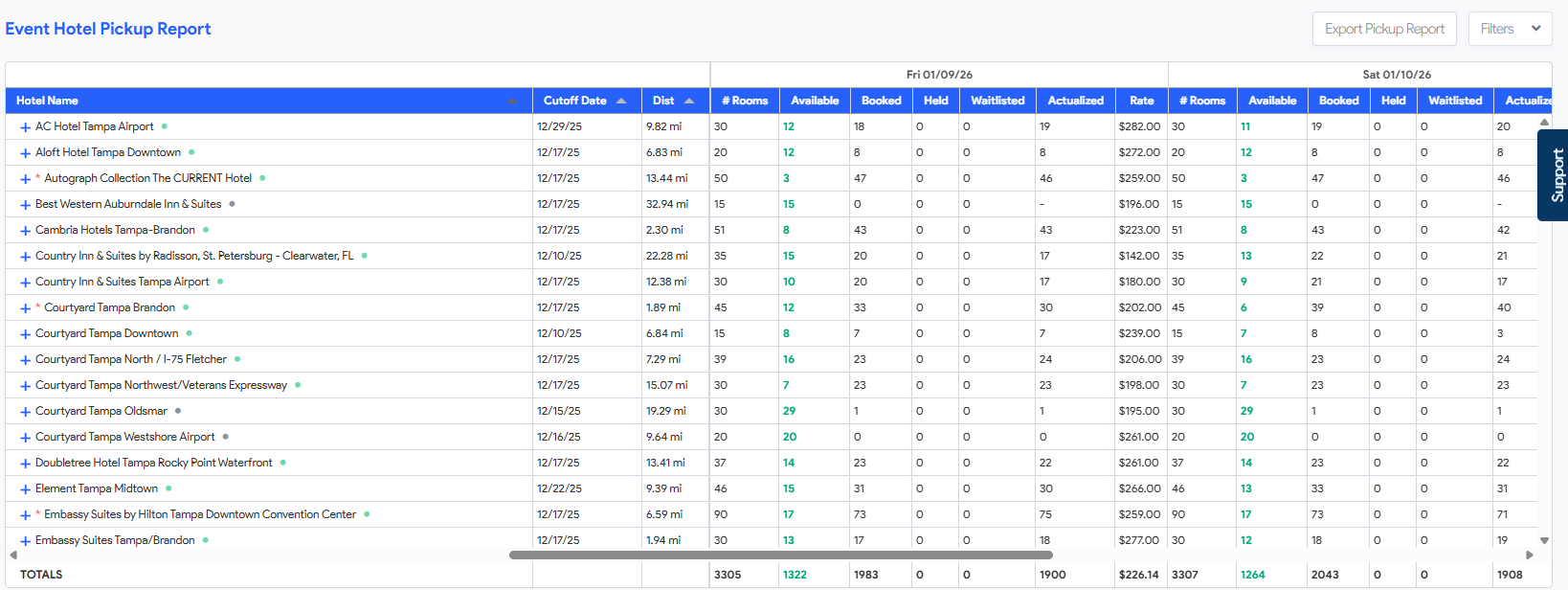
Stack Sports, through its TeamINN brand, is a housing company rather than an association, but the lesson transfers. Manual processes and email chains capped how many events the team could take on, never a shortage of demand. After moving to room block management software, they reported nearly 80 percent revenue growth in under 18 months, along with expanded room blocks from stronger hotel relationships.
Associations hit the same ceiling from a different direction. Whether you run housing in house or contract a housing company, association and AMC hotel booking breaks down in the same place: block data, reservation data, and pickup data sitting apart until after the event.
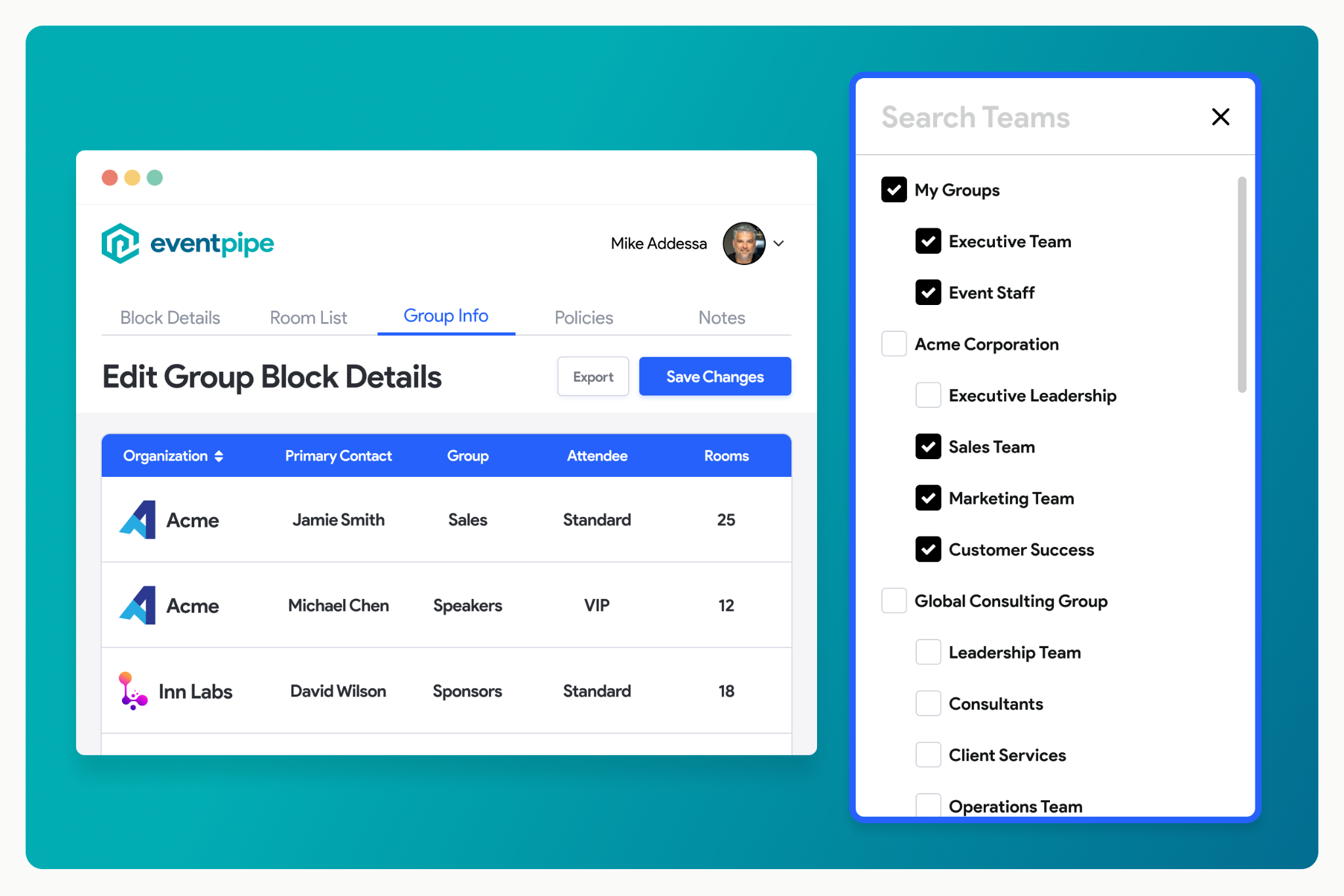
Blockflation is EventPipe's term for attendees reserving more rooms than they need to secure inventory, which inflates the apparent size of your block, leaves actual pickup short at reconciliation, and exposes your association to attrition penalties on rooms nobody ever used.
The term came out of youth sports. Tournaments there run on stay-to-play rules, where teams have to book designated hotels to be allowed to compete, so coaches hold extra rooms early to guarantee their spot and release the surplus late or never at all. EventPipe named the pattern while building tournament housing software around it. Association conventions have the same problem with different actors.
At a convention, the over-holding tends to come from chapter leaders blocking rooms for delegations that are not confirmed yet, and from exhibitors holding rooms against booth staff rosters that shrink as the show gets closer. Board members and committee chairs add courtesy rooms that nobody cancels, because nobody owns cancelling them.
What the inflated number really costs you is every decision you make while looking at it. You see a block that is 90 percent reserved, so you do not open a second property, you do not push a booking reminder to members, and you release nothing back to the hotel. Then reconciliation arrives, actual pickup lands well below reserved, and your association absorbs the attrition penalty on rooms that were spoken for on paper the entire time.
“At an association convention, over-holding usually isn't the attendees. It's exhibitors and sponsor groups reserving rooms well past what their actual headcount needs, sometimes holding blocks for staff who end up commuting or not attending at all. The earliest signal shows up in pacing data as a gap between rooms reserved and rooms actually picked up at the individual level, not just the block total. If you're seeing strong reservation numbers early but attendee registration is pacing slower, that mismatch is blockflation showing up before cutoff, not after.”
Scott Villemain, Product Manager at EventPipe
When a block sells out or the cut off date passes, attendees book wherever they can find a room, and every one of those room nights leaves your event without counting toward your contracted pickup or generating commission. The rooms still get booked. Your association just stops getting credit for them.
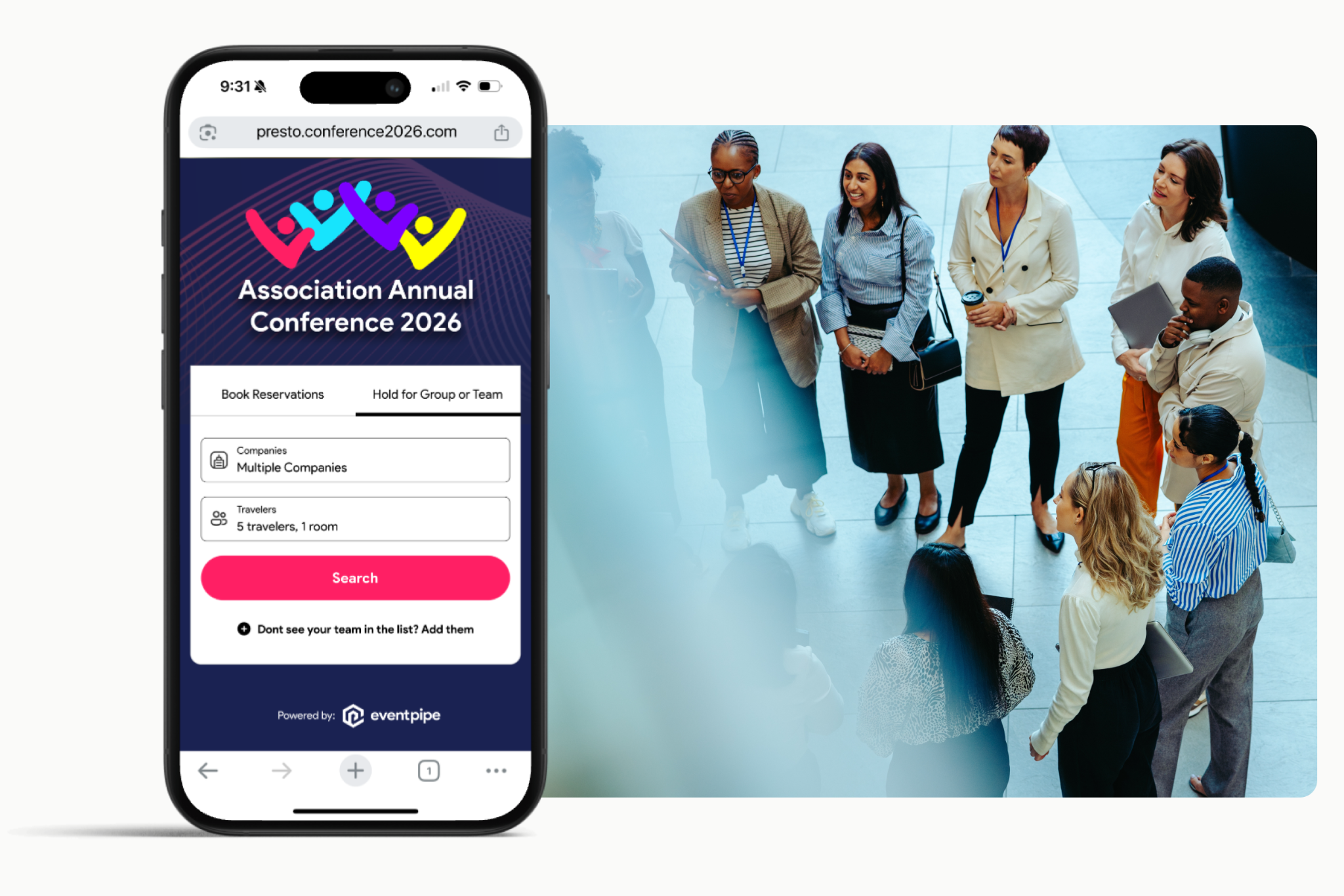
That is the case for having an overflow plan live before you need it. Post-block hotel booking through Presto connects to live hotel inventory without requiring a new contract, which lets an association keep offering a booking link after the contracted block is gone. For associations whose annual convention regularly outgrows its block, that window is where a meaningful share of total room nights sits.
Talk to someone who knows event housing.
Attendees judge the attendee experience on the walk from their hotel to the general session and on the price they paid for the room. Your venue rental negotiation never enters their thinking.
So run the last check from their side. A member on a modest budget should be able to find a room within walking distance, book it in a couple of minutes whether they are in person at the desk or on a phone, and still get in if they register late. A perfect venue that fails that test is not the right venue.
A lower rental fee saves money once. The hotels around your event venue protect the event experience and the room night revenue every year you come back.
“The tell is pickup velocity, not just the raw number. When a block is moving through 15 to 20 percent of its rooms per week instead of the usual steady trickle, that's the signal it's heading for a sellout. Planners typically get anywhere from a week to ten days of real warning once that pace kicks in, sometimes less if it's a high demand date. By then, the overflow hotel agreement should already be signed and ready to activate, not something you're scrambling to negotiate while the block is closing out. Waiting until the block actually sells out means losing days you don't have.”
Scott Villemain, Product Manager at EventPipe
Request a demo. See how associations and AMCs manage conference room blocks, pickup, and post-block bookings in one place.
Size the block on your own pickup history rather than registration projections, since most associations pick up well below what they reserve. Start from your last comparable event's actual room nights, adjusted for venue location and how many attendees are local. Build in a release schedule so unused rooms go back before attrition penalties apply.
That depends on how many hotels you contract and how much staff time reconciliation can take. Associations with one host hotel often manage in house, while those contracting across several properties bring in a third-party housing company to handle contracting, booking sites, and commission collection. Either model needs one system where block, reservation, and pickup data live together.
Those room nights do not count toward your contracted pickup, so your association can miss attrition minimums and lose commission on rooms your event generated. The usual causes are a block that sold out, cheaper rates online, or third parties soliciting your attendees directly. Clear communication about the official booking link, plus enough inventory, prevents most of it.
Open the block when registration opens so members can book travel and lodging in one sitting. Opening ahead of registration tends to produce speculative holds that inflate your numbers before anyone has committed. Set the cut off date far enough ahead to reconcile the rooming list before it goes to the hotel.

Jeff is the Marketing Manager at EventPipe. He brings a decade of Marketing experience with a background in social media, events, SEO, and content. Outside of work, Jeff is an independent Hip Hop artist who regularly releases and performs his music and loves to golf and play ice hockey in his spare time. Jeff holds a bachelor of arts in Economics from Union College, with a minor in Spanish.
