
Corporate hotel booking is how a company secures, pays for, and manages hotel stays for employees traveling for business. Most companies run corporate travel accommodation as one process. But in reality, it works as two.
Booking one room at a negotiated corporate rate and holding a block of 40 rooms for an event carry different contracts, risk, and math. Companies cross that line and keep booking the same way. The budget takes the hit.
Corporate hotel booking covers every reservation a company makes at hotels for its people, from a one-night sales trip to a 300-room conference. Two different processes sit under one label.
The first is individual business travel: one traveler, one reservation, booked through travel management tools or directly with hotels. The second is group hotel booking, where a business contracts a block of rooms and attendees book accommodations against it.
One budget and one travel policy cover both, yet only group bookings carry financial risk if nobody shows up.
The difference between individual hotel bookings and group hotel booking is who carries the risk.
Corporate hotel rates are discounted rates a hotel brand gives a company for expected annual volume. Large travel management programs negotiate directly with preferred hotels. Smaller companies get corporate discounts through a booking platform or a hotel brand's business program.
For short trips and routine work trips, these negotiated rates work well. Corporate travelers get flexible cancellation options when plans change, keep loyalty program status, and file travel expenses afterward. Amenities often outweigh rates for many business travelers: reliable Wi-Fi, breakfast, a staffed front desk. Between hotels with matching amenities, a loyalty program balance decides it.
Corporate housing means fully furnished apartments and serviced apartments rented by the month for relocations, project work, or long assignments. National corporate housing providers handle these longer stays.
For extended stays, temporary housing can be more cost effective than nightly rates at hotels. Those accommodation options do nothing for an event. Serviced apartments cannot hold a block for 40 people arriving on the same nights, so event accommodations come back to hotels and the cost savings never apply.
The same math shows up when booking hotel rooms for construction crews, where a job runs for months but the crew still needs rooms held together near the site.
A business needs a room block once roughly ten or more people need rooms in the same market on the same nights. Below that line, individual booking is fine. Above it, three things break.
Availability tightens, because ten travelers booking separately find hotels sold out by the fifth. Rates scatter, because each traveler books on a different day at a different price. Nobody holds a list of who is staying where.
Peak-night concentration is the trigger, not headcount. Twenty employees traveling across a month is routine business travel. Twenty arriving Tuesday and leaving Thursday is team travel needing contracted accommodations across one or two hotels.
When asked at what point a company outgrows booking rooms one at a time, and what signal most companies miss before reaching that point, Patricia Driscoll, the Director of Customer Success and Support, says:
“The signal I look for is when a group stops managing rooms and starts managing a spreadsheet just to keep track of who booked where. Once someone on the team is manually cross-checking a rooming list against individual reservations, they've already outgrown the process, they just haven't admitted it yet. What most people miss is that the real cost isn't the time spent tracking it, it's the rooms scattered across the property with no group rate protection and no visibility into pickup until it's too late to fix. By the time attrition shows up at reconciliation as a surprise, the signal was there weeks earlier in how much manual work it took just to answer "how many rooms do we actually have booked."
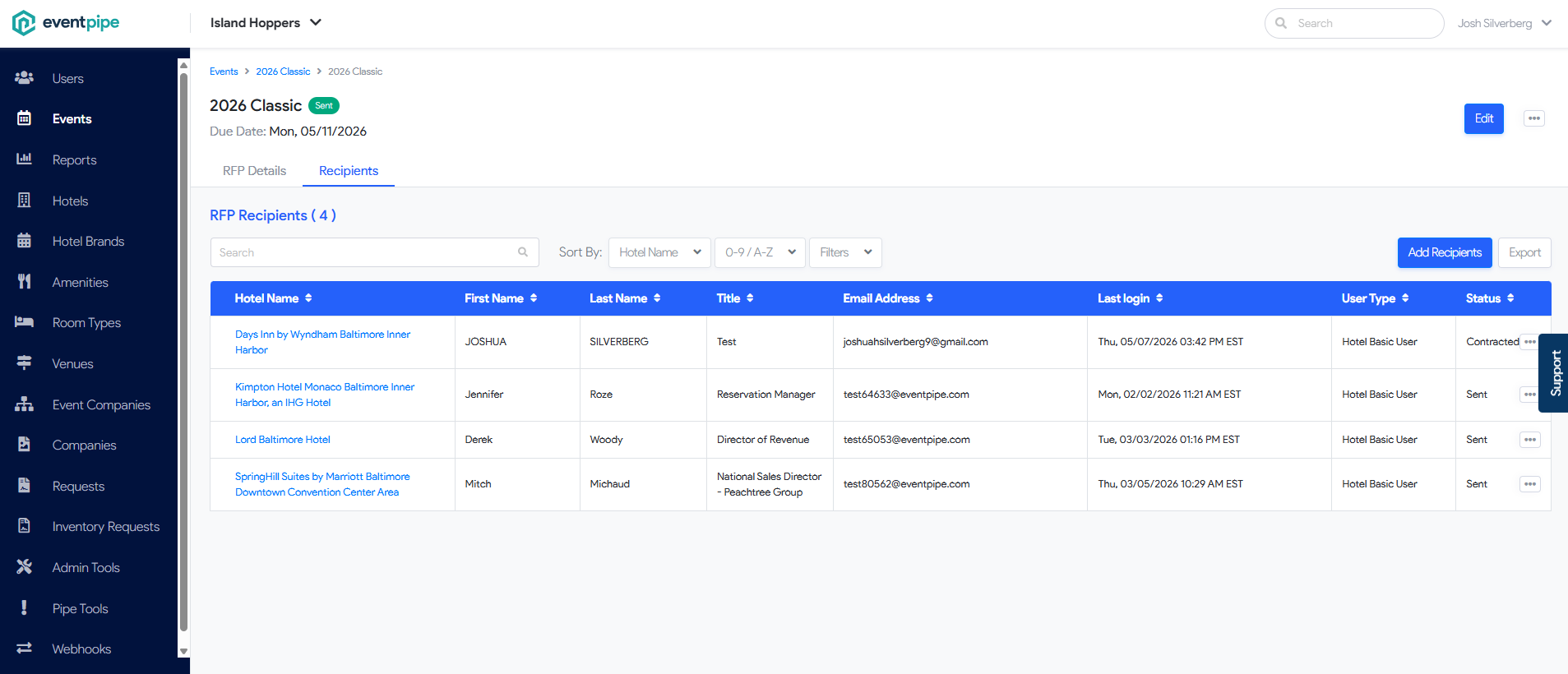
The booking process for a contracted block runs in a fixed order.
Running that across multiple vendors and multiple hotels in spreadsheets is where the hours go. Hotel room block management software collapses the booking process into one record.
Choose hotels on total cost, not rate alone. A property twelve minutes further out costs more once car rentals and lost meeting time count. Weigh venue proximity, meeting rooms, amenities, and the right accommodation mix before comparing hotel rates, since those travel costs make all the difference.
Four clauses decide whether a block saves money or produces a surprise bill.
The minimum share of the block a business must fill, which Northstar Meetings Group reports now commonly reaches 90%. Fall short and the company pays for empty rooms. Hotel room block attrition is the largest source of unplanned cost in event accommodations.
Per-night terms make a soft Monday trigger a penalty even if the rest of the week sells out. Ask for cumulative terms in writing.
Once it passes, unbooked rooms go back to hotels and late travelers pay rack rate.
Comp room ratios, meeting space credits, and waived resort fees carry real value and are easy to lose in a contract nobody rereads.
When asked which hotel contract clause she checks first, and which overlooked clause ends up costing companies the most, Patricia Driscoll, the Director of Customer Success and Support, says:
“The first thing I check is the attrition clause, specifically whether it's per night or cumulative. That single distinction can be the difference between a manageable wash and a number that blows up the budget after the event. The clause people skim past is cutoff, because it reads like a formality when it's really the date your rate protection and your room availability both disappear. I've seen teams focus all their negotiating energy on rate and concessions, then get surprised months later when pickup is soft and they're staring down attrition with no leverage left, because nobody flagged how the cutoff and attrition language worked together in the first place.”
Want to learn more? Talk to someone on our team who knows event housing.
Blocks fail from both ends at once, and companies usually notice only one.
At one end, attendees book outside the block at other hotels, chasing loyalty program points or a cheaper link from a colleague. Those room nights never count toward the contract, even though those travelers attended.
At the other end, attendees over-reserve. Someone holds two rooms for a plus-one when plans are unsettled. A department reserves eight for six confirmed business travelers. At EventPipe, we call this blockflation: the block looks full on paper, pickup lands under contract, and the business pays attrition on rooms nobody used.
Neither shows up without live pickup data.
Inside most companies, nobody owns it end to end. Finance teams see the spend, the event owner sees the block, the traveler holds the confirmation. No system holds all three, producing missing invoices, duplicate hotel bookings, and a travel policy nobody can enforce without access to the data.
The gap costs more every year. The Global Business Travel Association's 2026 Business Travel Index projects global business travel spending to rise 7.2% in 2026 while trip volume grows just 1.3%. Every unfilled room now costs more than it did two years ago.
Duty of care runs on the same data. A business that cannot say which travelers are in which hotels tonight cannot reach them when plans go wrong.
Book corporate travel in-house for one or two events a year under 100 rooms. Bring in a partner above that, or when one person absorbs block management on top of a full-time job.
A housing company is a group travel agent that sources hotels, contracts blocks, runs the booking site, and collects commissions for the event organizer. The company stays the event organizer; the housing company is the partner. Stack Sports (TeamINN) grew its business nearly 80% in under 18 months after moving to a purpose-built hotel booking platform.
When asked what separates corporate teams that manage their own hotel room blocks effectively from those that quietly lose money doing so, Patricia Driscoll, the Director of Customer Success and Support, says:
“The teams that run it well treat pickup like a number they check weekly, not something they find out about at reconciliation. They're watching how rooms are filling against the block well before cutoff, so if pickup is soft they still have time to renegotiate or release rooms before attrition kicks in. The ones losing money quietly are usually managing the block in a spreadsheet or an inbox, so nobody actually owns the number day to day, and the first real look at pickup happens right before or even after cutoff has already passed. By then there's no room to adjust anything, the wash gets calculated, and the loss just shows up as a line item nobody saw coming.”
Travel management tools handle individual trips well. Booking business travel for an event needs different capabilities for group accommodations:
That overflow path can save time and money on every event. EventPipe's Presto connects to live inventory at non-contracted hotels for post-block and standalone bookings, so demand after cutoff does not walk away.
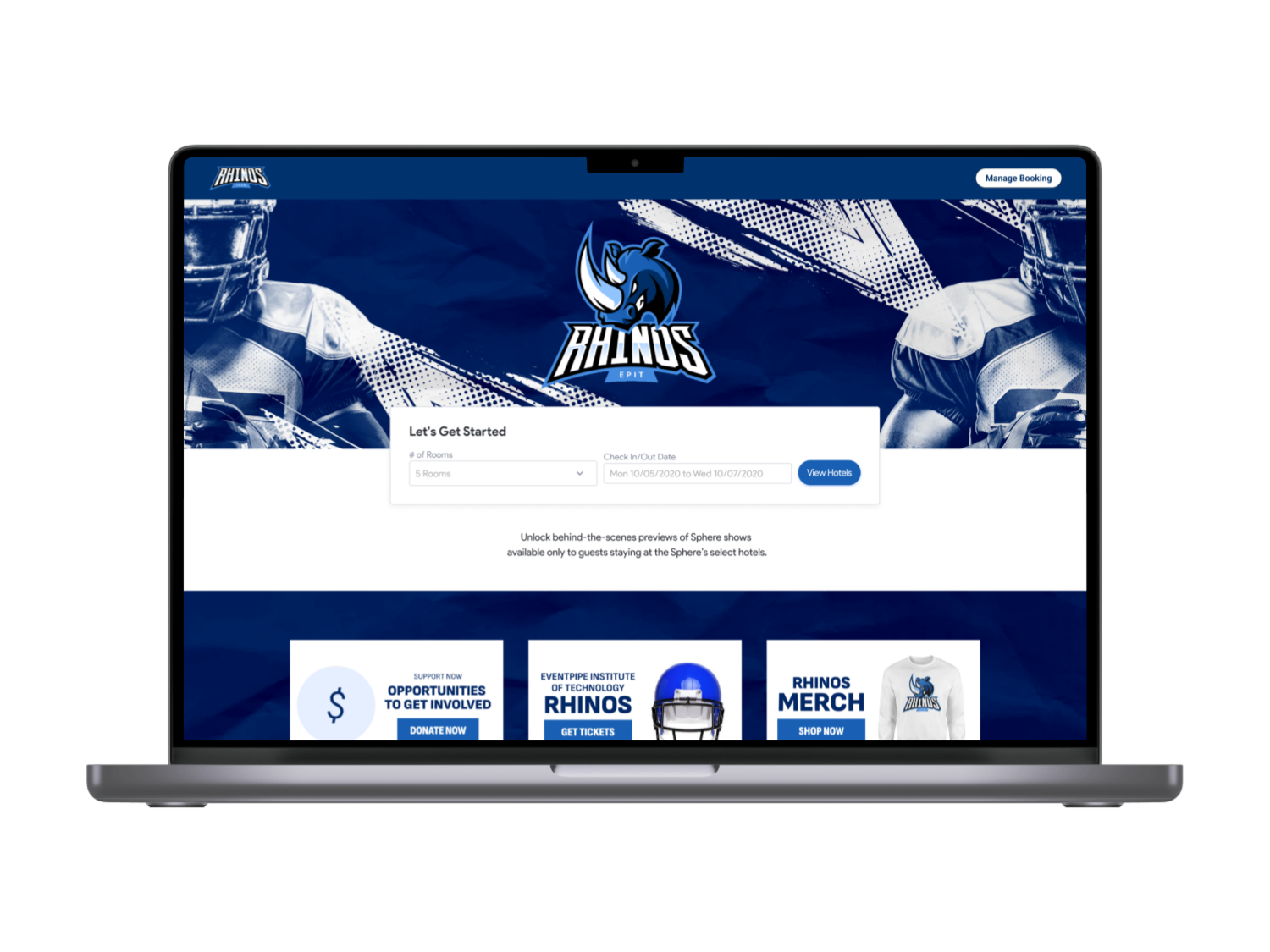
EventPipe's corporate hotel booking software covers the rest of that list in one account, from the RFP through the rooming list and the reconciliation that closes the event out.
LRA (last room available) means hotels must honor the negotiated rate whenever a standard room is open. NLRA lets the property withhold that rate when demand runs high, so those rates look cheaper and disappear on the nights travelers most need them. Ask which applies before comparing corporate rates.
For individual trips, yes, since booking travel in one place keeps expense reporting and duty of care intact, and travelers book flights, rental cars, and hotels together. Booking business travel for an event works differently, because blocks run on contracts rather than transactions. Companies book flights in one system and run blocks in another, then connect the reporting so flights and rooms land on one budget.
Start sourcing six to twelve months out for events over 50 rooms, three to six for smaller ones. Waiting costs bargaining power, and in tight markets it removes hotel options. Contract early, then adjust the budget as plans firm up.
Direct bill gives finance teams cleaner reporting and one invoice, suiting executive travel and smaller blocks. Attendee-pay keeps the cost off the company's books and suits large events. Many businesses run a hybrid, covering staff accommodations directly while attendees pay their own.

Jeff is the Marketing Manager at EventPipe. He brings a decade of Marketing experience with a background in social media, events, SEO, and content. Outside of work, Jeff is an independent Hip Hop artist who regularly releases and performs his music and loves to golf and play ice hockey in his spare time. Jeff holds a bachelor of arts in Economics from Union College, with a minor in Spanish.
