
Conference planning is the full process of putting on a great conference: setting objectives, building a program, contracting a venue and hotel rooms, marketing the event, and measuring results afterward. For association conferences specifically, one part carries more financial weight than the rest: the hotel contract. Sign it too late or size it wrong, and attrition penalties can wipe out the margin a successful conference was supposed to generate.
This guide covers every stage of planning an association conference, with housing decisions built in where they belong rather than tacked on at the end.
Conference planning for an association is the work of turning an annual or regional meeting into a repeatable revenue and membership engine. The difference from a corporate conference event is that attendance is voluntary. Members choose to come, pay their own registration and travel, and weigh the trip against competing industry events on the calendar.
That changes the math. A corporate planner knows the headcount. An association (or AMC) planner forecasts it, then commits to hotel rooms on that forecast, sometimes years out. Every decision after that, from the conference schedule to the marketing plan, exists to close the gap between forecast and reality.
Clear conference objectives give every later decision a test to pass. Write them before sourcing begins, because they set the size of the room block you commit to. Strong conference goals are specific and measurable:
Turn each one into key performance indicators you can track. "Grow attendance" is not a goal. "Grow paid attendance 8% and in-block room nights 12% over last year" gives your planning committee a solid foundation to work from, a sharper message to attract attendees with, and a number it can defend at budget time.
“Attendance goals are what you hope happens, and hotels will hold you to that hope in the contract. When an association or AMC sizes its block off a growth target, the block usually comes up short, attrition kicks in, and the wash lands on the association or AMC after the event. The better anchor is last year's actual pickup at cutoff, meaning the rooms really booked inside the block, not total registrations, since plenty of attendees book outside it. Start from that number, adjust for the new city and any real changes to the program, and negotiate room to grow at the RFP stage so you can add rooms later without paying for rooms nobody books."
Patricia Driscoll, Director of Customer Success & Support at EventPipe
The hotel contract is usually the first large commitment an association signs and the hardest to reverse. It sets the dates, caps the size of the event, and creates financial exposure through hotel room block attrition, the clause that holds your organization responsible if the group does not fill an agreed percentage of the contracted rooms.
Getting those terms right takes time, and the window keeps shrinking. A March 2026 Meetings Today survey of 70 corporate, association, and third-party planners found that 89% think signed contracts are harder to reach than they were two years ago. The terms eating the most time were attrition allowances and minimum pickup percentages. More than half of those planners now work with lead times of at least nine months, even for meetings needing fewer than 200 rooms on peak night.
Treat the contract as the anchor of your conference planning timeline. Program, marketing, and event logistics can flex. Attrition liability cannot. Everything that follows in group hotel booking inherits the numbers you set here, so negotiate the hotel contract on the cutoff date, attrition percentage, and complimentary room ratio as hard as you negotiate the rate.
A conference planning timeline for an association typically runs 12 to 24 months, and longer for conventions that need citywide hotel inventory. Build a detailed timeline backwards from the event date, then assign owners to the key tasks in each planning phase.
See how it works: Book a demo
A comprehensive budget covers venue and meeting space, food and beverage, AV and production, speaker fees, marketing, staffing, technology, and contingency. Most planners build those lines carefully, then leave the largest variable off the sheet: attrition exposure.
Model it directly. Here is what a single night of a 300-room block looks like at an 85% attrition threshold:
Those numbers are illustrative, but the structure is not. The invoice lands after the event, when your revenue is already booked. Put the worst case on the budget as its own line so leadership sees it before anyone signs.
Housing also belongs on the revenue side, which is where associations most often monetize event housing. Hotels pay commissions and rebates to the organization that brings the business, so the block your members already fill can offset registration costs or fund experience upgrades. Associations that do not track pickup accurately tend to under-collect.
Hold roughly 10% back for unexpected challenges, and keep backup plans for the ones that cost real money. Good resource management usually shows up here. Event planners who allocate resources effectively across the whole program, instead of protecting one line and starving the rest, absorb most surprises without touching contingency at all.
The conference agenda is your strongest lever on room nights. Members book flights and hotels around the sessions they refuse to miss, so where you put the best content decides how many arrival and departure nights you sell.
Put something worth staying for on the last afternoon. A weak closing session sends people home a night early and hands rooms back to the hotel. Leave real gaps in the conference schedule too, because networking opportunities are a top reason members travel in person, and a packed grid pushes those conversations offsite.
Book keynote speakers early, since the strongest names shape the marketing plan and justify their speaker fees in ticket sales. Build session topics from member surveys, not staff assumptions, and mix formats so breakout sessions and interactive sessions carry the load between keynotes.
Attendee engagement comes down to session design more than technology. Roundtables and structured meetups keep attendees engaged in ways a four-person panel rarely does. For a hybrid conference, give one moderator sole responsibility for virtual attendees. Hybrid events fail when remote participants become an afterthought.
Choosing the right venue means matching your space needs, your room block, and your target audience's travel patterns to one destination. Hotels will judge that fit using your rooms to space ratio, so know yours before you ask for meeting space. Associations usually run a headquarters hotel plus overflow properties, so venue logistics and housing decisions belong in the same conversation.
Send hotel RFPs to several properties at once. One hotel is not a competition, and competing bids move the key elements of the deal: cutoff dates, complimentary rooms, breakout rooms, meeting space rental, and attrition percentage.
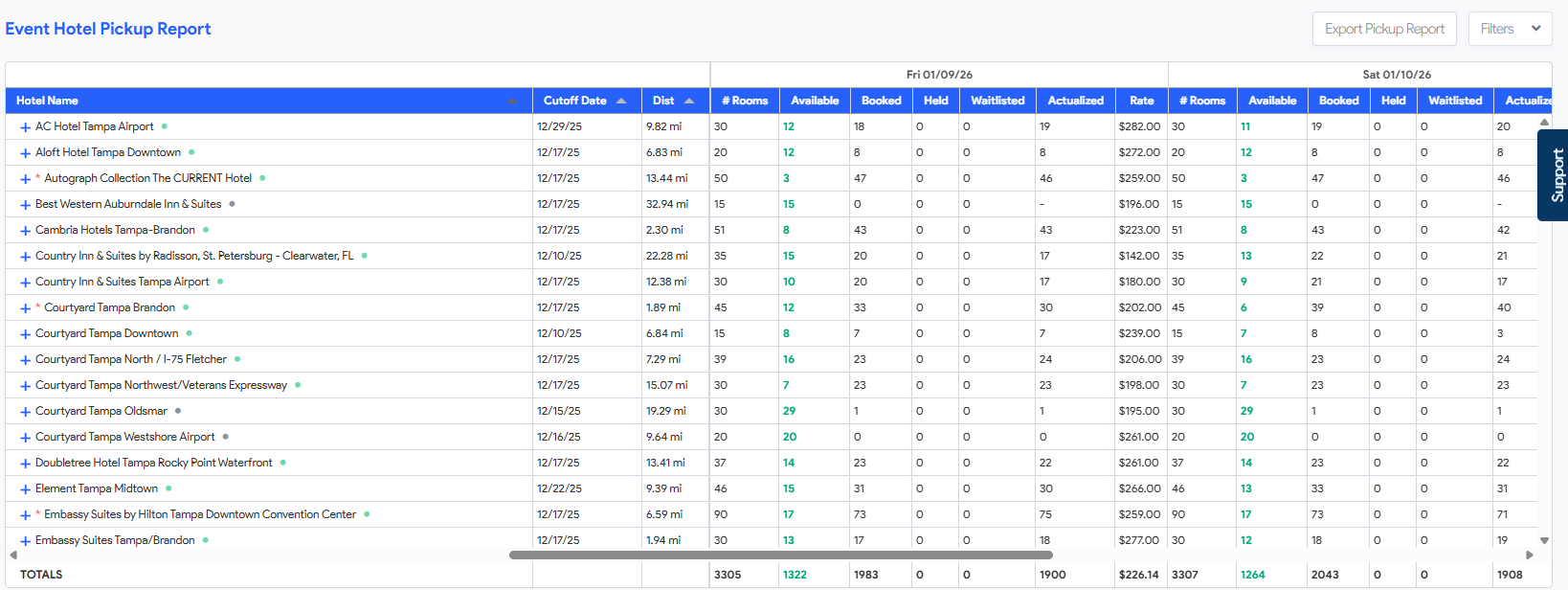
Keep attendees inside the block by making the official booking path the easiest one available, then tracking pickup weekly so you can act before the cutoff date. Leakage is the norm.
A study conducted by Tourism Economics for ASAE, CEIR, and other industry bodies found that an average of 34.1% of group room nights were booked outside contracted blocks, based on ZIP code analysis of more than 170 events. That research dates to 2015, and planners still cite it because nothing since has shown the gap closing.
What moves in-block pickup:
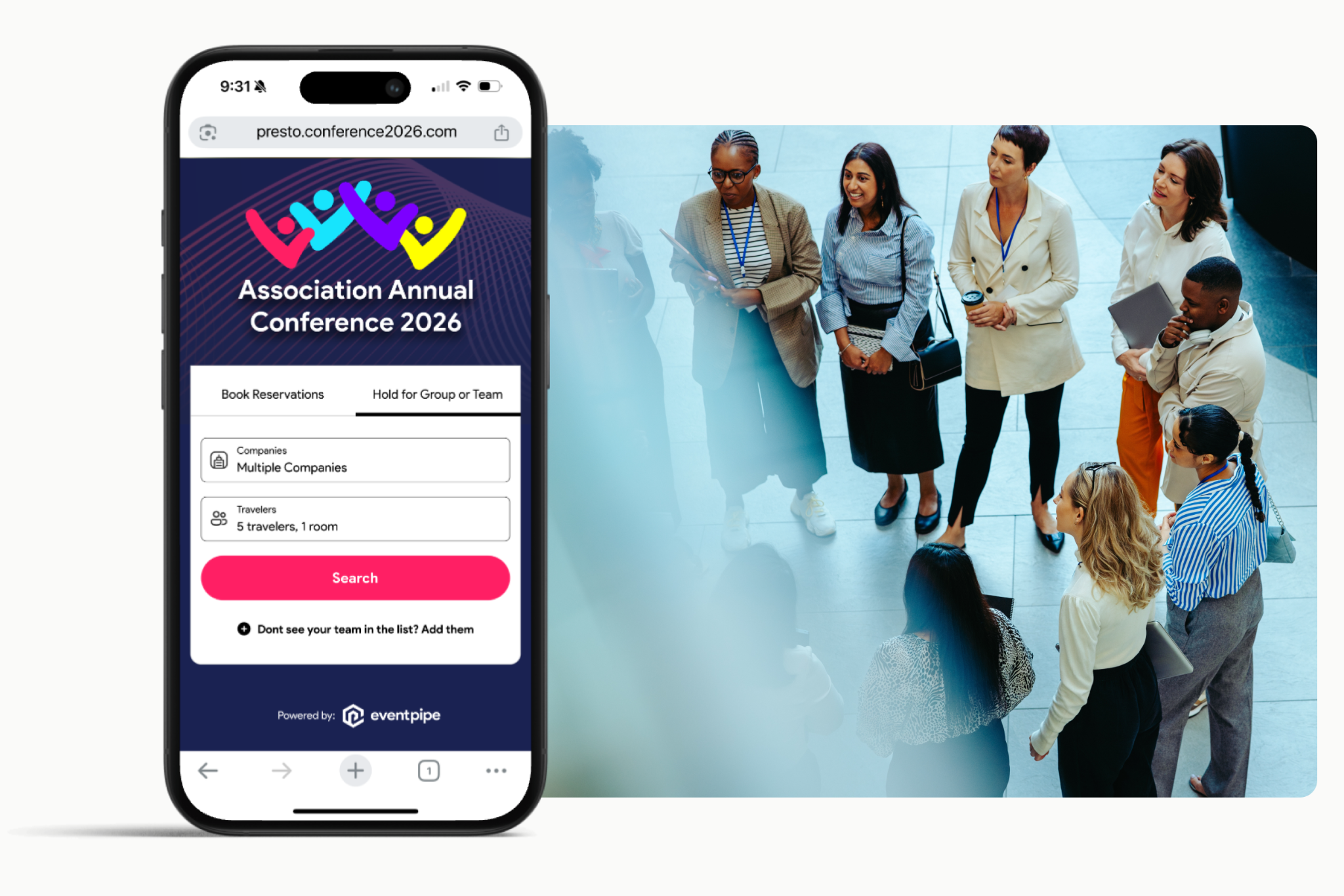
"The biggest lift comes from making housing a step inside registration instead of a link in the confirmation email. When attendees book their room in the same flow where they register, they do it right then, inside the block. Send them a link later and a lot of them go to a booking site or a points program and never come back, and that pickup is gone for good. Teams skip it because registration and housing often sit with different vendors or staff, and they worry an extra step will make people drop off. In practice attendees expect to handle both at once, and that one change can protect an association from an attrition bill."
Patricia Driscoll, Director of Customer Success and Support at EventPipe
When the block sells out or the cutoff passes, demand does not stop. Registrations often spike in the final weeks, and those attendees book somewhere regardless. Without an overflow (or post-block) plan, they book on third-party sites and the organization loses the commission and the booking data with it.
That window is called post-block, and it’s manageable. EventPipe's Presto connects to live hotel inventory without a new contract, so an association can keep a branded booking link live after the block closes and keep those reservations in its own reporting. The guide to capturing post-block hotel revenue covers how to set that up before you need it.
Most associations run two systems, because event management software that handles registration well rarely handles hotel contracting with the same depth.
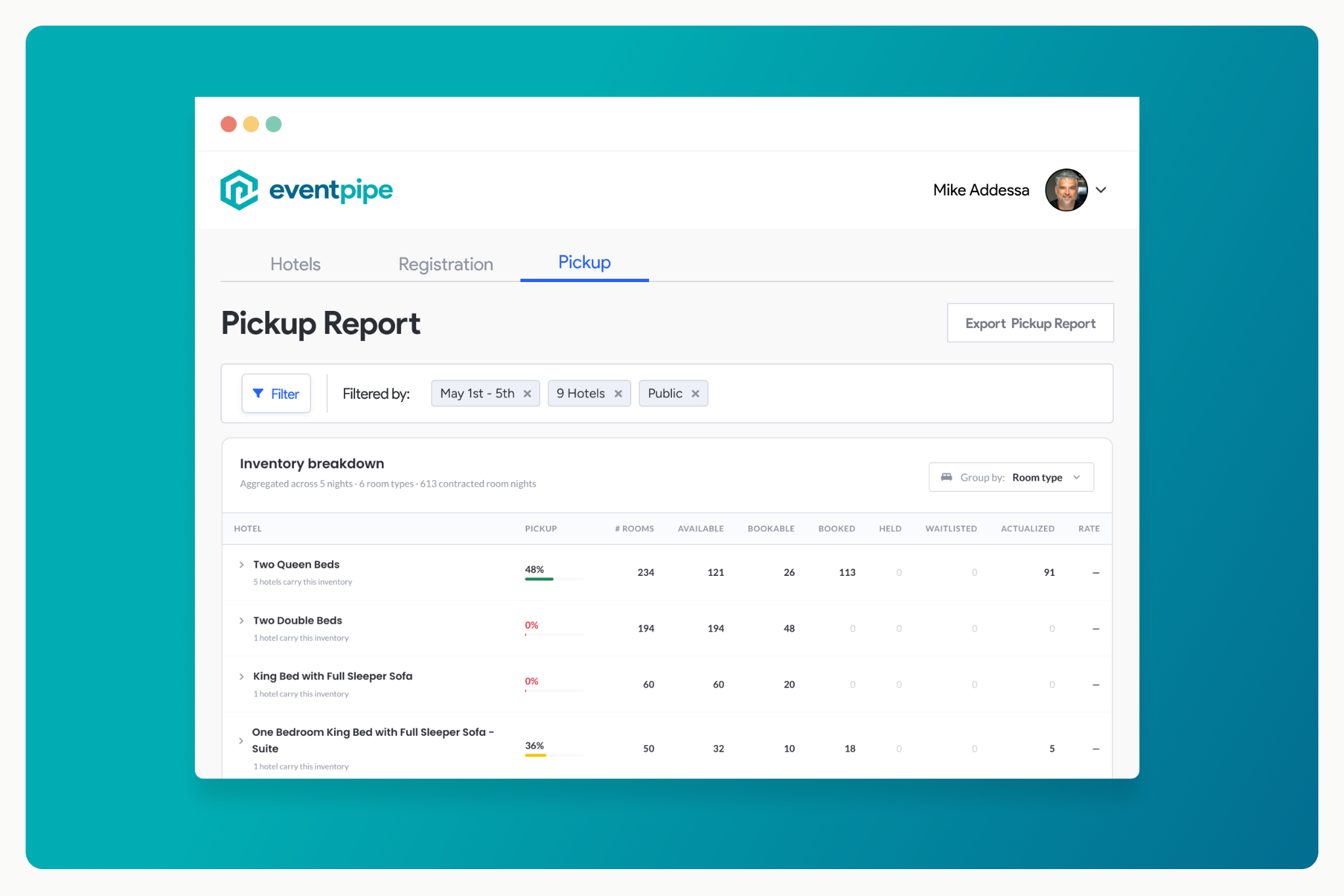
The test is whether you can answer one question on any given Tuesday: how many rooms are picked up at each property against contract, right now. If that takes three emails to three hotels, the housing side of your stack is missing. Conference housing management for associations exists to close that gap.
Talk to someone who knows conference lodging: Request a demo
Two weeks out, with your team juggling multiple tasks at once, send each hotel the final rooming list so staff can load reservations before arrivals begin. Confirm suite assignments, comp rooms, and VIP or speaker reservations in the same pass.
Then build contingency plans for the failures that actually happen, and give each one a named owner:
Brief venue staff and your onsite team together, in the same room, so the handoffs are clear before doors open.
Members judge the whole event experience by how the first ten minutes go, so staff check in heavily through the first two hours of peak arrival. Keep badge pickup separate from the line for registration problems, and have technical support standing by for the app and any hybrid streams.
Measure conference ROI the same way you would measure event ROI anywhere else, by comparing outcomes against the KPIs you set at the start, then reconciling the housing contract to confirm what the event cost and earned. Reconciliation is where associations most often leave money behind: compare booked reservations to actual stays, confirm net room nights, and invoice the commissions and rebates the contract entitles you to.
Gather feedback with a post event survey while the experience is fresh. Attendee feedback on session topics and attendee satisfaction tells you what to repeat. Registration data, pickup by property, and sponsorship performance tell you what to renegotiate for the next conference.
Real-time pickup data changes that conversation. Paula Gravatt, owner of JPG Travel Solutions, told EventPipe that seeing room night pickup live let her answer client questions about the block quickly and estimate profit for both sides. That is the same evidence you carry into next year's RFP.
Package the event outcomes into a post event report with key takeaways for the board, sponsors, and hotel partners. Hotels reward groups that document history, which strengthens your hand on future events.
"The costliest mistake is trusting the hotel's pickup report. Commissions and rebates are paid on rooms the hotel counts, and that count often misses attendees who booked through points, a booking site, or under a coworker's name. Before the final invoice, ask for the hotel's in-house guest list and match it against your registrations. Every attendee you find outside the block is a room you can get credited, which lowers attrition and recovers commission you already earned.”
Patricia Driscoll, Director of Customer Success & Support
Here is the short version of everything above, as a checklist.
A few conference planning tips separate smooth, successful events from expensive ones. Give every hotel contract one named owner so nothing sits unread in a shared inbox. Review pickup and registration pace in the same meeting instead of two separate reports. Then write down what went wrong within 48 hours of load-out, while your dedicated team still remembers the details. Those notes make planning a conference next year considerably faster.
See how EventPipe helps associations manage room blocks, pickup, and reconciliation in one place: Book a demo.
A headquarters hotel is the primary property for an event, usually hosting the main room block, staff offices, and some meeting space. Overflow hotels handle demand beyond that block. The headquarters contract carries the largest commitment and the most negotiated terms.
That depends on volume and staffing. Associations (or AMCs) running one annual meeting with a small block often manage housing in-house with the right software, while organizations juggling multiple events or more complex events hire a housing company to handle contracting and reconciliation for a share of commissions. Either way, keep visibility into pickup and reservation data.
A force majeure clause defines when either party can cancel without penalty, such as natural disasters or government restrictions. Language varies widely, and narrow wording can leave an association liable in situations it assumed were covered. Have counsel review it before signing. Plan the rest of the conference around the hotel contract instead of after it, and most of the expensive surprises stop happening.

Jeff is the Marketing Manager at EventPipe. He brings a decade of Marketing experience with a background in social media, events, SEO, and content. Outside of work, Jeff is an independent Hip Hop artist who regularly releases and performs his music and loves to golf and play ice hockey in his spare time. Jeff holds a bachelor of arts in Economics from Union College, with a minor in Spanish.
