
A winning hotel RFP response answers every line of the request in the buyer's format, prices the full deal (rate, commission, rebate, and comps), and arrives before the decision date with terms that drop straight into a contract. That’show hotels win group business in a competitive hospitality industry.
Most advice on the RFP process comes from the hotel side of the desk. This guide comes from the other side: how housing companies and event planners read, compare, and shortlist the proposals that hotels send back.
A hotel RFP response is the proposal a hotel sends back after it receives a request for proposal for a group stay. It lists the rooms, rates, dates and concessions the property can offer.
For sports and event group business, the request often comes from a housing company. A housing company sources and contracts hotels on behalf of an event organizer, such as a tournament director or an association.
The organizer runs the event. The housing company runs the hotels, and commissions and rebates are how it can generate revenue. So a housing company wants more than a fair rate. It wants a deal it can sell to hundreds of teams and still get paid on after the event.
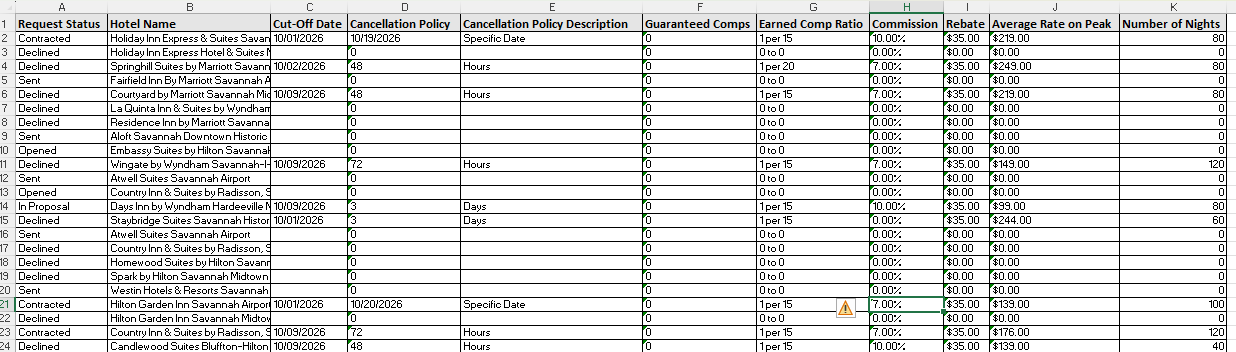
Housing companies rarely read a proposal on its own. Many send one hotel RFP to every property near a venue, then compare multiple proposals side by side. In EventPipe, a housing company downloads one comparison report of every bid and can sort it by brand.
So your response gets read as one row in a grid. Key decision makers scan for gaps first: a blank concession, a missing commission rate, a mismatched cutoff date. Bids with gaps sink before anyone reads your value proposition.
“The first thing I check is the real nightly rate, meaning the rate after resort fees, parking, and taxes, because a bid that looks cheap on the cover sheet often isn’t once those are added. The second is the attrition clause, specifically whether it’s per night or cumulative and how much cushion the hotel gives us. A bid drops to the bottom right away if it has a tight per night attrition clause with no room for early bracket eliminations. With a schedule that can change overnight, that kind of clause is a penalty waiting to happen, no matter how good the rate looks.”
Patricia Driscoll, Director of Customer Success and Support
Running RFPs across dozens of hotels? See every bid in one view. Book a demo
A strong RFP response strategy starts with how bids get scored. Each practice below targets a point in the RFP response process where good proposals tend to lose ground.
Not every incoming RFP deserves the same effort. Check the dates against your revenue management forecast, the block size, and how many properties are in the running. A request blasted to every hotel in a 20-mile radius is often one of the low-probability opportunities. Sales teams that prioritize incoming RFPs this way cut wasted effort and respond quickly where the odds are real.
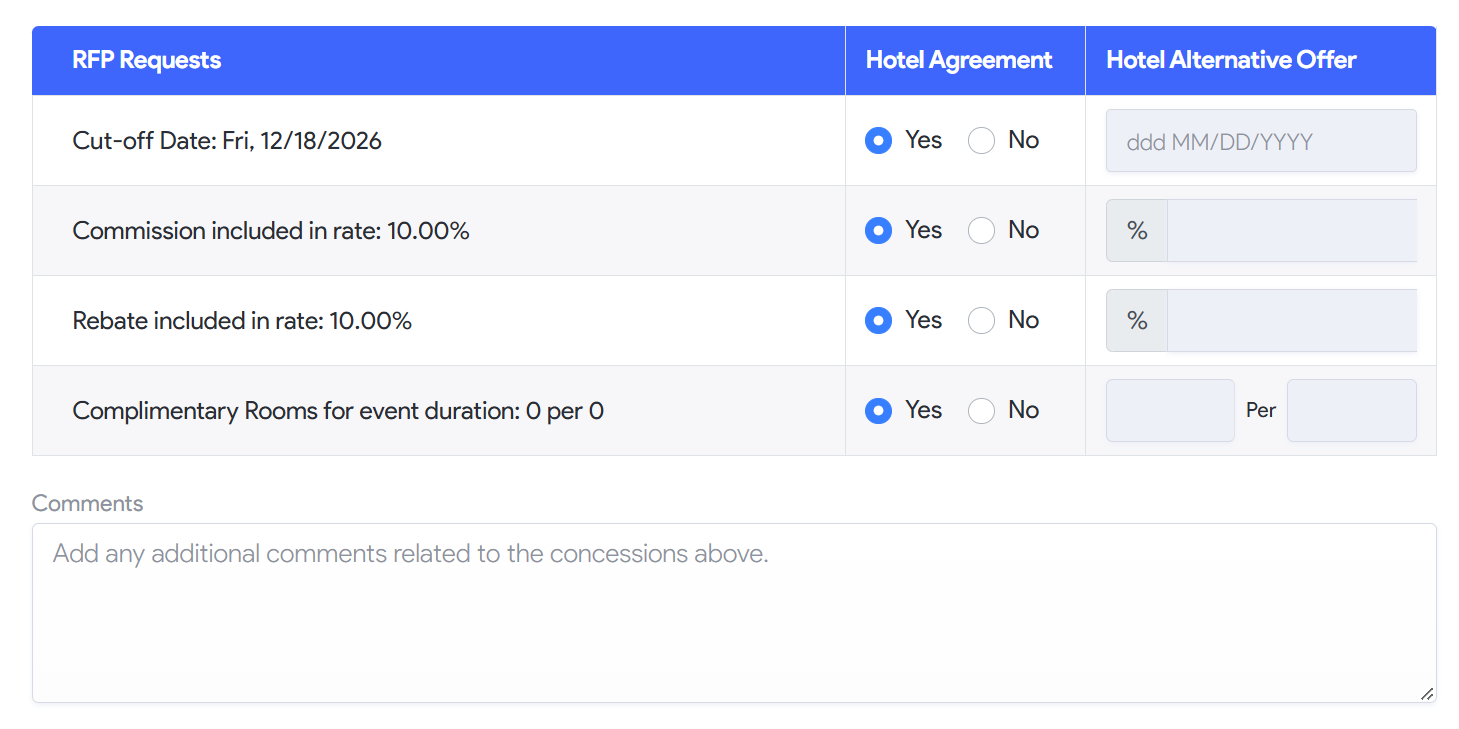
Many group RFPs list concessions as yes-or-no items: comp rooms, free breakfast, parking, a meeting room for coaches. In EventPipe, hotels answer each concession in a grid when they submit a bid. A blank reads as a hidden no. A clear "no on parking, yes on breakfast" reads as a hotel that is easy to work with. Response quality on these critical details often decides the shortlist before rate does.
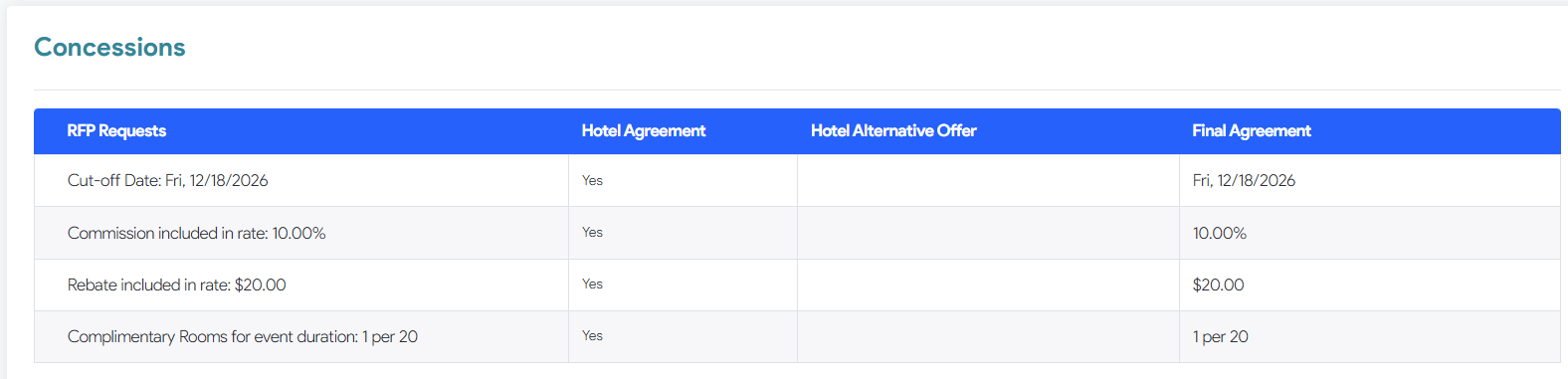
A housing company compares net value across every financial term. Group requests often state a comp ratio (one comp room per 20 or 30 booked), a commission percentage, and a flat rebate per room night paid after the event. A lower rate with no rebate can lose to a higher rate that pays back on every night. An empty commission line forces a follow-up email while complete bids move ahead.
Tailored responses and speed work together once the basics are pre-approved. Keep a content library of reusable content: a short company overview, meeting space specs, distance to common venues, and past responses that won.
Many hotel RFP solutions offer proposal generation and automation tools that pull from that library and your catering system. Align sales and revenue teams on floor rates before RFP season.
Boilerplate content covers the technical details, so your team spends its time on personalized proposals for dates, rates, and concessions. Route unusual questions to a subject matter expert and you avoid last-minute scrambling before a due date.
Group RFPs carry at least three dates: the proposal due date, the decision date, and the hotel cutoff date. EventPipe sets the cutoff two weeks before arrival by default, when unbooked rooms return to your inventory.
Response time matters. Planners often wait on hotels that answer late or never, a frustration Northstar Meetings Group has covered in its guidance on crafting hotel RFPs. Hit the due date and match the requested cutoff, or explain why you can't.
Sports group business behaves differently from a corporate meeting. The industry data shows the scale: the Sports ETA 2026 State of the Industry Report found that 339 million sports travelers generated 124.3 million room nights. Much of that demand hits the same peak weekends in the same host cities.
Three things set tournament RFPs apart:
That last point is why release terms win sports bids. Fair attrition, a sensible cutoff and room to adjust the block show a hotel understands how tournaments fill. Housing companies use hotel booking software for sports housing companies to track pickup across every property, so they notice which hotels make that easy.
“The clearest sign is whether the response talks about team blocks and roster changes without being asked. A hotel that understands tournament business will offer flexible name-list deadlines, a rooming list that can change up to a few days before arrival, and a way to move rooms between teams inside the block. A hotel that treats it like a corporate group sends back a standard contract with a single cutoff and a fixed attrition clause, which tells me nobody on their side has dealt with a team dropping out or adding players the week before. I’d rather work with the first hotel even at a slightly higher rate, because the other one is the property that turns every roster change into a billing dispute at reconciliation.”
Patricia Driscoll, Director of Customer Success and Support at EventPipe

In platforms that connect the RFP to contracting, the terms you submit carry forward into the signed agreement without retyping, which helps both sides reduce errors. It also means a vague answer in the bid becomes a vague clause in the contract. State whether attrition is counted per night or across the full stay, because that decides what the housing company owes if the block comes up short.
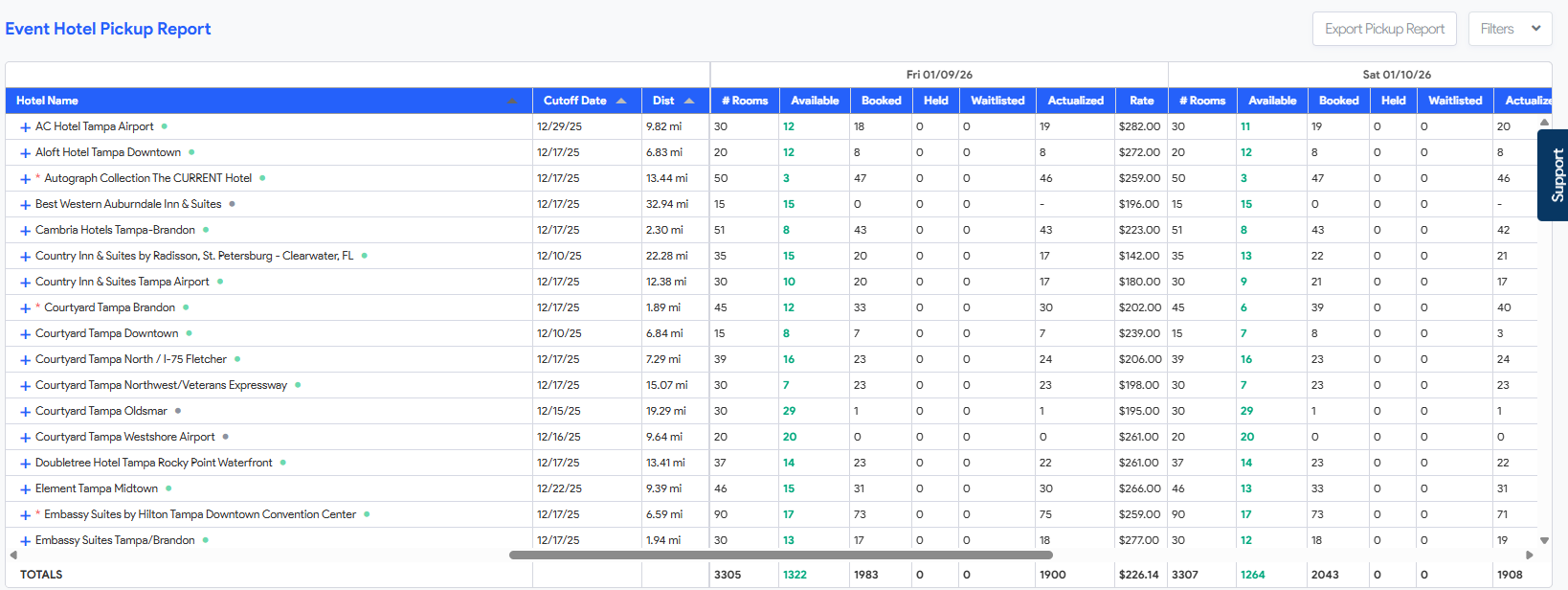
After signing, the relationship runs on data. Hotel partners in EventPipe pull their own pickup data from a portal. Housing companies review supplier performance after each event. Hotels that track progress against key milestones and flag problems early build relationships that bring repeat business, and one successful event can generate referral business across a calendar.
The Stack Sports (TeamINN) case study shows how this plays out. Hotel partners asked TeamINN for reporting and contract customization the team couldn't deliver fast enough. Once those partners got flexible settings and real-time reporting, trust grew and inventory commitments followed, leading to expanded room blocks.
“The hotels that get our events year after year are the ones that stay involved after the contract is signed. They send pickup reports on a set schedule without us asking, flag a slow block early enough for us to fix it, and give us one person to call when a roster changes. When a team drops out, they work with us on the rooms instead of pointing to the clause. That kind of follow through is what makes us send them the next tournament, because we know what reconciliation will look like before the event even starts.”
Patricia Driscoll, Director of Customer Success and Support at EventPipe
Better responses start with better requests. A Mix Meetings report on why hotel reps snub RFPs found two common triggers: requests sent to too many destinations, and lists of 15 to 20 concessions that hotel sales teams lack the authority to grant. Seasoned buyers ask for the top four or five and keep the rest as a wish list.
An effective template gives hotels the key details up front: event dates, venue, rooms per night, room types, priority concessions, commission and rebate terms, and the due and decision dates. The same RFP template structure works as a corporate event RFP template or a wedding RFP template. When a hotel receives a request in a consistent format, it can answer fast, and every bid lines up for a fair comparison. For a full walkthrough, see how housing companies build a hotel RFP.
Running the hotel RFP process by email caps how many events a team can take on. Hotel RFP management software puts sourcing, follow-up and comparison in one centralized platform. EventPipe's RFP tool includes sales contacts for 60,000 hotels, sends automated follow-ups when a hotel hasn't responded and lets hotels submit a bid in under five minutes without creating an account. With EventPipe, issuing an RFP for a 50-hotel event drops from about 12.5 hours of manual work to about five minutes.
The cost savings run both ways: housing companies save time and source more events, and hotels get cleaner requests from RFP software, so future RFPs take less effort.
See how EventPipe's hotel RFP management works for housing companies. Book a demo
Hotel partner bidding through EventPipe? See how to submit a proposal
Every hotel RFP response ends up in a comparison. Answer every line, price the full deal, hit the dates and write terms that read cleanly in a contract. That is how your proposal stands out in the grid where the decision happens, and how you win more business across the hotel industry's busiest event calendars.
Talk to someone who knows event housing. Book a demo
Yes, and decline quickly with a short reason. A clear "sold out those dates" with alternate dates keeps you on the buyer's list for future RFPs. Silence often costs you the next request too.
In a larger hotel group, the national sales office (NSO) often sources and routes group RFPs, while property sales teams write the final response. Buyers can include several NSO contacts on one request, so agree internally on who answers. Clear ownership prevents duplicate bids and keeps response time low.
A hotel RFP response should be as long as the request requires and no longer. Answer every field the buyer asked for, then add one short paragraph on why your property fits the event. Long brochures rarely get read during a side-by-side comparison.

Jeff is the Marketing Manager at EventPipe. He brings a decade of Marketing experience with a background in social media, events, SEO, and content. Outside of work, Jeff is an independent Hip Hop artist who regularly releases and performs his music and loves to golf and play ice hockey in his spare time. Jeff holds a bachelor of arts in Economics from Union College, with a minor in Spanish.
