
Hotel concessions are the extras and contract terms a hotel gives a group in exchange for a room block. Every group RFP should ask for four kinds: revenue concessions (commission, rebates, comp rooms), risk concessions (attrition, cancellation, and force majeure terms), attendee concessions (free Wi-Fi, meeting space, waived resort fees), and flexibility for late bookers.
A concession only pays off if it makes it into the signed hotel contract and gets checked at reconciliation.
Event planners can use this checklist for the RFP and again when the invoice goes out.
A hotel concession is anything the hotel gives up, discounts, or guarantees in return for your group's business. Sports ETA's glossary of sports event industry terms lists free parking, comp rooms, suite upgrades, food and beverage discounts, and storage space for sports gear as common examples.
Each type protects someone different. Revenue concessions pay the business holding the block, risk concessions protect the event budget, and attendee perks keep guests booking inside the block instead of shopping around.
Often, yes. Every concession costs the hotel money, and many hotels recover that cost through the group rate. Ask for a bigger rebate, extra comps, and free breakfast, and the rate that comes back may climb to cover them.
Rebates are where this shows up first. Sports ETA's white paper on sports event housing breaks down how the two main revenue terms differ:
When room rates climb too high, attendees go looking for the best deal down the street. Those stays fall outside the block, so they don't count toward pickup, rebates, or commission. A rebate you fought for at the table can come back months later as attrition fees.
For every concession you request, ask the hotel what it does to the rate. Then decide which ones are worth the cost to your attendees.
“The tell is that the rate moves up right as the concession shows up. If a hotel quotes us one number, then offers a bigger rebate or extra comps and the nightly rate is suddenly ten or fifteen dollars higher, we’ve usually just been charged for it. The first thing I do is calculate the net effective rate, which is the nightly rate after the rebate and the value of the comps are taken out, and compare it to the hotel’s original bid and to the other bids on the table. If the net number is no better than before, I ask the hotel to show me the concession at the original rate. A bigger rebate only helps the housing company if the total cost actually goes down.”
Patricia Driscoll, Director of Customer Success and Support
Ask for everything in the first RFP. New requests after a quote tend to raise the rate. Bring your event history, including past pickup and room nights, since a proven block gives you a better chance at better terms. Some planners also time signatures to month-end, when sales managers are working toward quotas.
Revenue concessions turn guest rooms into income, so write each one into the contract in plain numbers:
Hotels dispute vague revenue terms far more often than specific ones. A rebate written as "$10 per actualized room night, paid within 30 days of the final folio" leaves little to argue about and helps you save time at reconciliation.
Talk to someone who knows event housing.
Risk concessions limit what you owe when attendance falls short or the event can't happen. Most teams give them less attention than rates and perks until a bill arrives.
Ask for the lowest pickup threshold you can get, and confirm how it's measured. Northstar Meetings Group reports that many hotels have shifted from cumulative to nightly attrition, and that some groups now need 90% pickup where 80% used to be common. The same report recommends the right to audit the hotel's guest list.
Have a qualified attorney review high-value contracts, since these clauses decide who pays when an event goes sideways.
Attendee concessions lower the total cost of the stay, which keeps guests inside the room block and protects your pickup.
Ask for free or reduced meeting space when the group fills enough guest rooms. Share your space needs in the RFP so the hotel prices the space along with the rooms.
If the event uses hotel catering, negotiate the F&B minimum and a discount on food. When the program includes presentations, negotiate AV discounts or the right to bring an outside audiovisual vendor without a fee. Many hotels will bend on these items to win a group that fills the house on slower nights.
Ask for suite upgrades at the group rate for VIPs, speakers, or staff, plus welcome amenities in their rooms. If the event needs a site visit, request a complimentary room for the planning trip. Where the brand runs a loyalty program, ask for bonus points on the group's stays.
Hidden fees can wipe out the value of a good group rate. Ask the hotel to waive or reduce each of these:
Ask the hotel to honor the group rate after the cutoff date, subject to availability, and to extend it to shoulder nights. For teams booking multiple rooms, ask for room-type swaps without penalty. When a hotel won't extend the block, EventPipe's Presto connects late attendees to live hotel inventory, so their post-block bookings still tie back to the event.

Most concessions go missing in the handoffs after the deal is struck. Each stage of the event housing lifecycle is one of those handoffs:
When those stages live in separate emails and spreadsheets, each handoff is another place to lose money.
A disciplined hotel RFP process sets the foundation by asking for every concession in writing up front. From there, terms need to carry forward without anyone retyping them.
Stack Sports' TeamINN team ran into this before switching to EventPipe. Their contracts moved through long email chains and redlined PDFs, which slowed turnaround and made it harder to see what had been agreed. After the switch, stronger hotel relationships helped them expand room blocks, and they grew nearly 80% in under 18 months.
JPG Travel owner Paula Gravatt described a similar change: "Before EventPipe, contracting was a nightmare. It's now simple and professional."
Hotel RFP management software keeps one record from first request to signed contract. With EventPipe, housing companies send one RFP to many hotels, compare proposals side by side, and move agreed terms into the contract. Issuing an RFP for a 50-hotel event can drop from 12.5 hours to about 5 minutes.
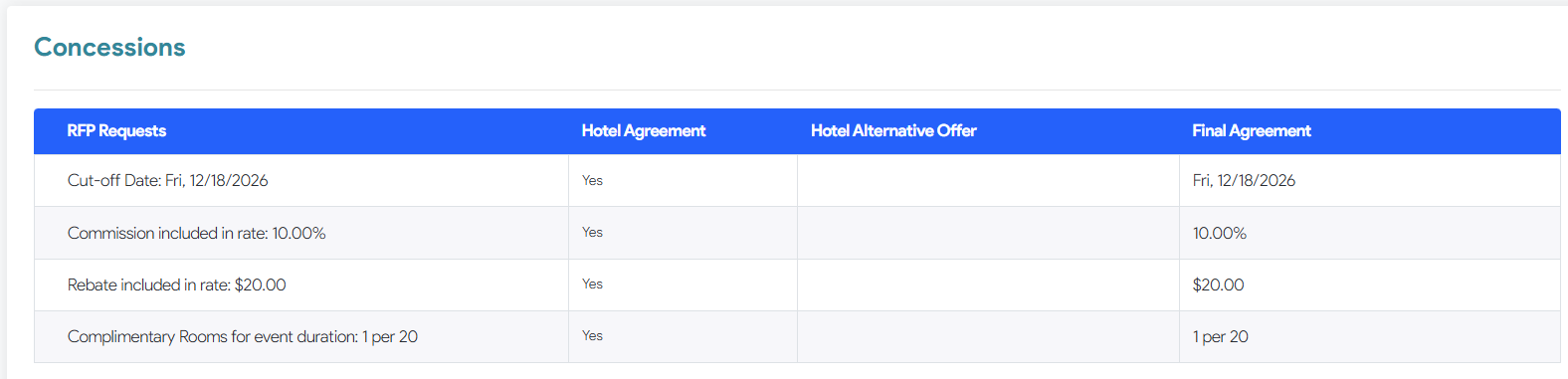
“The concession that most often disappears is the attrition cushion. A hotel agrees to 80 percent in the RFP response, then the contract draft comes back with the standard 90 percent or with wording that only counts rooms booked at the group rate. We catch it by lining up the draft against the RFP response and every email where a concession was promised, then checking each one against the actual contract language. If it’s not in the contract, it doesn’t exist at reconciliation, so we don’t sign until every agreed concession shows up in writing.”
Patricia Driscoll, Director of Customer Success and Support
See how it works: Book a demo.
Check every concession at reconciliation, line by line against the contract, before the invoice goes out. Use this list:
This check depends on pickup data that is accurate and kept in one place. Room block management software like EventPipe compares actual stays against contracted room nights, then builds invoices from the reconciled data.
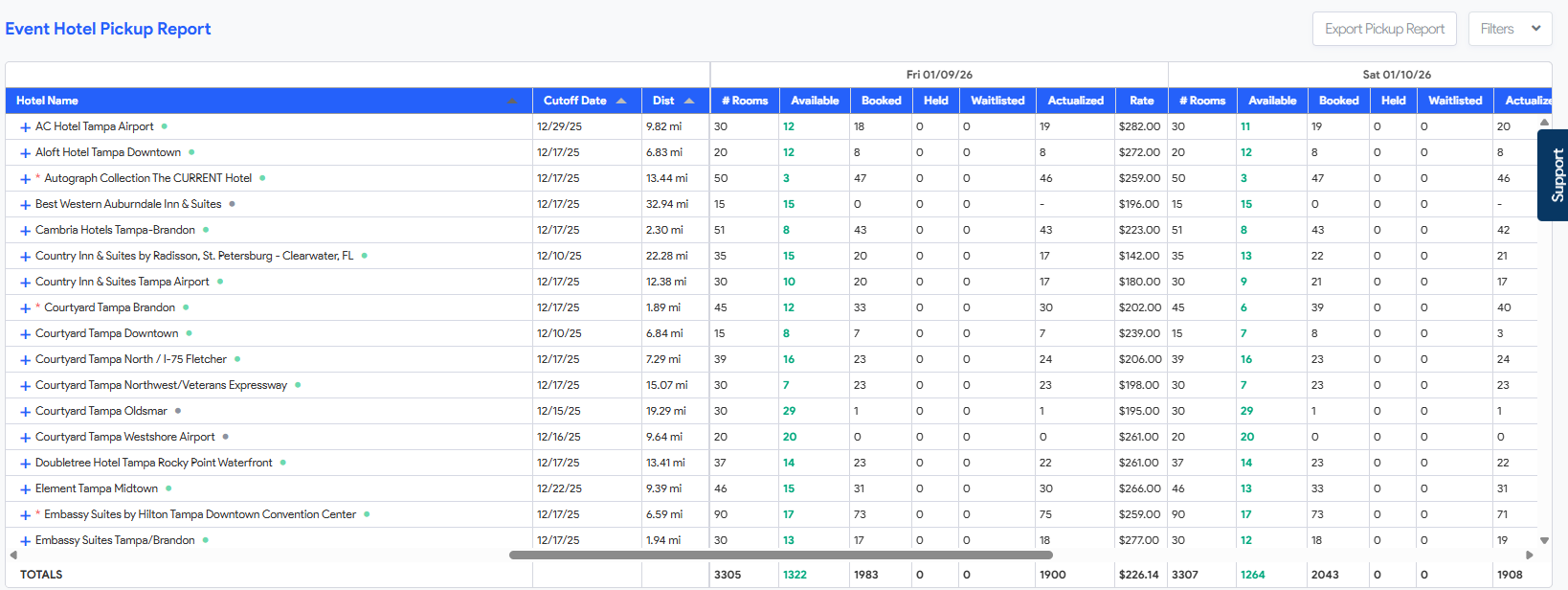
“The concession hotels most often underpay is the complimentary room earn, usually something like one comp for every 40 room nights picked up. The hotel runs its final numbers off its own system, and any rooms booked late or moved between teams can drop out of the count, so the comps come back short. To recover it, I need the signed contract showing the comp ratio and the final pickup report with every room night broken out by date. With those two documents side by side, it becomes a math check instead of a debate, and most hotels correct it quickly once they see their own numbers.”
Patricia Driscoll, Director of Customer Success and Support
When you provide hotels with clean pickup history, you have a better chance at better terms for the next event, and the hotel partner has a reason to want your business back.
Request a demo to see how EventPipe tracks every concession from RFP to invoice.
Yes, but you have much less pull once the hotel has your signature. Changes need a written amendment that both parties sign. Hotels are more open to additional concessions when you bring new business, such as added room nights or a future booking.
Yes, though the list is usually shorter. Smaller groups can often still get free Wi-Fi, parking discounts, or a flexible cutoff date, and booking outside peak seasons gives them more room to ask.
It depends on the agreement between them. Attendee perks go to guests, while commissions, rebates, and comps are split however the housing company and event organizer agree. Put that split in writing before either side signs with the hotel.

Jeff is the Marketing Manager at EventPipe. He brings a decade of Marketing experience with a background in social media, events, SEO, and content. Outside of work, Jeff is an independent Hip Hop artist who regularly releases and performs his music and loves to golf and play ice hockey in his spare time. Jeff holds a bachelor of arts in Economics from Union College, with a minor in Spanish.
