
A hotel RFP template for group and event blocks is a reusable request for proposal document that asks every hotel the same questions. It covers room pattern by night, group rate, commission and rebate, additional concessions, cutoff and attrition terms, and how bookings will flow.
With those fields in place, every proposal comes back in a format you can compare line by line. If anything is missing, the gap tends to surface months later at reconciliation, and the hotel's version of the deal is the one that gets paid.
Download the Free Hotel RFP Template
A hotel RFP template is a standard document that turns your event's room and term requirements into a request hotels can answer the same way every time. The RFP opens the conversation, and the contract makes the terms binding. Every employee starts from the same template, so each new event means updating dates and numbers, not writing from scratch.
For a step-by-step look at sourcing, comparing and negotiating, see the full hotel RFP process.
Most free templates were built for meeting planners sourcing a single venue, and they accomplish that job well. They focus on meeting space, catering and AV, and treat sleeping rooms as one line.
For housing companies and event organizers hosting group blocks, that order is backwards. The value of the deal sits in commission, per-night rebate, comp ratio, cutoff and attrition. Each of those terms starts in the RFP and carries through to the contract, the booking site and the final invoice.
A term missing from the request tends to stay missing from the proposal and the contract, which means you cannot invoice for it later. So build the template backwards from the pickup report. That approach puts the fields that matter at the top.
“The field that causes the most pain is the attrition clause definition, specifically whether it is calculated per night or cumulatively. When the RFP just says “attrition applies” without spelling that out, nobody notices until reconciliation, when the hotel runs the wash on a per night basis and every soft night gets penalized on its own, even if the block as a whole picked up fine. The housing company usually ends up eating that shortfall or spending weeks disputing it, and that is a conversation you can avoid by pinning down the clause at the RFP stage.”
Patricia Driscoll, Customer Success and Support at EventPipe
Use these eight sections as your hotel RFP form template. Each one gives hotel sales teams enough to quote fast and records the terms you will collect on later.
Open with a short overview of the gathering:
History gives hotels context. Hoteliers price group business on proof, and a clean history is the strongest point you bring to negotiations.
List rooms per night, room types, peak night and shoulder nights instead of one total. Hotels sell inventory night by night, so a single number hides the pattern they need. Keep the estimate honest. Padding the block to secure inventory is how Blockflation, EventPipe's term for over-reserved blocks that fall short at pickup, gets started, and those extra rooms turn into attrition exposure at cutoff.
State your target group rate range, the commission percentage you expect and any flat per-night rebate. Hotels check for an IATA number before paying commission, which U.S. agencies get through IATAN accreditation.
Keep rebates in check, too. Sports ETA lists responsible rebates as a best practice, because excessive rebates push room rates up and drive attendees to book outside the block, where those rooms earn the block no credit.
List each concession as its own line and ask hotels to answer yes or no on each one:
A yes/no grid lets you compare five proposals in minutes, while concessions buried in a paragraph take an afternoon to sort out.
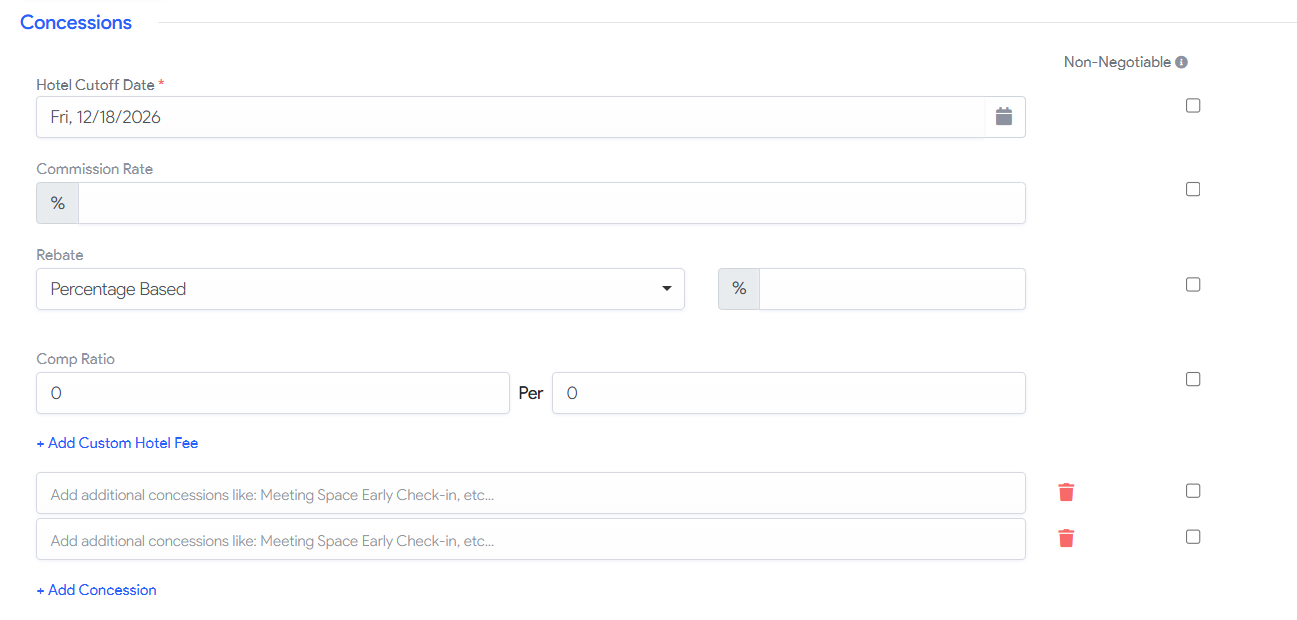
For conferences and other events with a program on property, add the hotel facilities and services you need: meeting space, catering and food minimums, and on-site technical support for AV. Meeting space pricing is often tied to room and food and beverage commitments, so keep the two in the same request. For a tournament played off property, keep this section limited.
Set the cutoff date. About two weeks before arrival is common, and it lines up with when the rooming list goes to the hotel. Then spell out attrition and cancellation, and ask for cumulative attrition. Northstar Meetings Group's legal expert explains why hotels prefer day-by-day attrition while planners want it counted across the whole stay.
Also ask for credit on rooms booked outside the block, so guests who book the hotel property on their own still count.
Explain how guests will book: through your booking site, a link per hotel or a rooming list. Note when the final rooming list goes to the hotel and how often you expect pickup reports during the booking window. Regular pickup data lets you spot a weak hotel early and move rooms before cutoff, instead of finding the gap after the event.
Close the RFP with:
A firm decision date sets expectations on both sides. It also keeps communication clean and reinforces professionalism with hotel sales teams who juggle many requests at once.
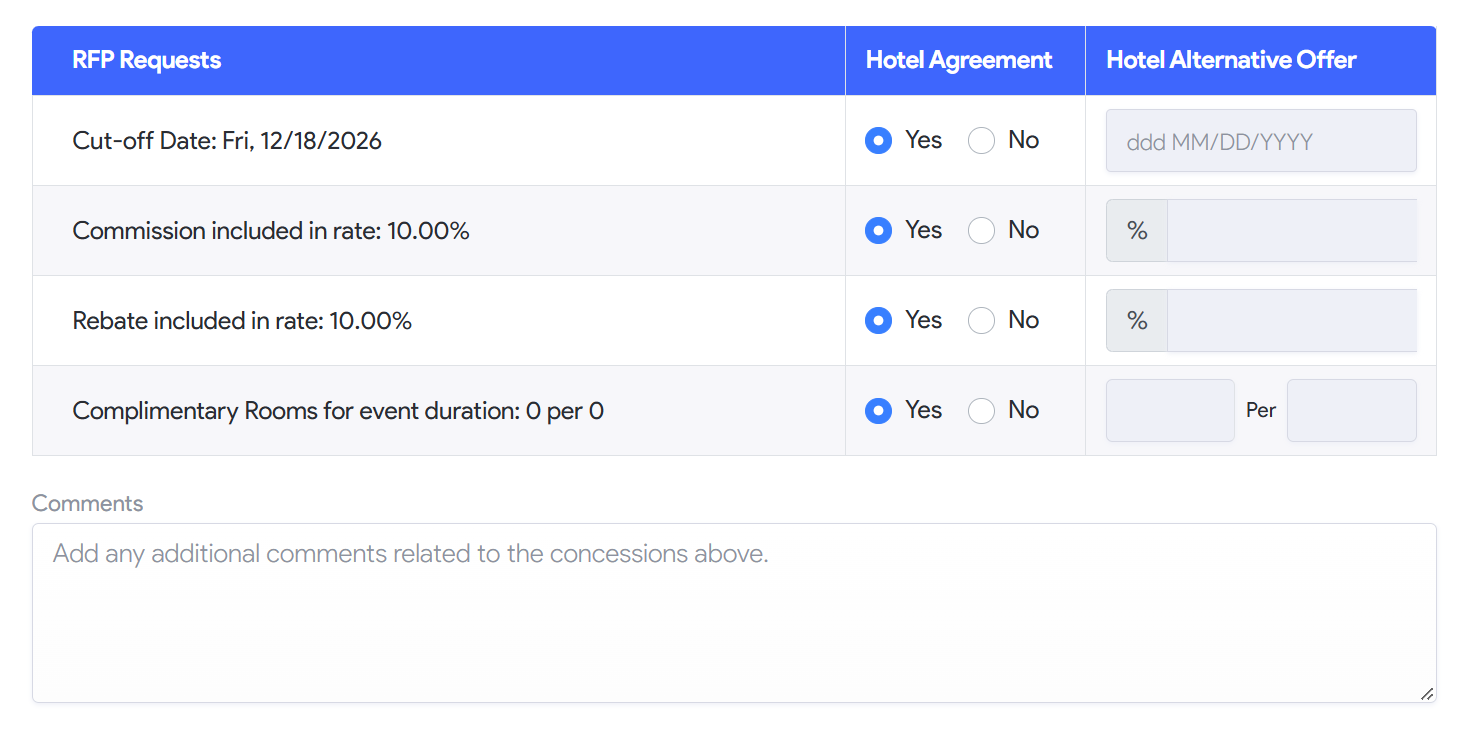

Each RFP field shows up again in the contract, on the booking site, and at reconciliation. This table maps where, so you can identify what a blank field costs.
Most of what you invoice after the event traces back to a line in the RFP.
A tournament RFP and a conference RFP share the same core fields but weigh them differently. Adjust the scope of the request to reflect the event. Tournaments put rooms, rebates, and compliance first. Conferences add meeting space, catering, and food and beverage spend to the room deal.
For associations whose demand often outruns the block, plan for post-block bookings up front. EventPipe's Presto connects to live hotel inventory, so a booking link can stay open after the block sells out without a new contract.
“I add language for early bracket eliminations, because conference attendees never lose on day two and head home. I also require rate parity and one shared cutoff date across every hotel, so teams can’t find a cheaper room next door and leave the block. With 20 hotels, you’re managing 20 separate attrition risks tied to a schedule nobody can fully predict, so the RFP has to account for that up front.”
Patricia Driscoll, Director of Customer Support and Success
These lines express each term in plain, specific wording. Adapt them to each event, and have counsel review final contract language.
Talk to Someone Who Knows Event Housing.
A hotel RFP template stops scaling when managing the responses takes more work than writing the request.
A detailed template will cover one event and three hotels. Once you are organizing 30 events and a few hundred hotel properties, follow-up becomes the challenge and drains staff resources. Versions drift between drafts in spreadsheet tools, and concessions agreed in an email thread often never make it into the contract.
Stack Sports' TeamINN team hit that wall in 2023, when contracts ran through long email chains and redlined PDFs that slowed turnaround. JPG Travel owner Paula Gravatt described the same pain: "Before EventPipe, contracting was a nightmare. It's now simple and professional."
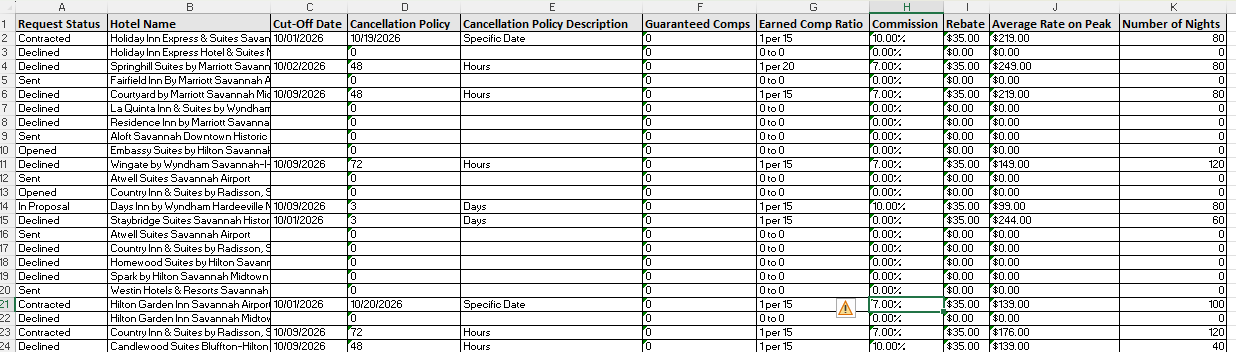
EventPipe's room block management software carries RFP terms straight into the contract. In practice, that means:
See How It Works: Book a Demo.
Explore the free template. It includes every field above in a fillable format:
Save a master copy, then update dates, expected attendance, and history for each new event and each of your clients.
Yes, but you can keep the full budget private. Share a target rate range and any hard limits on fees instead, which filters out hotels that cannot meet them on the first round.
The size and complexity of the request affect response time most. Multi-night, multi-property requests take longer because hotels route group bids through revenue management. A firm deadline paired with a decision date tells hotels how long the wait will be.
An RFI, or request for information, serves an earlier stage. It gathers general details about a hotel's facilities and availability before you commit to a formal request. An RFP asks for specific rates, concessions and terms you can compare and contract. Many teams skip the RFI for repeat destinations and go straight to the RFP.

Jeff is the Marketing Manager at EventPipe. He brings a decade of Marketing experience with a background in social media, events, SEO, and content. Outside of work, Jeff is an independent Hip Hop artist who regularly releases and performs his music and loves to golf and play ice hockey in his spare time. Jeff holds a bachelor of arts in Economics from Union College, with a minor in Spanish.
