
Every youth sports tournament lives or dies on logistics, and housing sits near the top of that list. Get it right and families arrive rested, hotels stay full, and the event earns real money on every room night. Get it wrong and you field angry calls from parents, watch teams book cheaper rooms, and leave commission revenue on the table.
The stakes are bigger than most realize. Sports travel generated 124.3 million hotel room nights in one year, per Sports ETA's 2026 State of the Industry report, much from youth and amateur events. Someone must manage all those rooms.
This guide covers how the process works, what Stay-to-Play means, and how to protect the revenue inside your room block.
Tournament housing is the process of sourcing, booking, and managing hotel accommodations for every team, family, and staff member who travels to a sports event and needs a stay. It runs from picking hotels near the venue to handing the final rooming list to the front desk before guests check in.
For youth sports, the scale gets big fast. One weekend tournament can bring dozens of teams and hundreds of families to a single host city. Each family needs a room for their stay, a rate they trust, and a property close to the fields where their kids play. Multiply that across a season and you manage thousands of reservations and accommodations.
Youth sports participation keeps climbing, with 55.4% of kids ages 6 to 17 playing organized sports in 2023, per Aspen Institute Project Play. More players means more travel each year, and more travel means more rooms.
Here is what most guides skip: your room block is inventory, and inventory makes money. When you promise a hotel a block of rooms, the property gives you a group rate for the stay and pays back a commission or rebate on the rooms your event fills. The more room nights you deliver, the better your rates and the more revenue flows back to the event.
Housing companies fit here. A housing company acts as a group travel agent between the event organizer and the hotels. It contracts the room blocks, runs the booking website and guest services, and collects the commissions. The event organizer runs the tournament; the housing company runs the rooms. Money lives in the gap between rooms promised and filled.
A guaranteed block of 300 room nights wins better rates, free breakfast, or comp rooms walk-in bookings never could. Families get a fair price and a comfortable stay at a property near the venue. The event earns on every night guests stay.
“The change starts early, before the event even happens. It's how you set up the deal with the hotel in the first place. An operator who treats the block like a checkbox just signs whatever terms the hotel offers and hopes for the best when the final bill comes. An operator who treats it like a revenue engine does things differently. They push for better terms that reward strong booking numbers, and they add small fees when people book their rooms, instead of leaving that money on the table. That is where the extra money really comes from. It is not one big payday at the end of the event. It is capturing value from every single room booked, instead of just trying to survive the event without losing money. Operators who skip this step are not just missing out once. They are leaving money behind at every event, year after year.” - Patricia Driscoll, Director of Customer Success and Support
Event housing follows a lifecycle, and each stage feeds the next.
See how it works: Book a demo.
Stay-to-Play is a tournament rule that requires every participating team to book its stay through the event's official housing program, which typically involves staying at certain hotels within a certain geographic radius. Typically, with Stay-to-Play tournaments, teams who aren’t compliant aren’t eligible to participate.
Events promise hotels a required minimum of room nights for group rates and commissions. If teams book around the block, the event fails to meet that guarantee, rates get worse, and revenue funding the tournament dries up. Stay-to-Play protects the room-night guarantee that makes the model work, and it keeps every team's stay in approved accommodations near the venue.
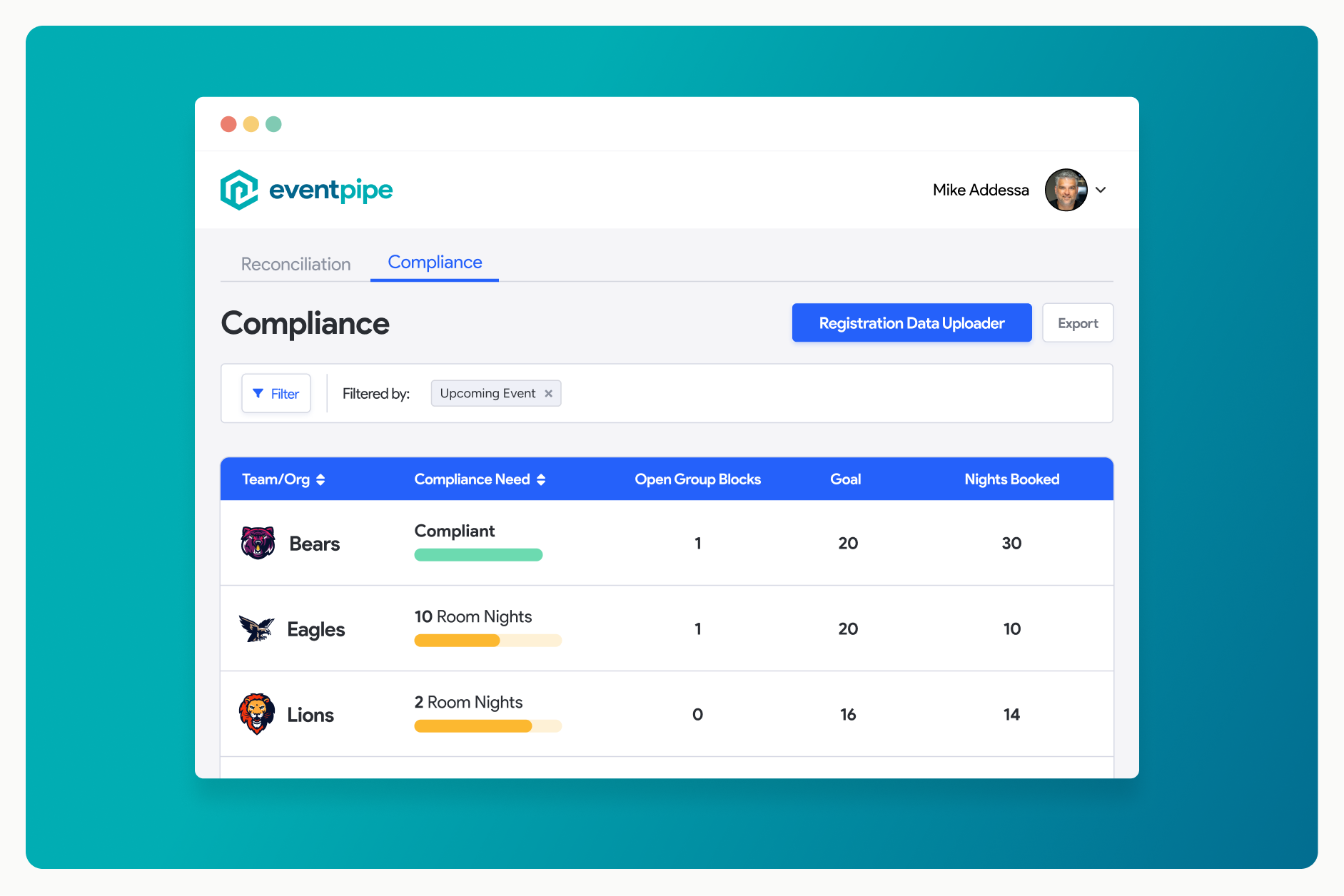
Tracking compliance by hand is painful. Stay-to-Play compliance tracking shows which teams have booked, which have not, and which fall outside the required radius, so staff and the hotel contact can act early instead of chasing a coach the week of the event.
Local teams often ask why they must book when they live 20 minutes away. Most events handle this in one of three ways:
Post the policy early on the sites so parents and each coach know the rules before they book a stay, keeping your room-night count honest.

Blockflation is EventPipe's term for what happens when teams reserve more rooms than they need, just to hold inventory. The block looks sold out, so you stop selling. Then at reconciliation, half those rooms come back empty, and the commissions you counted on vanish.
This is the leak that quietly drains event revenue. A block that looks fully booked can settle far lower once no-shows and released rooms clear. That gap is real money the event never collects, and families sometimes get walked to another open property.
“The first sign shows up early, right when hotel blocks open. It's when the number of rooms a team reserves doesn't match how many players and families they actually have. A team of twelve players blocking twenty five rooms "just in case" is the red flag, and it usually happens in that first rush when everyone is grabbing rooms near the venue. The best operators don't wait to see how it plays out. They check block size against real team size and past pickup right away, and start trimming or capping rooms while there's still time for other teams to grab them. If you wait until after the event, all you can do is add up the damage. Catching it early is what keeps rooms open for the families who book later.” Scott Villemain, Product Manager at EventPipe
Fighting blockflation means watching the right signal. An early sellout does not always mean strong demand. Tools that flag over-reservation, cap rooms per team, and track true pickup help you protect the block before the report tells you it is too late.
Managing tournament accommodations comes down to a few habits that separate smooth events from chaos.
One more habit matters: give families a booking experience and a stay they trust. When your website is clean and rates beat what they find alone, teams stay with you, not cheaper sites. Point them to hotels near restaurants and the city center, and every stay lands inside the block, where your commissions live.
The payoff shows in the numbers. Stack Sports, through its TeamINN operation, manages hotel bookings for hundreds of national youth sports events. After moving to EventPipe, the team grew revenue nearly 80% in under 18 months and expanded its room blocks.
Speed matters too. When startup INNplay signed a tournament operator with 14 events in three weeks, the team launched customized booking sites from live inventory within hours. No events were delayed. PipeSights reporting drove fast calls on pacing and availability.
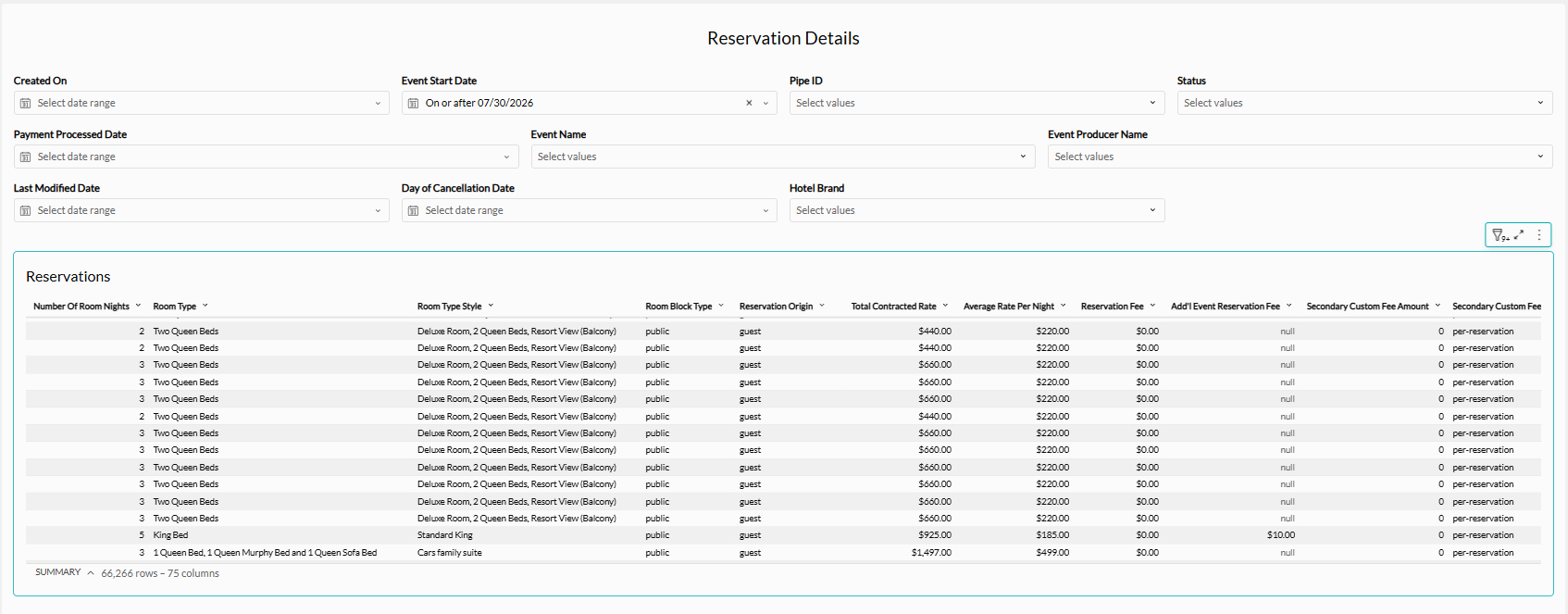
Both stories share a theme: when housing services run on one platform instead of spreadsheets, teams reclaim hours, protect revenue, and add events each year.
The right platform covers the full lifecycle, not one slice. Use these criteria to compare the services each platform offers.
The best platforms come with a team that knows event housing, not just a login. Ask how fast onboarding services get you live, how support services handle busy weekends, and whether you can contact a real person when a coach calls late. Software is only as good as the services behind it.
Great event housing rewards organizers who treat their room block like the revenue engine it is. Source hotels early, enforce Stay-to-Play fairly, watch for blockflation, and give families accommodations and a stay they trust. Do that, and every room night works harder.
Book a demo and talk to a team that knows event housing inside and out.
Housing companies make money by collecting commissions and rebates from the hotels that fill rooms for an event. When a housing company contracts a room block, the property pays back a percentage of room revenue, plus per-night rebates. The company can also add booking fees and paid services on the website. Because their pay is tied to filled rooms and nights guests stay, protecting pickup is how they protect their income.
Stay-to-Play requires teams to book through the event's official hotels; an open housing policy lets families book anywhere. The difference is control over room nights. Stay-to-Play locks in the guarantee, winning stronger rates and commissions and more revenue to reinvest. An open policy is easier on parents but softens rates and keeps less for the event. Many organizers meet in the middle, requiring traveling teams to book a stay in the block while giving local teams a pass.
Start your room blocks three to six months before the event, and earlier for large or peak-season tournaments. Hotels near a popular host city fill fast, so early contact and contracting lock in better rates and rooms. Get the booking website live as soon as the block is set, giving families the longest window to book and boost pickup.

Jeff is the Marketing Manager at EventPipe. He brings a decade of Marketing experience with a background in social media, events, SEO, and content. Outside of work, Jeff is an independent Hip Hop artist who regularly releases and performs his music and loves to golf and play ice hockey in his spare time. Jeff holds a bachelor of arts in Economics from Union College, with a minor in Spanish.
