
Hotel reconciliation is the post-event process of comparing what a group contracted, what attendees booked, and what each hotel reports as stayed, then settling the commissions, rebates, concessions, and attrition owed. Done by hand, it means trusting the hotel's numbers, because checking every line takes more effort than most accounting teams can spare.
Commissions are earned during the event and collected weeks later. Any room night the hotel misses in between is commission the housing company never collects.
Hotel reconciliation for group events is the financial reconciliation of a room block. It matches three sets of records:
An invoice built on three matching records holds up. Any gap between them costs someone revenue.
A housing company acts as a group travel agent for an event organizer, such as a tournament director or association. It runs reconciliation in most cases, because commissions and rebates are how it gets paid.
In the hotel industry, reconciliation often means property-side accounting. Finance teams handle those financial transactions on a daily basis inside the hotel's accounting system. Event-side reconciliation comes first, and it produces the verified room nights and invoice amounts that finance later matches against those accounts.
Reconciliation sets the final numbers a group gets paid or billed on, so it shows whether the contract delivered what it promised. A housing company and a planner read that pickup report for different reasons.
For a housing company, it is revenue reconciliation. Every room night a hotel fails to count is commission and rebate money that never arrives. Across dozens of events a year, those small misses add up to a cash flow problem.
For an association or corporate planner, the final spend comes out of reconciliation. Fall short of contracted room nights and attrition fees apply. Miss a concession during review and the comp rooms or rebates negotiated months earlier never reach the final bill.
Either way, reconciliation is the last point to catch a missed term before the invoice is paid.
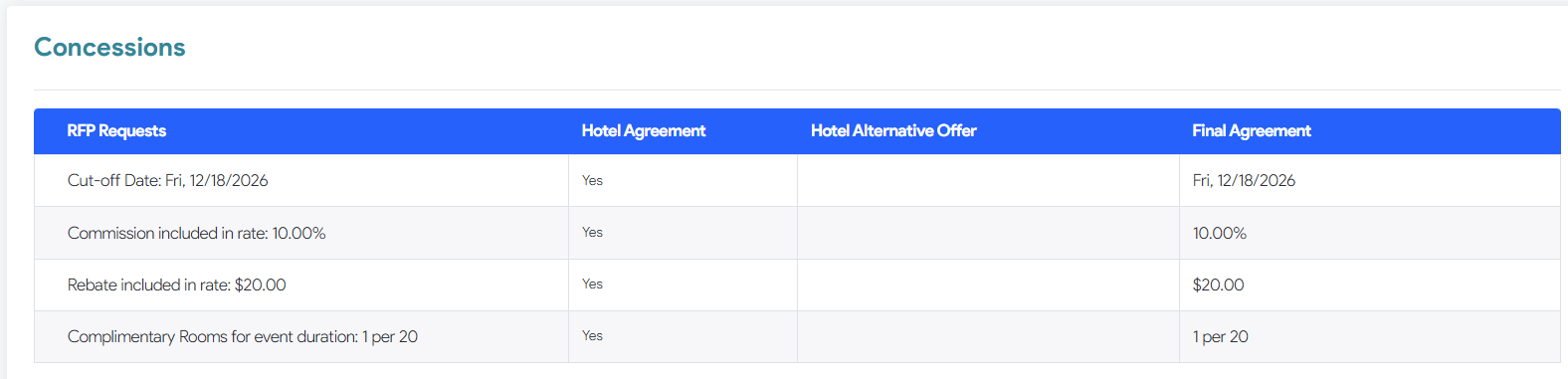
Hotel reconciliation should verify every term that carries money: room nights, rate, commission, rebate, comp rooms, concessions, attrition, and out-of-block credit. Accurate reconciliation starts when the contract is signed.
Nobody checks a concession months later if it only exists in a PDF. Enter the terms into the booking system at contracting, and the team can check every reservation against them line by line.
The counting method matters too. Hotel contract attorney Jonathan Howe explains why hotels push for nightly attrition while planners prefer cumulative, and reconciliation has to follow whichever method the contract uses. For the math behind each, see EventPipe's breakdown of cumulative and per-night attrition calculations.
For out-of-block rooms, Howe recommends a clause that counts attendee rooms in the block however they were booked, paired with the right to audit the hotel's guest list against your registration list.
“The term that is most often wrong or missing is the attrition clause itself, specifically whether it’s per night or cumulative and what the allowed percentage is. A pickup report will show rooms booked against the block, but it rarely shows which penalty rules those numbers will be judged by. The fastest way to catch it is to open the signed contract next to the report before you read a single pickup number, and confirm the clause type, the attrition percentage, and the cutoff date match what you negotiated. Teams often skip that step and trust the hotel’s summary, which is how a cumulative clause quietly turns into a per night one. Five minutes of checking up front can save you from a surprise at wash time, when it’s too late to change anything.”
Patricia Driscoll, Director of Customer Success and Support
With purpose-built hotel reconciliation software, the team runs these steps in the same platform attendees booked through. Credit card payments and refund requests update the same transaction data, which works as automated payment reconciliation on the group side. Nobody retypes the financial data behind the invoice between multiple systems.
See how it works: Book a demo
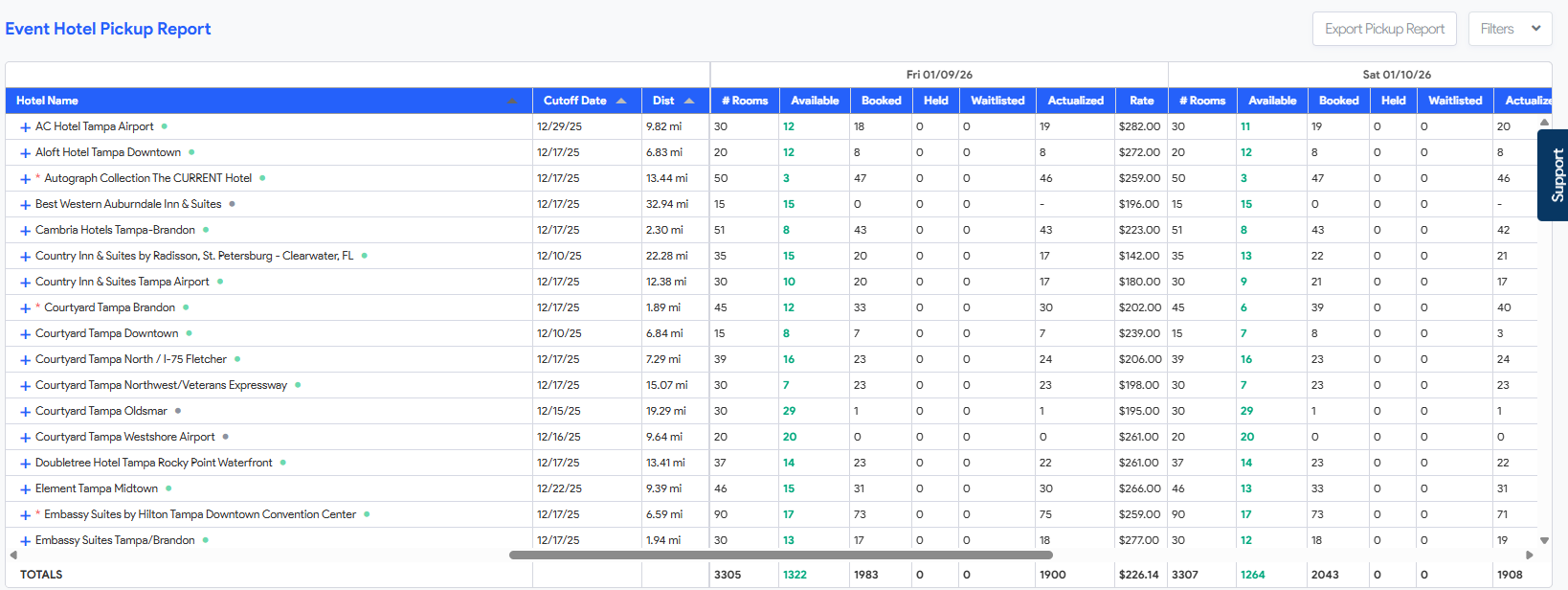
Pickup reports come in two common formats.
Night-by-night is faster and lines up with nightly attrition terms. Reservation-by-reservation shows which individual transactions created the gap, so the team and the hotel can settle a disagreement on facts. EventPipe supports both formats and lets teams set a different one for a single hotel when that property needs closer review.
Manual reconciliation means pulling a booking export and each hotel's report, in whatever format it arrives, into one spreadsheet. That spreadsheet becomes the only link between two systems, so incorrect entries flow straight into the invoice. With several properties in play, complexity multiplies: more hotels mean more manual work and more room for errors.
Blockflation is EventPipe's term for teams or attendees reserving more rooms than they need to secure inventory. The block looks healthy during the booking window, then holds wash out before arrival and actual pickup lands short. The gap shows up at reconciliation as lost commission or attrition risk. EventPipe covers the causes of blockflation in youth sports tournaments in depth.
Teams and attendees who book outside official hotels create room nights the group earned but may never get credit for. Without an audit of the hotel's guest list against internal records, those reservations stay invisible.
Extended stays, early checkouts, and late cancellations often reach the hotel's system before anyone updates the booking record. Those timing differences become discrepancies at reconciliation unless every reservation gets a confirmed final status.
“The first thing I check is whether the two sets of numbers are even measuring the same thing. Hotel actuals often count only stays that checked in under the block, so rooms booked outside the block, name changes, or no-shows can make the gap look bigger than it is. Before I dispute anything, I line up the reservation names, confirmation numbers, and dates in my booking data against the hotel’s final rooming list to see exactly which rooms are missing. What changes a hotel’s answer is specific evidence, like time-stamped confirmations, the attendee’s registration record, and proof the reservation was made through the block link. A general complaint that the count seems low gets nowhere, but a short list of named guests with confirmation numbers usually gets the wash corrected.”
Patricia Driscoll, Director of Customer Success and Support
Automated reconciliation lets housing companies see pickup problems during the booking window, while rooms can still be released or attendees reminded to book.
Paula Gravatt, owner of JPG Travel Solutions, described what real-time pickup tracking in EventPipe changed for her business: "I love the ability to see room night pickup. This allows me to quickly answer my client's questions about the room block, provide better customer service to travelers and event attendees, and estimate profits for both me and my clients."
Hotel partners notice too. At Stack Sports' TeamINN, David Costlow recalled that "We had hotel partners asking for specific reporting and contract customization, and we couldn't deliver fast enough." After the move to EventPipe, the team gave hotel partners real-time reporting, which built trust and led to larger inventory commitments.
“The biggest difference is that reconciliation has become a confirmation, not a discovery. When we only saw numbers after checkout, the wash often held surprises, like a weak night we never noticed or a batch of cancellations that came in too late to fix. Now that I can watch pickup build through the booking window, I already know which nights are short and why, so the final numbers rarely catch me off guard. Seeing it live lets us act while it still counts, whether that means pushing a reminder to attendees, releasing rooms before cutoff, or shifting them to another property. By the time the hotel’s actuals arrive, most of the work is done, and the conversation is about small differences instead of a large penalty.”
Patricia Driscoll, Director of Customer Support and Success
Reconciliation is where every promise in the hotel contract gets checked. Housing companies that run their reconciliation processes from one system of record close events faster and collect what they earned. The accounting department gets financial records that hold up when a hotel disagrees, and leadership gets financial reporting on revenue by event through PipeSights. With automation handling the matching, that operational efficiency frees staff for sales and other tasks.
See how EventPipe reconciles every event: Book a demo.
Only if the hotel contract says so. Post-block reservations are made on live hotel inventory after the block sells out or the cutoff passes. EventPipe's Presto keeps those bookings on the same event record, so total event volume stays visible.
Reconciled pickup becomes the event's history, and hotels use history to size blocks and set terms. The Events Industry Council's APEX resources include a Post-Event Report format built to carry that history into future RFPs. With verified room nights, both sides can trust the numbers in that report.
Reconciliation starts after the last guest checks out, and commissions usually arrive weeks after the event. In EventPipe, each hotel receives the pickup report automatically once the event ends, then confirms its actuals before the housing company invoices. The exact timing depends on how fast each hotel confirms and pays.

Jeff is the Marketing Manager at EventPipe. He brings a decade of Marketing experience with a background in social media, events, SEO, and content. Outside of work, Jeff is an independent Hip Hop artist who regularly releases and performs his music and loves to golf and play ice hockey in his spare time. Jeff holds a bachelor of arts in Economics from Union College, with a minor in Spanish.
