
Searching for the best group hotel booking platforms turns up a strange mix of results: online marketplaces, full-service housing bureaus, destination marketing tools, and hotel-brand booking engines, all competing for the same query.
That’s because "group hotel booking" is at least five different workflows wearing the same search term.
This review sorts through that mix. Below are seven platforms that handle group bookings, hotel booking sites, and group hotel reservations across event types, from citywide trade shows to regional sports tournaments to DMO-driven destination marketing.
Each one is scored against EventPipe's published eight-factor review methodology, the same framework applied across every software review on this site. The goal is to help organizers, associations, and housing companies match the right booking model to the group they are actually managing.
Every platform in this review uses the same eight-factor scoring rubric published in EventPipe's methodology, which evaluates:
The framework is built to stay neutral across different business models, whether a platform runs on contracted room blocks, live hotel rates, or a commission-based marketplace.
Planners handling one block for a private event sit at the opposite end of that range from a housing company running fifty events a year, and the rubric accounts for both.
Four platforms in this review, EventPipe, PlayBook365, EventConnect and Groups360 also appear in EventPipe's companion review of full lifecycle hotel reservation software.
“The first tip-off is usually how they talk about pickup. On a marketplace-style site, nobody's tracking pickup against a contracted block because there isn't one, guests just book one at a time with no cutoff pushing them to commit. So when a housing company shows up still thinking "how many people signed up" instead of "how many rooms are we on pace to pick up before cutoff," that's the sign their event never had the predictable, contracted demand that model was built for.”
Patricia Driscoll, Director of Customer Success and Support at EventPipe
Before comparing specific hotel booking sites, it helps to understand the different business models hiding under the same search term. Event housing management as a discipline covers the full lifecycle, but the software built to support it splits into distinct categories, and the category matters more than any individual feature when picking the right fit.
These platforms operate like a consumer travel site scaled up for groups. Planners submit event details and receive proposals from hotels bidding for the business. There is often no platform fee for the organizer, and the site earns money through referral commissions paid by the hotel. HotelPlanner runs on this model.
A bureau handles hotel booking as a managed service, not just software. Staff negotiate contracts, run the booking process on the organizer's behalf, and operate a call center for guest support. This model suits large-scale trade shows and conventions where the housing volume justifies dedicated staffing. onPeak operates this way.
Destination marketing organizations and sports commissions use these platforms to market their region and give event organizers a hotel booking page tied to local properties. PlayEasy fits here, connecting sports tourism destinations to event organizers and travelers.
Backed directly by major hotel chains, these platforms pull real-time rates and hotel room availability straight from brand reservation systems for instant booking, typically for smaller room blocks. Groups360 operates this model.
These platforms focus narrowly on the request-for-proposal stage: sourcing hotels, collecting bids, and comparing offers, without managing the full booking process through to reconciliation. HopSkip and Cvent Supplier Network are both built around this single stage, though at different scales: HopSkip requires planners to pay for access, while Supplier Network is free and built around Cvent's much larger venue database.
A platform built for one of these models is not automatically better or worse than one built for another. The right choice depends on booking volume, staffing, and whether the group needs a contracted block or can work off live inventory. Group hotel bookings that scale past a handful of events a year usually outgrow a single-stage tool fast.
None of the five models above are the right fit for individual travelers booking a single room. Vacation rentals and casino hotels tied to a single leisure trip fall outside the scope of this review entirely, since they involve one guest, one reservation, and no group coordination.
The same goes for hostels booked one bed at a time. Group hotel booking is a different job, built around dozens or hundreds of reservations tied to a single event, with one point of contact managing the whole block instead of each guest booking on their own.
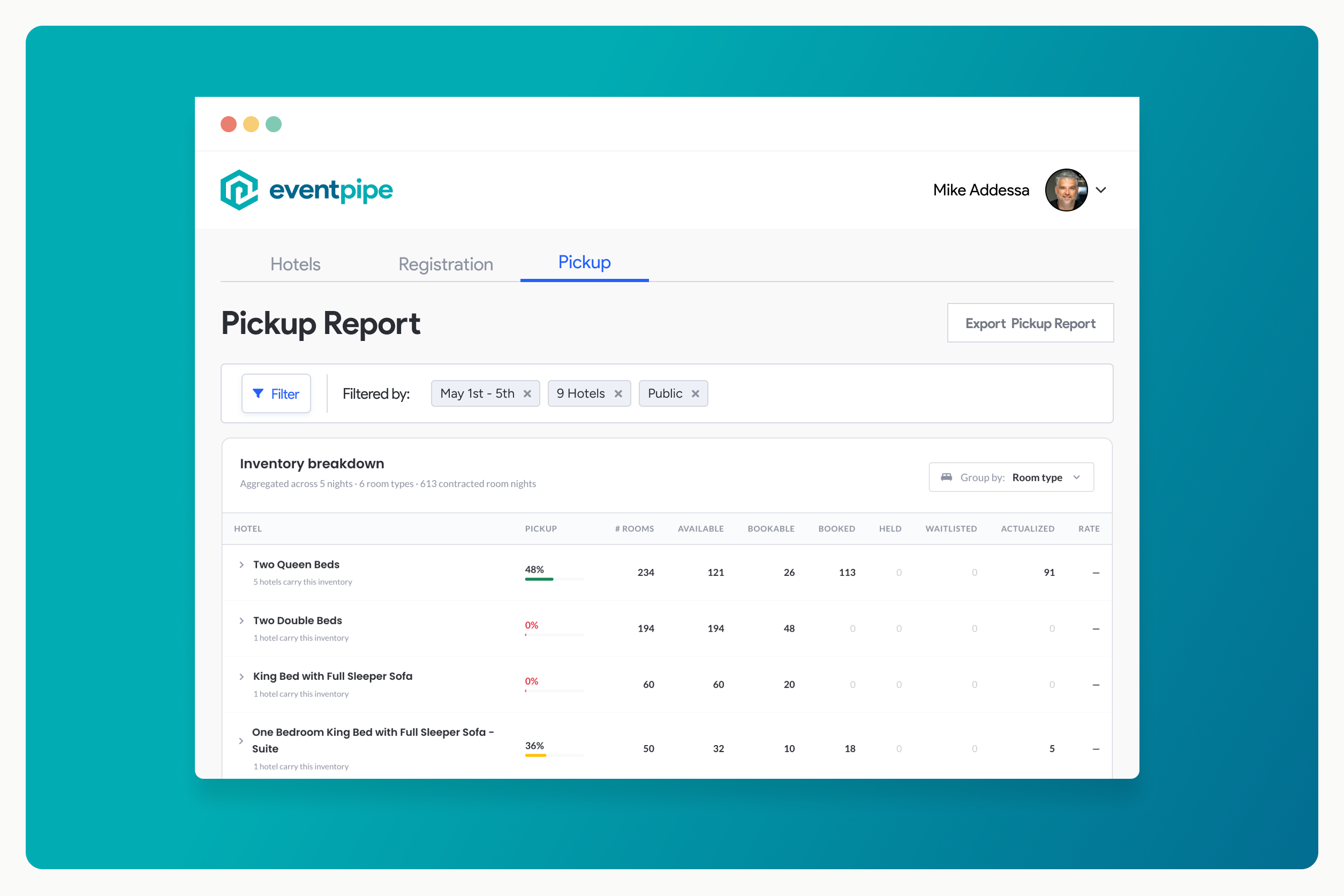
EventPipe is a group hotel booking platform built for housing companies and event organizers who manage contracted room blocks across youth sports tournaments, associations, and corporate events. Rather than sourcing a single hotel booking site through a marketplace, EventPipe covers the full workflow: hotel identification, RFPs, contracting, a branded booking page, reservation management, pickup reconciliation, and invoicing, in one system.
Best For: Best fit for housing companies and event organizers managing recurring group bookings who need one hotel booking site to handle contracting, hotel room inventory, and commission reconciliation without re-entering data across separate tools.
Most group hotel booking platforms are built around one piece of the process: sourcing hotels, taking bookings, or reporting on pickup after the fact. EventPipe's approach ties the whole sequence together, so the room types and rates negotiated in the RFP carry through automatically to the booking page and the final invoice.
That continuity matters most for organizations running the same type of event repeatedly. A housing company managing dozens of tournaments a year cannot afford to rebuild its booking process from scratch each time, and a platform that treats every event as a one-off group booking request creates exactly that kind of repeated setup work.
Housing company INNplay saw this play out directly. After securing a new tournament operator with 14 events and its first event starting in three weeks, INNplay used EventPipe's live inventory to launch customized booking sites within hours rather than building each one from scratch.
EventPipe integrates with major youth sports registration platforms, including SportsEngine, LeagueApps, StackTourney, and TeamSnap, and connects to each hotel's own property management system for reservation and confirmation data.
Data security includes SSAE 16, ISO 27001, and PCI DSS compliance.
“The RFP stage looks the same, you're still negotiating rate and concessions. What changes is everything after it. Once contracting, the booking page, and reconciliation run through the same system, the attrition clause you negotiated at RFP is the same one tracking pickup and the same one reconciliation pulls from at the end, instead of getting re-entered by hand across three tools. That's usually when reconciliation goes from taking a week to taking an afternoon.”
Patricia Driscoll, Director of Customer Success and Support at EventPipe
EventPipe uses a reservation-based subscription model with a committed annual volume and pay-as-you-go overages above that threshold. Pricing is consultative and scales with how many customers and events a housing company manages.
Contact EventPipe directly for a quote based on event volume.
Ready to see how EventPipe manages group hotel bookings end-to-end? Request a demo.
Paula Gravatt, owner of JPG Travel Solutions, ran room blocks for athletes, vendors, and volunteers by hand before switching to EventPipe, managing lists across spreadsheets and separate systems for every event.
After adopting EventPipe, she moved hotel contracting, real-time pickup tracking, and attendee booking into one platform.
"Contracting has become super simple and streamlined for me. Before EventPipe, contracting was a nightmare. It's now simple and professional. I love the ability to see room night pickup. This allows me to quickly answer my client's questions about the room block, provide better customer service to travelers and event attendees, and estimate profits for both me and my clients."
Groups360 operates GroupSync, an online marketplace that connects planners directly to hotel-brand reservation systems for instant group hotel booking.
Rather than a traditional block or bureau model, GroupSync functions as a real-time booking engine with rates and hotel room availability pulled straight from participating brands.
Best For: Best fit for corporate meeting planners booking smaller groups (10 to 25 rooms) who want instant confirmation and transparent hotel rates across major hotel chains without an RFP cycle.
GroupSync solves a specific friction point in group bookings: the RFP wait. For a small meeting or a modest room block, waiting days for hotel proposals can be a bigger obstacle than the booking itself. Instant confirmation on transparent hotel rates removes that delay entirely for groups under the platform's size threshold.
That same strength defines its limits. For a housing company managing a 50-hotel tournament block or an association whose convention needs sub-block assignment across hundreds of attendees, an instant-booking marketplace capped at 25 rooms operates in a different category of group booking than a housing platform built for contracted-block scale.
Contracted blocks at that scale also carry their own financial exposure, including attrition penalties if pickup falls short, a risk an instant-booking model like GroupSync does not carry in the same way.
Direct integration with Accor, Hilton, IHG, and Marriott reservation systems and each property's management system. GroupSync Connect embeds the marketplace into third-party event platforms.
Free to use for travel organizers and planners, with hotels paying Groups360 a commission on completed bookings. GroupSync Planner+, the enterprise version, is also positioned as free to start, with negotiated terms possible for larger deployments.
TechTrans International manages more than 1,000 events per quarter for government and corporate clients, ranging from 50 to 300 attendees. After adopting GroupSync for hotel sourcing, special events planner Alissa Howell cut hotel sourcing time by more than half, moving from a process that could take weeks of manual outreach to contracts finalized in as few as seven days.
"The transparency and time saved have been the biggest advantages. We're no longer calling venues multiple times just to get an answer. The time from initial request to contract has been drastically reduced."
— Alissa Howell, Special Events Planner, TechTrans International
onPeak, a GES network company, is a full-service hotel booking bureau built for large trade shows, conventions, and citywide events. onPeak runs the group booking process as a managed service, with a dedicated contact center handling attendee and exhibitor reservations through its proprietary Compass Reservation System, according to onPeak's own service documentation.
Best For: Best fit for large trade show organizers and conference planners who want group bookings, hotel contracting, and guest support handled by a dedicated bureau team rather than managed in-house.
onPeak's bureau model is a meaningful differentiator from software-only group booking platforms. For a citywide trade show with thousands of attendees and dozens of contracted hotels, having a dedicated team run the reservation process and handle guest calls removes a significant operational burden from event staff.
The tradeoff is that a full-service bureau is built for a different scale than a self-serve housing company managing recurring regional events. Based on publicly available documentation, onPeak's positioning centers on large trade shows and conventions rather than the kind of season-over-season, multi-event portfolio a youth sports housing company typically manages.
onPeak names Visit by GES, Maritz Global Events, and Event Citadel (formerly CompuSystems) as integration partners on its technology page, positioning Compass's registration and housing data as connected rather than siloed, according to onPeak's technology and integration partners page.
Based on publicly available documentation, this integration layer centers on combining registration and housing analytics into one reporting view rather than connecting to external CRM or event management platforms beyond these named partners.
Pricing is not publicly listed. onPeak operates a bureau service model, and cost typically depends on event scale and the level of staffing support required. Contact onPeak directly for a quote.
RSA Conference runs a 60+ hotel housing program in San Francisco spanning more than 11,000 hotel reservations annually. According to onPeak's client testimonials, the event's Director of Operations credits onPeak's technology and hotel market relationships for managing that scale.
"Our 60+ hotel event held annually in San Francisco requires a housing partner that truly knows how to navigate our hotel market. Not only does onPeak have amazing technology to help manage our 11,000+ hotel reservations, their relationship with the hotel community and San Francisco Travel is second to none."
—Amy Hitchcock, Director of Operations, RSA Conference
Playbook365 pairs tournament management software with Staybook, its dedicated event housing tool, giving housing companies and tournament directors registration, scheduling, and hotel room block management inside one platform. Owned by Travel + Leisure Co. since a 2023 acquisition, Playbook365 registered more than 55,000 teams and served over 1.7 million attendees in a single year prior to that acquisition, according to SportsTravel Magazine's coverage of the deal.
Best For: youth sports organizations that want tournament management and event housing bundled into one vendor relationship rather than running separate systems for registration and hotel booking.
Score: 68/100
Playbook365's core pitch is consolidation: a tournament director already running registration, scheduling, and bracketing through the platform can add event housing without introducing a second vendor relationship. For organizations that value having tournament operations and hotel booking under one login, that bundling has real appeal.
The tradeoff shows up for housing companies whose primary business is housing, not tournament management. Based on publicly available documentation, Staybook's housing depth is positioned as part of a broader sports management suite rather than a dedicated, housing-first platform, which may matter less to a tournament director and more to a housing company managing room blocks across many different tournament operators' events.
Playbook365 operates as part of Travel + Leisure Co.'s portfolio following the 2023 Alliance Reservations Network acquisition. Based on publicly available documentation, its primary integration is internal, connecting Staybook's housing module with Playbook365's own tournament, facility, and club management tools rather than external CRM or registration platforms outside its own suite.
Pricing is not publicly listed. Playbook365 requires a demo or sales conversation to scope cost based on event volume and which modules (housing, tournament management, facility management) an organization needs.
AC Sports, a Pittsburgh-based youth travel tournament organizer running 40+ events a year across baseball, softball, and basketball, struggled with stay-to-play compliance tracking before combining Staybook with its housing partner T1 Housing.
According to Playbook365's published case study, the switch cut weekly compliance tracking time from roughly three hours to five minutes, saving more than 85 hours per season, and contributed to a 25% increase in room pickup alongside 43% business growth over five years.
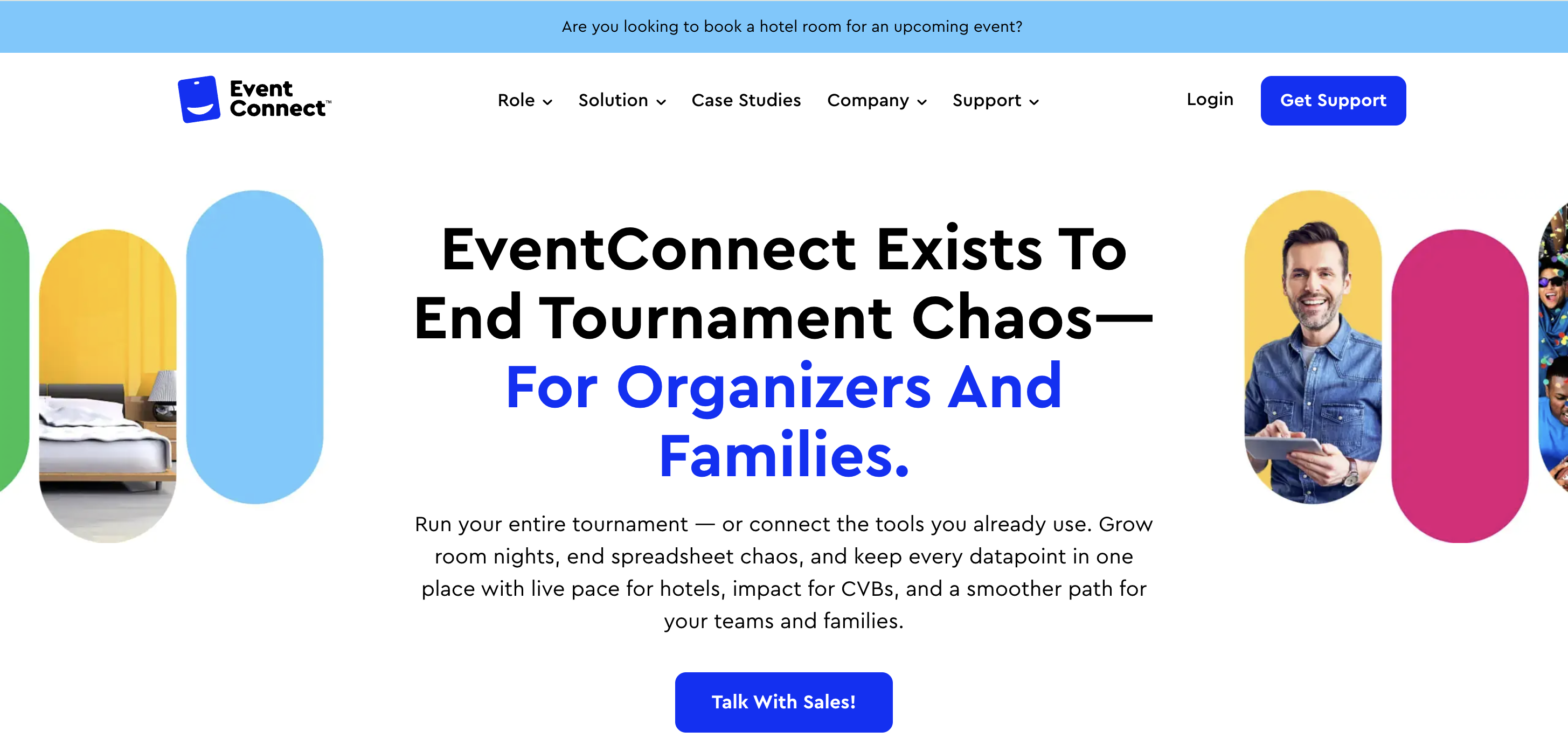
EventConnect is a sports tournament management platform built around a stay-to-play model, pairing team registration with hotel booking coordination in the same workflow. Its housing module, HousingConnect, is positioned as a private-labeled, turnkey solution for third-party housing companies and rights holders running internal housing operations, connecting to more than 30,000 hotels across over 800 cities in North America, according to EventConnect's own platform materials.
Best For: youth sports tournament organizers and housing companies that want registration and stay-to-play compliance tracking tied directly into the same platform handling hotel bookings.
Score: 65/100
EventConnect's tightest integration is the link between registration and housing. For a stay-to-play tournament, having compliance tracking built into the same system that handles sign-ups removes a step that other platforms leave to a separate process. Based on publicly available documentation, EventConnect states that pairing its registration and housing tools can increase room night reservations and reduce team hotel costs, though the underlying methodology behind those figures was not detailed in the materials reviewed for this article.
The tradeoff is the same one that applies to any bundled suite: a housing company that does not also want EventConnect's registration and tournament tools is adopting more platform than it may need. Based on publicly available documentation, reconciliation and invoicing depth appears less detailed in public materials than the registration and booking side of the platform.
EventConnect offers an open API for custom development and integration with existing software, according to its own solutions page. It also connects to third-party vacation rental providers as part of its accommodation options. Based on publicly available documentation, deeper integration detail beyond the open API is not extensively documented publicly.
Pricing is not publicly listed. EventConnect requires a demo or sales conversation to scope cost.
Capterra: 4.5 out of 5 (21 reviews)
Marc.B said “Event Connect is an easy to use, intuitive SAAS to manage tournaments and league play.”
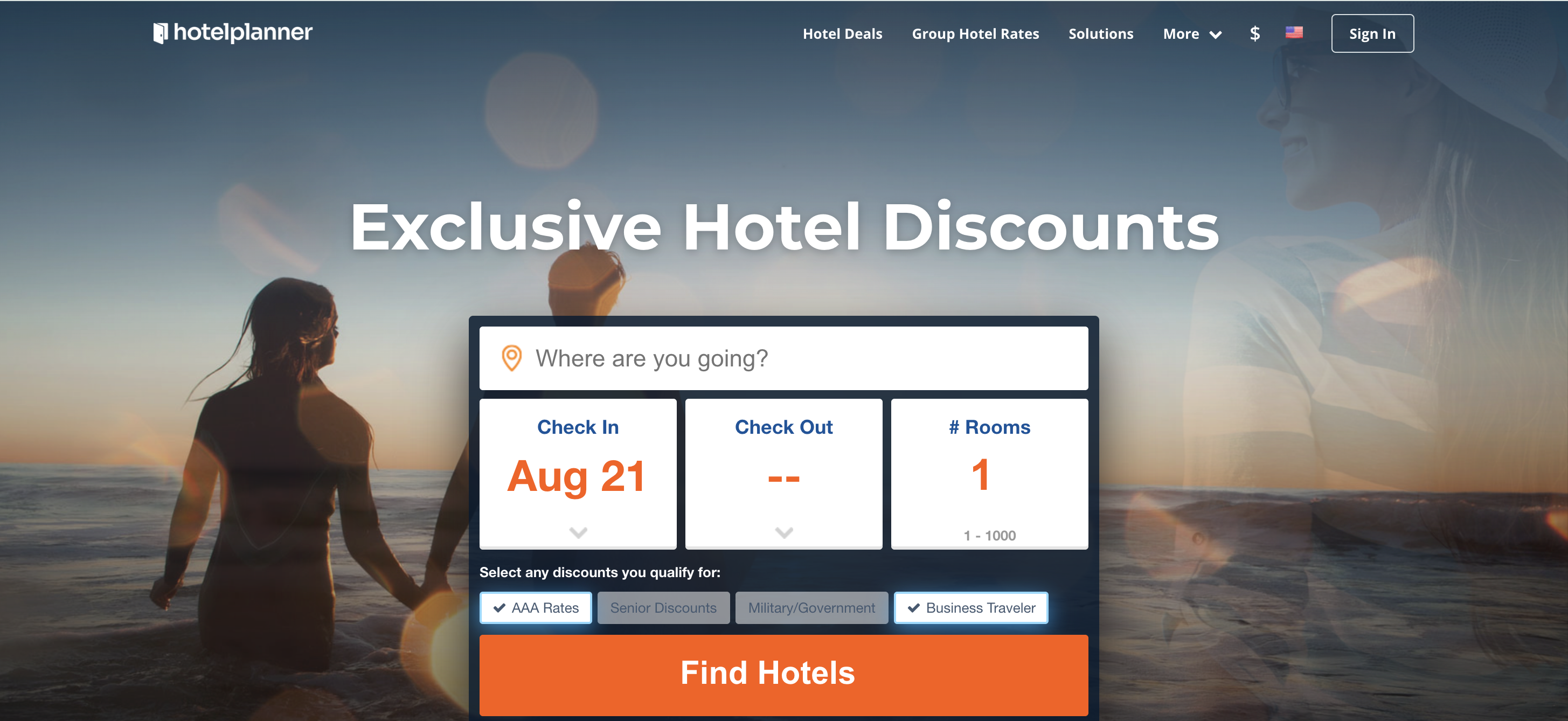
HotelPlanner runs one of the largest OTA-style marketplaces for group hotel bookings, spanning weddings, reunions, sports travel, and business groups. Planners submit event details and receive competing proposals from participating hotels, with HotelPlanner operating on referral fees paid by hotels rather than fees charged to the organizer.
Best For: Best fit for event organizers and planners who want broad hotel coverage across many group types and no platform fee to submit an RFP or compare offers.
HotelPlanner's breadth is its clearest advantage. A planner working across very different group types, from a wedding block to a youth tournament to a corporate retreat, can source hotel options for all of them through one site rather than juggling category-specific tools.
That same breadth means the platform is not built around the deeper room block management work a housing company handles: contract-level concession tracking, reservation-by-reservation reconciliation, and compliance enforcement for events that require teams to book inside an official block.
Based on publicly available documentation, RFP response quality and turnaround can vary by hotel engagement and market conditions, a tradeoff inherent to any marketplace model that depends on hotel participation.
HotelPlanner's rate sourcing combines its own direct hotel contracts with more than 50 industry connections, including OTAs like Expedia and Booking.com and hotel brands like Hilton and Marriott, according to its own solutions page.
The company also offers a public API supporting hotel search, booking, room block management, and reporting, complemented by Meetings.com for meeting space sourcing.
Commission-based. HotelPlanner does not charge organizers a platform fee; hotels pay referral commissions on completed bookings.
TrustPilot: 4.2 stars out of 5 (10,0374 ratings)
Luz said: “My call was answered right away and the agent was extremely helpful and fast with booking a last minute reservation.”
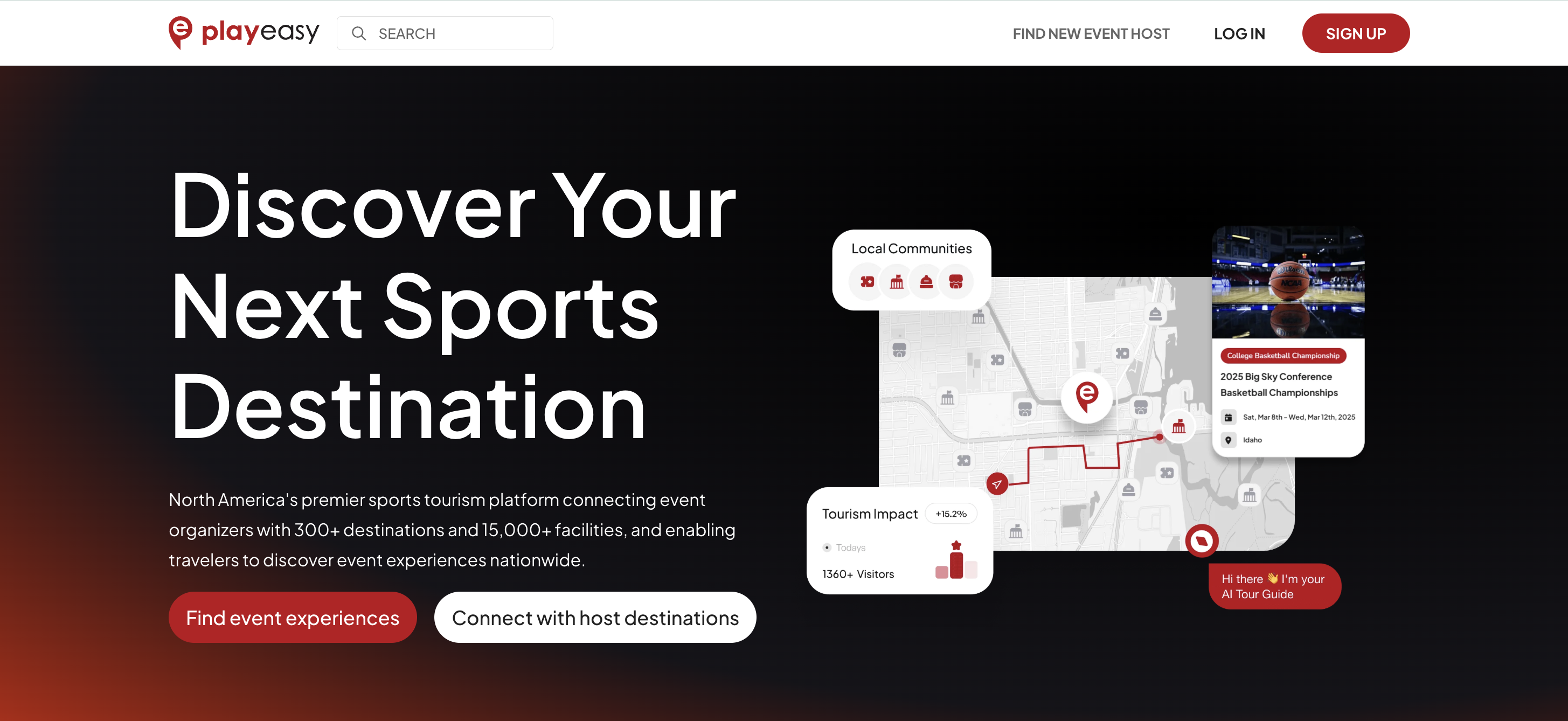
PlayEasy operates a sports tourism network connecting destinations, event organizers, and travelers, with a hotel booking layer built specifically for destination marketing organizations and sports commissions.
Rather than managing a contracted room block, PlayEasy's hotel solution pulls live rates from more than 40 sources, including GDS, OTA, and private wholesale rates, so destinations can offer visitors the lowest available hotel rates without charging extra commissions or fees.
Best For: Best fit for destination marketing organizations and sports commissions that want to market their region to event organizers while giving visitors a live-rate hotel booking option on the destination's own website.
PlayEasy gives a destination its own hotel booking tool, tied to local marketing rather than a single event's housing needs. That destination-first model is a real point of difference for a sports commission trying to attract organizers and support visitor bookings once they arrive.
The tradeoff is scope. PlayEasy covers live-rate booking on the destination side, not the contracted-block RFP, reconciliation, and invoicing work that a housing company running the event actually needs.
Based on publicly available documentation, PlayEasy also restructured into separate business lines in early 2026, which may affect how its hotel features are packaged going forward.
For the local community, the value shows up as economic impact data rather than reservation-level detail: a visitor can search hotels, book a room, and browse local attractions in one place..
PlayEasy's hotel booking layer draws live rates from more than 40 sources, including GDS and OTA connections. Based on publicly available documentation, the platform's primary integration surface is destination-facing rather than built around housing company back-office tools like registration or accounting systems.
Pricing is not publicly listed. PlayEasy is positioned as a subscription platform for destinations, according to its own marketing materials.
Sports Salt Lake used Playeasy to market its destination and connect with event organizers, generating more than 50 new sporting event leads within a few months of joining the platform, according to Playeasy's published customer testimonials.
"At Sports Salt Lake we wanted to find an efficient way to market our destination and connect with event organizers all year at an affordable price. With Playeasy we finally have that solution. Playeasy has created a marketing platform that showcases our destination and venues 24/7/365, and their integration with Threshold 360 allows event organizers to now tour our sports venues virtually. This has resulted in over 50 new sporting events leads for Salt Lake since joining the platform a few months ago."
-Clay Partain, Sports Salt Lake
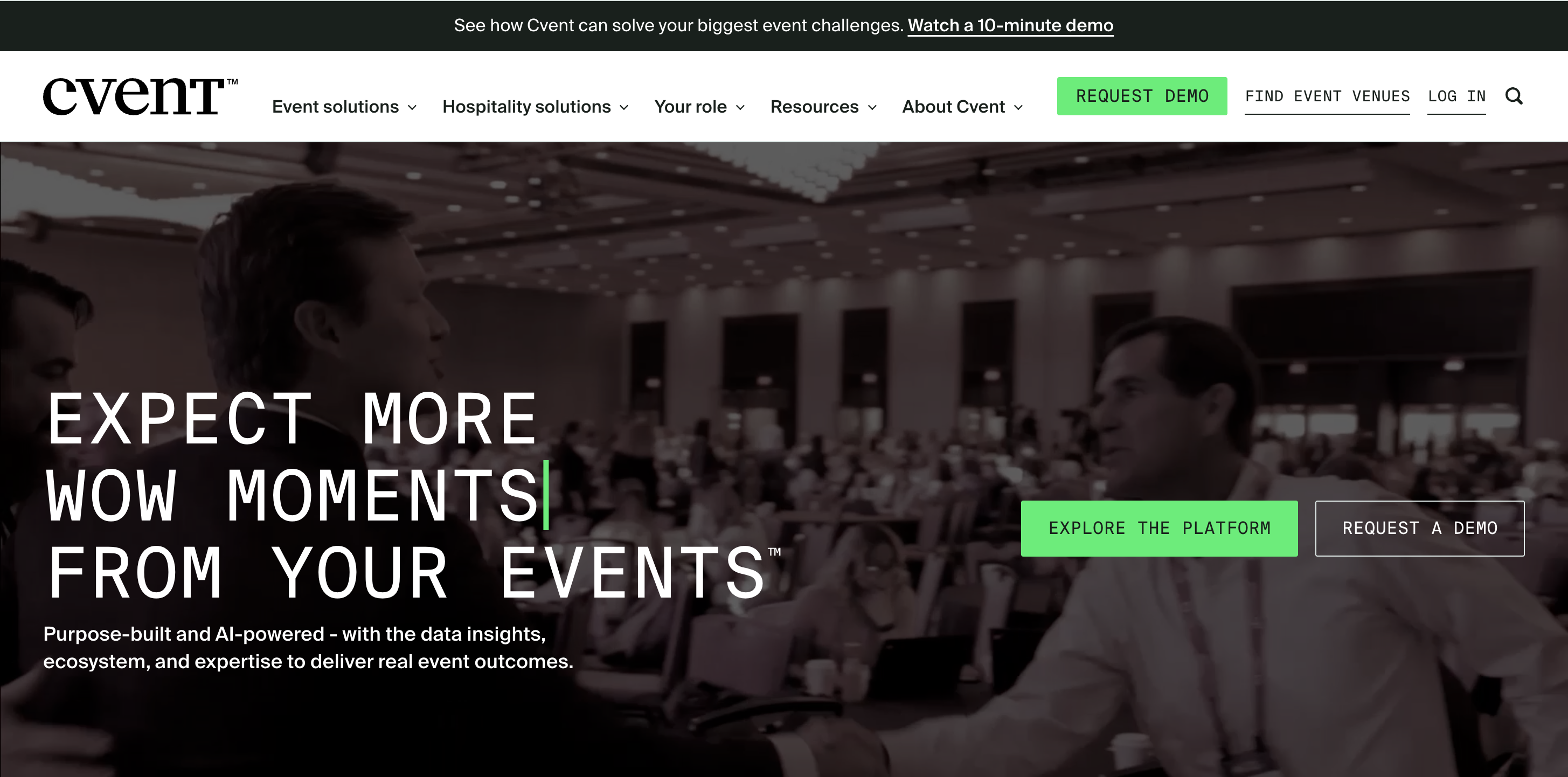
Cvent Supplier Network is a free venue and hotel sourcing tool that lets planners search nearly 340,000 hotels and venues worldwide and send a single RFP to multiple properties at once, according to Cvent's own venue sourcing platform page. It is a distinct product from Cvent Passkey, which handles housing and room block management after a contract is signed. Supplier Network sits earlier in the process, at the sourcing and RFP stage.
Best For: Best fit for planners and housing companies who need to source hotels and venues at scale, sending one RFP to dozens of properties simultaneously, without paying to search or compare proposals.
Cvent Supplier Network solves the earliest and often most time-consuming part of group hotel booking: finding qualified hotels and getting proposals back quickly. For an organization sourcing hotels for a large-scale event across an unfamiliar destination, searching nearly 340,000 properties from one interface removes a meaningful amount of manual research.
The tradeoff is scope. Supplier Network is a sourcing and RFP tool, not a housing platform. Based on publicly available documentation, contracting, branded booking page delivery, reservation-level reconciliation, and invoicing live outside Supplier Network, in either Cvent Passkey or a separate housing system entirely. Organizations that need the full lifecycle covered would typically use Supplier Network to source hotels, then hand the contracted block off to a dedicated housing platform.
Cvent Supplier Network connects to other Cvent products, including Cvent's Hotel RFP Management tools and the broader Cvent Vendor Marketplace for non-hotel event services. Based on publicly available documentation, RFPs sourced through Supplier Network can feed into Cvent Passkey for organizations using both products together.
Free for the core venue search, RFP distribution, and response tracking. An enterprise plan with additional automation is available; pricing is not publicly listed for that tier.
Capterra: 4.5 stars out of 5 (1,096 reviews)
Adriana B says: “I am impressed with the platform, its innovative features, and the way AI is transforming event management. Cvent helps streamline processes, improve efficiency, and create a better experience for both organizers and attendees including all the event registration process.”
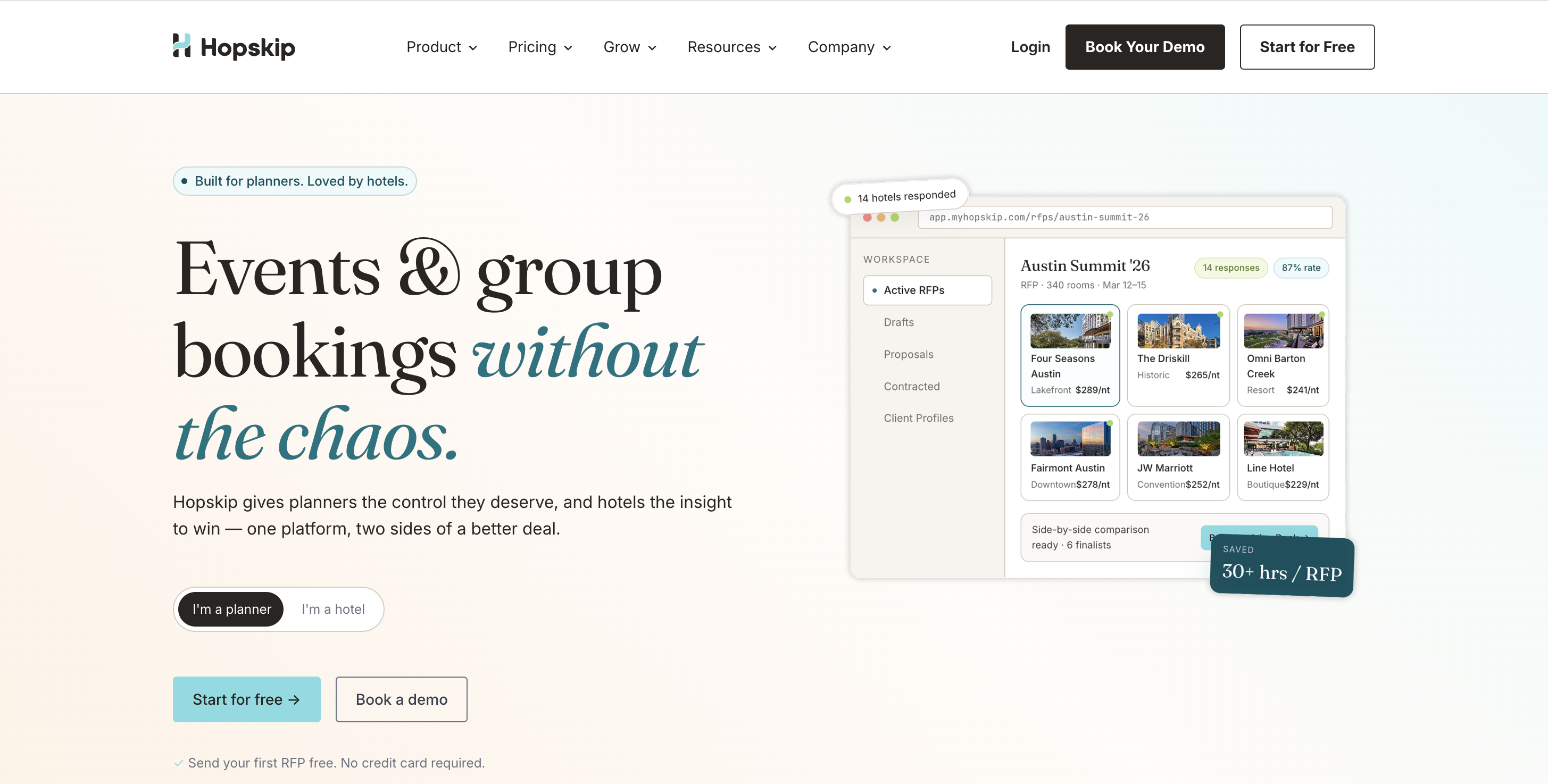
HopSkip is a hotel sourcing platform built specifically around the RFP stage for corporate meetings and events. Rather than managing the full group booking process, HopSkip focuses on making sure every RFP submitted includes complete event details, so hotel sales teams respond to qualified requests instead of vague inquiries.
Best For: Best fit for corporate meeting planners and conference organizers whose primary need is sourcing and comparing hotel RFPs, rather than managing a full contracted block through to reconciliation.
HopSkip's narrow focus on the RFP stage is also its defining tradeoff. For a meeting planner whose main pain point is unqualified leads and vague hotel inquiries, a platform that forces complete event details into every RFP solves a real problem cleanly.
That focus means the platform does not extend into contracting, a branded booking page for attendees, pickup reconciliation, or invoicing. Based on publicly available documentation, organizations that need HopSkip's sourcing strength would typically pair it with a separate tool for the booking and reconciliation stages that follow.
Based on publicly available documentation, HopSkip's integrations are calibrated to the RFP and sourcing stage rather than the broader group booking or reservation management workflow.
Pricing is not publicly listed for planners' subscription tier. Hotels can list for free with paid upgrades available.
G2: 4.9 stars out of 5 (9 ratings)
A user said: “HopSkip saves me an incredible amount of time when creating an RFP to source multiple hotels in multiple cities. The reports are easy to create, and they are easy for my clients to understand, making narrowing down the list I provide very simple.”
Picking the best group hotel booking platform starts with matching the tool to the booking model the group actually needs, not the feature list with the most checkmarks. A platform built for instant booking on small meetings solves a different problem than one built for a 50-hotel tournament block, and neither is the wrong answer for its intended use case.
Hotel size matters here too. A platform built to fill a handful of rooms for a small meeting is not built to fill 50 hotels for a citywide tournament, and matching platform-to-hotel size prevents both over-buying software and under-buying capability.
Some of the terms in this table, like attrition and cutoff dates, come up constantly once a group moves from sourcing into a signed contract. EventPipe's glossary of hotel terms is a useful reference for anyone newer to the negotiation side of group hotel booking.
For groups sourcing hotel deals through a marketplace rather than a lifecycle platform, checking guest reviews for each property under consideration still matters.
A hotel offering the lowest prices on paper does not always deliver the best prices in practice once fees and add-ons factor in, and reviews point to service issues a rate sheet will not reveal. A quick search on independent review sites, alongside the platform's own listing, rounds out the picture and helps a group save money before booking, not just at checkout.
A group hotel booking platform with a long feature list is not automatically the right fit. The more useful question is which of the five models covered earlier the group's situation actually calls for. An association managing one annual convention has different needs than a housing company running 30 tournaments a year, and a corporate planner booking a handful of small meetings has different needs than either one.
Matching the model first, then comparing features within that category, keeps the evaluation grounded in what the group will actually use rather than what looks impressive in a demo.
Primary recommendation: EventPipe. Built for exactly this scenario, with Teams Management handling Stay-to-Play compliance and Presto covering post-block overflow when a contracted block sells out. For a closer look at how tournament housing works end to end, from RFP through reconciliation, see EventPipe's dedicated guide.
Sports-related travel generated 124.3 million hotel room nights in the United States in 2025, according to Sports ETA's 2026 State of the Industry Report. A platform that tracks team-level compliance and prevents bookings outside the official block is the difference between capturing that volume and losing it to unapproved hotels.
Primary recommendation: onPeak. The bureau model fits large-scale events where dedicated staff handling attendee calls and contract negotiation offsets the cost of running housing entirely in-house.
Reasonable alternative: EventPipe. Fits organizers who want software-driven control over the full lifecycle without handing the process to a bureau team.
Primary recommendation: Groups360 (GroupSync). Instant booking and transparent hotel rates for 10 to 25 rooms remove the RFP wait entirely for meetings under that threshold.
Reasonable alternative: HopSkip. A better fit when the group size exceeds GroupSync's instant-booking threshold and the priority is a structured RFP process instead.
Primary recommendation: Cvent Supplier Network. Free access to nearly 340,000 hotels and venues, with the ability to send one RFP to multiple properties, makes this the fastest way to build a qualified shortlist before the housing stage even begins.
Reasonable alternative: onPeak. A better fit when the organization wants sourcing and staffed support handled together rather than sourcing hotels independently before choosing a housing platform.
Primary recommendation: PlayEasy. Purpose-built for destinations that want to attract event organizers and give visitors a live-rate hotel booking option without operating their own reservation system.
Reasonable alternative: EventPipe. A better fit if the organization is running events directly rather than marketing a destination to other organizers.
For many organizations, the answer is both. A DMO using PlayEasy to market its region and support visitor bookings is solving a different problem than the housing company actually running a tournament in that destination, and the two can operate side by side rather than in competition.
The same logic applies across the stack. A corporate travel team might use Groups360 for small internal meetings while a dedicated event managed through a housing company runs on a full lifecycle platform. The right combination depends on the mix of group types an organization handles, not a single platform trying to be everything at once.
With the models, the reviews, and the fit scenarios covered, a few specific questions still come up often enough to answer directly.
Ready to see how EventPipe manages group hotel bookings from RFP to reconciliation? Request a demo.
A group hotel booking platform centralizes the request, comparison, and management of hotel rates across multiple properties in one place, rather than requiring separate phone calls or emails with each hotel's sales team. Booking direct with a single hotel can still make sense for a small, one-property event, but once a group needs to compare hotel options across several properties or manage reservations for dozens of guests, a dedicated booking platform reduces the manual coordination significantly.
It depends on the platform's business model. Marketplace platforms like HotelPlanner and brand-backed platforms like Groups360 typically charge no platform fee to the organizer and instead earn referral commissions from participating hotels. Lifecycle platforms and bureaus, including EventPipe and onPeak, typically charge the organizer or housing company directly for the software or service, since they manage the full booking process rather than referring business to hotels.
Yes, several platforms in this review operate without requiring a signed room block contract. Groups360 and HotelPlanner both connect organizers to live hotel rates or proposal-based bookings without a formal block agreement, and EventPipe's Presto feature offers the same live-inventory approach for post-block or standalone events that skip contracting entirely.
Timing depends on event size and booking model. Large-scale events using a contracted block, such as major tournaments or citywide conventions, typically need six to twelve months of lead time to source hotels, negotiate rates, and launch a booking page before demand peaks. Smaller meetings using instant-booking or marketplace platforms can be set up in days rather than months, since there is no RFP cycle or contract negotiation required. For example, a corporate planner booking 15 rooms through an instant confirmation flow, sometimes just one click away, can typically have a booking page live the same week, with any group savings locked in immediately rather than pending a hotel's RFP response.
Typically, no. Most group hotel booking platforms, including every platform reviewed here, focus specifically on the hotel room reservation rather than a complete travel itinerary. Guests booking through a group hotel booking site can usually access hotel details, room types, and their own reservation confirmation, but flights, transportation, and activity planning remain outside the platform's scope and stay with the guest or a separate travel service. Group organizers and customers alike should expect the hotel booking piece to be one part of trip planning, not the whole of it.

Jeff is the Marketing Manager at EventPipe. He brings a decade of Marketing experience with a background in social media, events, SEO, and content. Outside of work, Jeff is an independent Hip Hop artist who regularly releases and performs his music and loves to golf and play ice hockey in his spare time. Jeff holds a bachelor of arts in Economics from Union College, with a minor in Spanish.
